Speechelo has been a go-to for many looking to turn text into speech, but let’s be honest. Its voice quality and features are limited. Today, users expect more than just robotic narration. With advanced AI, the top voice tools can deliver natural, human-like voices that sound almost indistinguishable from real speech. For businesses ready to upgrade, it’s worth exploring the newer alternatives that raise the bar in realism and flexibility.

This blog takes a closer look at where Speechelo falls short, why natural-sounding AI voices matter, and which tools are leading the way in 2025.

Overview

  • Speechelo struggles to keep up with modern AI voice standards in realism, flexibility, and integrations.
  • Alternatives like Resemble AI, Murf, and Cartesia deliver more natural voices, real-time generation, and advanced customization.
  • Many tools now support voice cloning, watermarking, and detection, ensuring both creativity and security.
  • Free plans and developer-friendly APIs make alternatives more accessible for individuals, teams, and enterprises.
  • Resemble AI stands out as the most future-ready option, combining high-quality TTS with deepfake defense.

What is Speechelo? 

Speechelo is a commercial text-to-speech (TTS) software developed by Blaster Suite, designed to help content creators, marketers, and businesses generate natural-sounding voice overs. 

Unlike freeware platforms, Speechelo is a paid tool that emphasizes ease of use, multilingual support, and professional-quality narration for videos, presentations, and online content.

Here are some of its key features:

  • Voice Variety: Offers over 30 different voices in both male and female options, with support for multiple languages.
  • Tone Customization: Users can choose from three tones of voice delivery, including normal, joyful, and serious to match the context of their content.
  • Breathing & Pauses: Speechelo automatically adds breathing sounds and pauses, making the speech sound more human and less robotic.
  • Ease of Use: Built for non-technical users, the platform provides a simple interface that allows text input, voice selection, and quick audio export.
  • Video Integration: Often marketed as a companion tool for video creators, Speechelo is optimized for YouTube videos, training modules, and sales presentations.

While Speechelo has gained popularity as a text-to-speech tool, many users have pointed out areas where it doesn’t fully meet their expectations.

Limitations of Speechelo and Why Users Seek Better Alternatives

Limitations of Speechelo and Why Users Seek Better Alternatives

Speechelo helped popularize text-to-speech by offering simple, affordable voice generation, but its underlying models haven’t kept pace with advances in AI speech synthesis. While newer platforms use transformer-based architectures, expressive prosody modeling, and multilingual training to deliver near-human realism, Speechelo still relies on more basic rule-based inflections and limited voice datasets. 

As a result, its voices often sound flat, lack emotional nuance, and struggle with natural pacing, creating a noticeable gap compared to modern alternatives that use neural TTS and self-supervised learning.

Here are the main areas where Speechelo falls short:

  • Voice quality: Many of its voices still sound robotic and lack the natural tone that today’s audiences demand.
  • Limited customization: Users don’t have much control over pacing, intonation, or emotional expression.
  • Feature gaps: It misses out on newer capabilities like real-time generation, multilingual accuracy, and deep integrations.
  • Scalability issues: For businesses and creators with larger needs, it often feels too basic.

This is why alternatives like Resemble, Murf, Speechify, and Cartesia are gaining traction. They not only provide more human-like voices but also add advanced AI features, flexible pricing (including free plans), and stronger support for professional use cases. 

Top 10 Speechelo Alternatives for Businesses in 2025

What makes these alternatives stand out is the technology under the hood. Instead of older concatenative or rule-based methods, platforms like Resemble, Murf, Speechify, and Cartesia rely on neural text-to-speech (TTS) models built on transformer and diffusion architectures. 

These systems capture fine-grained speech features like intonation, prosody, rhythm, and even micro-pauses, which make voices sound far more lifelike. 

Let’s first compare the top 10 tools side by side to help you pick the best fit for your needs:

ToolFree PlanVoice CloningReal-Time ProcessingBest Use Case
Resemble AITrial AvailableYes (advanced + watermarking)YesEnterprises, creators, deepfake detection
CartesiaYesYes (real-time)YesCustomization & flexible cloning
SpeechifyYesNoNoAccessibility & cross-platform use
Play.htYes (limited)NoNoContent creators needing voice variety
Murf AIYes (limited)YesNoE-learning, video, professional content
Natural ReaderYesNoNoSimple reading & accessibility
DescriptNo (paid only)Yes (Overdub)NoPodcasting & video editing
Lovo AIYesYesNoAds, audiobooks, gaming voices
ElevenLabsPaid-only platformYesYesCorporate training, professional-grade voices
RespeecherNo (paid only)YesNoGaming, film production, commercials, and media

With a basic overview of the tools, let’s explore these options in more detail:

1. Resemble AI

Resemble AI is a cutting-edge platform powered by artificial intelligence, offering solutions in voice synthesis such as voice cloning, text-to-speech (TTS), and speech-to-speech (STS).

Unlike traditional TTS tools, it prioritizes not only the realism of output but also content authenticity and security through watermarking and verification models. This makes it particularly valuable for enterprises, media outlets, and developers handling sensitive communications.

Key Features:

  • Neural Voice Cloning with Watermarking: Creates natural-sounding synthetic voices and embeds imperceptible watermarks (PerTH) to verify authenticity and reduce misuse.
  • Low-Latency Voice Generation: Produces speech in ~200 ms, making it suitable for interactive use cases like customer service automation, gaming dialogue, and live narration.
  • Synthetic Voice Detection (DETECT-2B): A detection model based on Mamba-SSM that identifies AI-generated audio with 94–98% accuracy across 30+ languages, even in noisy or compressed environments.
  • Chatterbox (Open Source): An open-source model released under MIT license that supports zero-shot voice cloning, emotional modulation, and real-time generation. This makes it accessible for developers who want to experiment with production-grade voice synthesis.
  • Multilingual Capabilities: Supports voice localization in over 120 languages, allowing you to concentrate on crafting the overall experience.
  • Voice Design: Allows the creation of new AI voices from textual descriptions, useful for content localization and media production.
  • Speech-to-Speech Conversion: Transforms one voice into another while maintaining emotional nuance.
  • Audio Intelligence: Includes speaker recognition from short audio samples, conversation analysis, and identity verification tools.

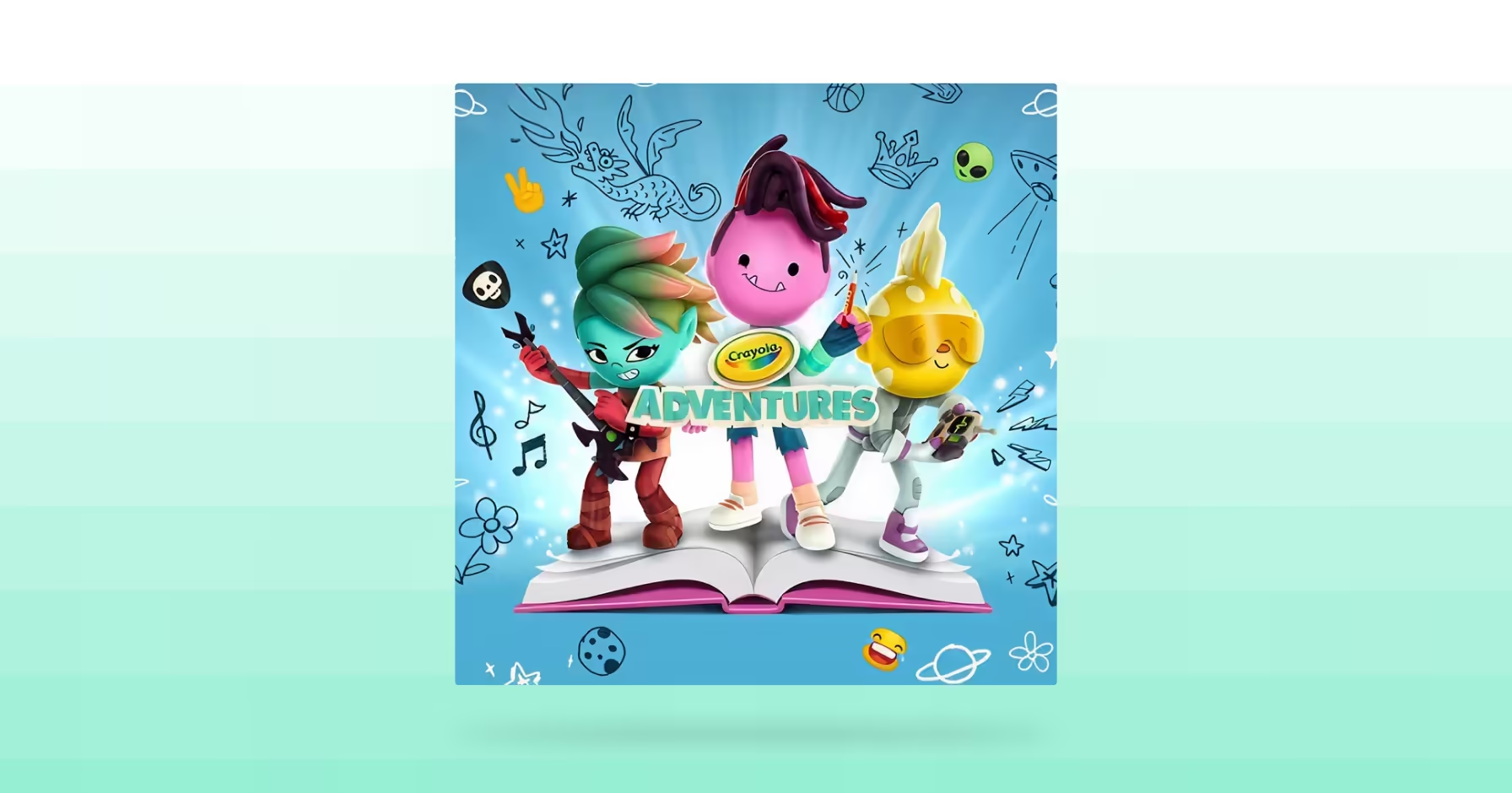
Case Study: In partnership with Red Games, Resemble AI was integrated into Crayola Adventures, a 2024 Apple Design Award–winning game. The game used Resemble real-time, dynamic AI voices to let players create and personalize characters with unique voices during gameplay.

By combining instant synthesis, expressive control, and multilingual support, the integration enhanced storytelling and gave players an interactive, creative experience that extended beyond static, pre-recorded dialogue.

Pricing

  • Free Tier: Explore with 150 free seconds.
  • Pay-As-You-Go: $0.030/minute (~$3/min) with no expiration of credits.
  • Creator Plan: $9.50 first month, $19 thereafter—great for individual creators.
  • Pro Plan: $99/month with higher limits and better model access.
  • Business Plan: $699/month, scaled for teams and automation.
  • Enterprise: Tailored, high-volume, mission-critical deployments. Contact Sales.

2. Cartesia

Cartesia is a developer-focused AI voice platform designed for flexibility, real-time interaction, and fine-grained customization. Unlike static TTS tools, it offers live audio streaming and voice parameter control, making it ideal for teams that need scalable, interactive, and cost-effective voice solutions. 

Its user-friendly APIs and free tier also make it attractive for startups and indie creators experimenting with AI-driven voice.

Key Features:

  • Real-Time Audio Streaming: Generates speech with minimal latency, enabling live experiences like gaming or virtual assistants.
  • Customizable Voice Styles: Fine-tune pitch, tone, and delivery for unique voice identities tailored to projects.
  • Free Plan for Testing: Offers a no-cost entry point for smaller teams to prototype and validate use cases before scaling.

Pricing:

  • Free Tier: Ideal for personal experimentation with limited controls.
  • Pro ($5): Best for early-stage creators needing essential features like voice cloning and commercial usage.
  • Startup ($49): Suits small teams with higher usage and organizational needs.
  • Scale ($299): Designed for extensive usage by larger teams or applications.
  • Enterprise: Customizable, robust offering for high-scale, secure deployments.

3. Speechify

Speechify began as a reading assistant but has evolved into a versatile text-to-speech platform focused on accessibility and convenience. It bridges devices seamlessly, allowing users to consume written content on desktop, mobile, or browser without interruption. 

With its natural voices and multilingual support, Speechify is particularly valuable for students, professionals, and individuals with reading or learning challenges.

Key Features:

  • Cross-Platform Sync: Works on desktop, mobile, and browser with seamless syncing of notes and content.
  • Accessible Plans: Offers both free and premium tiers, making it suitable for casual users and power users alike.
  • Diverse Voice Library: Includes a wide range of natural voices and accents, catering to different preferences and learning styles.

Pricing:

  • Free: Basic TTS, 10 robotic voices, listen at up to 1.5x speed.
  • Premium ($29/month or $138.96/year): 200+ natural voices, 60+ languages, offline downloads, AI summaries, unlimited library.

4. Play.ht

Play.ht is an AI-powered text-to-speech platform that transforms written content into natural, human-like audio. With over 900 voices across 140+ languages and accents, it offers creators, brands, and teams the ability to generate engaging podcasts, audiobooks, video voiceovers, and IVR content. 

Users can customize tone, pitch, speed, and even create multi-voice conversations, while secure storage and team collaboration make it ideal for professional and commercial use.

Key Features:

  • Customizable AI Voices: Adjust pitch, tone, speed, and pauses for natural, brand-aligned speech.
  • Voice Cloning & Multi-Voice Support: Clone your own voice or create conversational audio with multiple characters.
  • Secure & Collaborative: Team access, safe storage, and easy export in MP3/WAV for web, video, or IVR applications.

Pricing:

  • Free: 5,000 words/month, all ultra-realistic voices, try voice cloning, attribution required, non-commercial.
  • Professional ($39/month): 600,000 words/year, premium voices, unlimited downloads, commercial use, unlimited projects.
  • Premium ($99/month): Unlimited generation, ultra-realistic voices, white-labeled players, commercial use.
  • Enterprise (custom pricing): Team access, multiple voice clones, SSO, ISO/SOC2 certifications, dedicated support, SLA.

5. Murf AI

Murf AI is a professional-grade text-to-speech and voiceover solution tailored for businesses, educators, and content teams. It goes beyond basic TTS by offering custom voice cloning and seamless integrations with video platforms, enabling end-to-end production without relying on external voice talent. 

With its studio-like interface, Murf is particularly well-suited for creating polished, multilingual training content and corporate media.

Key Features:

  • Realistic & Custom Voices: High-quality AI voices with the ability to clone real voices for consistent branding.
  • Video Integration: Directly syncs with video creation tools, streamlining voiceover production for e-learning, explainer videos, and presentations.
  • Flexible Plans: Includes a free trial for experimenting before committing to professional plans.

Pricing:

  • Free: 10 projects, 10 minutes; watermark included, no commercial rights.
  • Creator ($19/mo): 100 projects, 24 hours/year; all voices, multi-native voices, unlimited downloads, Canva integration, commercial use.
  • Business ($66/mo): 500 projects, 96 hours/year; everything in Creator plus business license, advanced features, PowerPoint integration, audio-to-text.
  • Enterprise: Custom; unlimited projects, custom editors, collaboration, AI translation, SSO, security assessment, custom voice clones, dedicated support.

6. Natural Reader

Natural Reader is a straightforward text-to-speech app designed for accessibility and ease of use. Unlike more advanced platforms, it focuses on quick conversions rather than customization or enterprise-level features. 

Its clean interface and support for multiple file types make it a reliable everyday tool for students, professionals, and individuals with reading difficulties.

Key Features:

  • Instant Conversions: Quickly turns text from PDFs, Word documents, and web pages into natural-sounding speech.
  • Cross-Platform Access: Available as free desktop and mobile apps for on-the-go use.
  • Accessibility Focus: Ideal for users with visual impairments or learning differences who need fast, clear audio.

Pricing:

  • Plus ($20.90/mo | $119/yr): Personal web/mobile/Chrome apps; 500K chars/day AI Plus; MP3 conversion; OCR; voice cloning; personal use.
  • Pro ($25.90/mo | $159/yr): Everything in Plus; HD Pro voices; 500K chars/day; extra reading styles; MP3 conversion.
  • Premium EDU ($199–$599/yr): Web/mobile apps; unlimited non-AI Premium listening; MP3 conversion; OCR; pronunciation editor; user management.
  • Plus EDU ($299–$1,500/yr): Web/mobile apps; 500K chars/day AI Plus; MP3 conversion; OCR; pronunciation editor; AI smart filter.
  • Site Licenses: Custom pricing for 2,000+ enrollments; contact sales.

7. Descript

Descript goes beyond standard text-to-speech, offering a complete suite for audio and video production. Its unique Overdub feature allows creators to clone their own voice, making it easy to correct mistakes or generate new content without re-recording. 

Combined with robust editing tools, Descript is especially powerful for podcasters, video producers, and teams who need streamlined collaboration.

Key Features:

  • Overdub Voice Cloning: Clone your own voice to generate natural-sounding edits directly from text.
  • Multi-Track Editing: Edit podcasts and videos with advanced, timeline-based audio/video controls.
  • Team Collaboration: Real-time collaboration features make it easy for production teams to work together.

Pricing:

  • Free ($0/mo): 1 person; 1 hr transcription; 5 min AI speech; basic AI Actions; watermark included.
  • Hobbyist ($16/mo): 1 person; 10 hr transcription; 30 min AI speech; 20 Basic AI Actions; 5 min avatars; 1080p export; watermark-free.
  • Creator ($24/mo): Up to 3 people; 30 hr transcription; 2 hr AI speech; 30 min dubbing; unlimited Basic & Advanced AI Actions; 10 min avatars; 4K export.
  • Business ($50/mo): Team plan; 40 hr transcription; 5 hr AI speech; 2 hr dubbing; 30 min avatars; full Professional AI Actions; Brand Studio; priority support.
  • Enterprise (Custom): Unlimited transcription & AI speech; SSO/SCIM; dedicated account rep; onboarding & training; priority SLA; custom invoicing & security review.

8. Lovo AI

Lovo AI is designed with creative industries in mind, offering expressive and character-driven voices that bring stories, ads, and games to life. Its strength lies in delivering voices with emotional range, something many TTS tools struggle to achieve. 

With voice cloning and flexible licensing, Lovo AI has become a go-to solution for indie creators and entertainment-focused projects.

Key Features:

  • Expressive Voice Library: Offers hundreds of AI voices trained for different tones, emotions, and scenarios, giving creators nuanced control.
  • AI Voice Cloning: Allows users to replicate unique voices while still applying Lovo’s expressive layers, enabling consistency across projects.
  • Flexible Licensing & Free Plan: Provides a no-cost entry for indie projects while also supporting commercial rights for ads, audiobooks, and larger campaigns.

Pricing:

  • Basic ($24/mo | $288/yr): 1 user; 2 hr voice generation; 5 voice clones; Pro V2 voices; 1080p export; unlimited downloads; commercial rights; auto subtitle generator.
  • Pro ($24/mo | $288/yr monthly, first year 50% off): 1 user; 5 hr voice generation; unlimited voice cloning; multilingual voices; voice enhancer; AI creation tools; team collaboration; priority queue.
  • Pro+ ($75/mo | $900/yr): 1 user; 20 hr voice generation; 400 GB storage; all Pro features; priority support; team collaboration.
  • Enterprise (Custom): Tailored solutions; custom voice generation; dedicated account executive; enterprise-grade security; SLA; private onboarding & training; API support.

9. ElevenLabs

ElevenLabs is a cutting-edge AI voice platform recognized for its hyper-realistic, emotionally expressive voices and flexible voice cloning capabilities. Its tools are used across publishing, corporate training, audiobooks, dubbing, and accessibility, making it a versatile solution for both individual creators and enterprises.

Key Features:

  • Expressive Narration: Voices capture tone, nuance, and emotion, with support for 70+ languages and contextual cues like laughter or whispers.
  • Voice Cloning Options: Instant cloning (few minutes of audio) and professional cloning (~30 minutes) for maximum vocal fidelity.
  • Creator & Enterprise Tools: Ecosystem includes AI Dubbing Studio, Reader App, Projects for audiobooks, and VoiceLab, all offered under a premium subscription model.

Pricing:

  • Free: $0/month, 10,000 characters, non-commercial use.
  • Starter: $5/month, 30,000 characters, commercial use, instant voice cloning.
  • Pro: $99/month, 500,000 characters, higher audio quality, priority support.
  • Scale: $330/month, 2 million characters, multi-seat access.
  • Business: $1,320/month, 11 million characters, multiple voice clones, enterprise features.

10. Respeecher

Respeecher is a leading AI voice platform renowned for its high-fidelity voice cloning and speech-to-speech (STS) capabilities. Trusted by Hollywood studios, game developers, and content creators, Respeecher enables the creation of authentic, emotionally nuanced voices across multiple languages and accents.

Key Features:

  • High-Quality Voice Cloning: Delivers realistic voice replication for various applications, including film, gaming, and music production.
  • Multilingual Support: Offers voice generation in over 40 languages and accents, facilitating global content creation.
  • Speech-to-Speech Conversion: Enables real-time voice transformation, preserving emotional tone and context.

Pricing:

  • Starter Pack ($5): 5 STS minutes or 20,000 TTS characters.
  • Best for Podcasts ($15–$16): 16 STS minutes or 60,000 TTS characters.
  • Most Popular ($27–$30): 30 STS minutes or 120,000 TTS characters.
  • Save 30% ($70): 100 STS minutes or 400,000 TTS characters.
  • Save 50% ($250): 500 STS minutes or 2,000,000 TTS characters.

After looking at the different Speechelo alternatives, the next step is figuring out which one truly fits your needs. Since each tool comes with its own strengths and trade-offs, it helps to have clear criteria in mind before making a choice.

Also Read: Top 10 AI Dubbing Platforms for Multi-Language Video Creation

How to Choose the Best Speechelo Alternative?

How to Choose the Best Speechelo Alternative?

Selecting the right alternative to Speechelo depends on your specific needs, including the type of content you create, the scale of usage, and the level of voice customization required. The ideal platform should align with your workflow, support the languages and accents your audience requires, and provide flexibility in pricing and licensing. 

Evaluating these factors ensures you choose a solution that delivers high-quality, natural-sounding voices while meeting both your creative and operational goals.

Here’s a checklist to guide your decision:

  • Voice Quality: Look for platforms that offer natural, expressive, and clear voices suitable for your content.
  • Customization Options: Choose tools that let you adjust tone, pitch, speed, and emotional nuances.
  • Language & Accent Support: Ensure the platform supports multiple languages and accents if you’re targeting a global audience.
  • Integration Capabilities: Check for API support or easy integration into apps, websites, or workflow tools.
  • Pricing & Usage Limits: Consider your budget and the platform’s subscription model or pay-as-you-go options.

Considering these factors, Resemble AI stands out as a strong contender in 2025 for high-quality, flexible, and scalable TTS solutions.

Conclusion

AI voice technology has advanced far beyond robotic-sounding tools like Speechelo. Modern alternatives such as Murf, Cartesia, ElevenLabs, and Play.ht deliver more natural voices, real-time features, and stronger customization.

Resemble AI stands out by combining lifelike voice synthesis with advanced features like watermarking, detection, and multilingual cloning, making it one of the most future-ready platforms available.

If you are ready to move beyond Speechelo and see what next-generation AI voices can do, schedule a demo with Resemble AI. It is built for creators, teams, and businesses that want natural voices, flexible tools, and the confidence of secure, authentic audio.

FAQs

1. Can AI voice tools like Resemble replace professional voice actors completely?
Not entirely. While these tools can generate natural-sounding voices quickly and at scale, professional actors still bring emotional nuance and creative depth that AI hasn’t fully mastered. Many studios use AI for drafts or background roles and save human talent for lead parts.

2. How do free plans from alternatives compare to Speechelo’s pricing model?
Most alternatives (like Resemble Cartesia, Play.ht, or Speechify) offer free trials or tiers for limited use, making them more flexible for testing. Speechelo requires an upfront purchase, which can be less convenient for casual or first-time users.

3. Are these alternatives safe to use for sensitive business communications?
Yes, especially platforms like Resemble AI, which add watermarking and fraud detection. This makes them suitable for industries like finance or healthcare, where authenticity is critical.

4. Do these tools work well with non-English languages and accents?
Many alternatives outperform Speechelo here. For instance, Resemble AI and Play.ht support 30–100+ languages with regional accents, giving users global reach.

5. How do developers benefit from advanced alternatives like Cartesia or Descript?
Developer-friendly APIs, real-time streaming, and integrations let teams build custom voice features directly into apps, games, or enterprise systems, something Speechelo doesn’t support natively.