TTS clones bypass biometric checks
Open-source models generate studio-quality voice at near-zero cost. Standard biometric tools weren't trained on this generation of TTS.
Face-swap defeats liveness detection
Real-time face-swap runs in-browser. Liveness checks relying on movement or blink are no longer a sufficient signal.
AI-generated IDs pass OCR checks
Inpainting produces ID photos with correct fonts, lighting, and metadata. OCR checks evaluate the text, not whether the image is synthetic.















KYC was built on one assumption: matching face, voice, and document means a real person. Generative models now produce all three as a coordinated matched set for zero marginal cost. Here's how Resemble detects them across every vertical.



Synthetic voice in verification
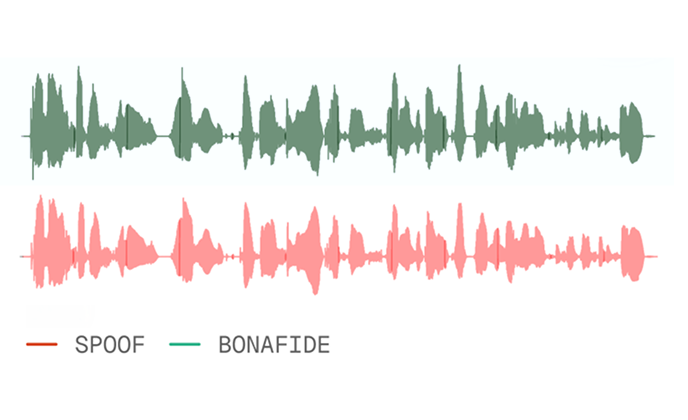
TTS audio submitted for voice biometric verification — indistinguishable from authentic speech to standard tools.
Audio multimodal analysis
Scores for TTS generation artifacts, voice-clone signatures, and absence of natural speech disfluencies.
Confidence score + audit log
Per-sample verdict with confidence score, flagged for review or auto-blocked above threshold.

Real-time face-swap in video verification
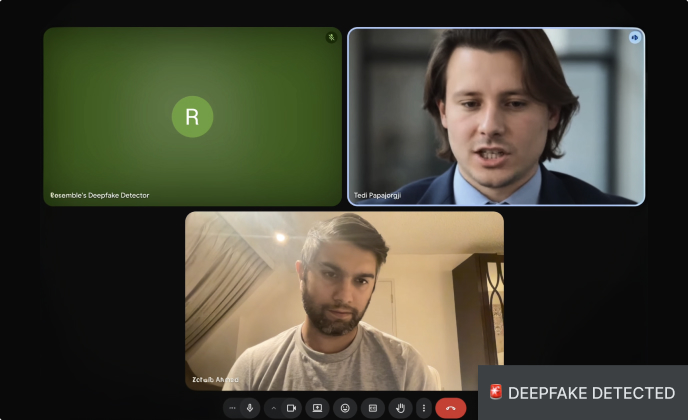
Live face-swap via webcam defeats video liveness checks — bypasses motion, blink, and depth-based signals.
Video + image analysis
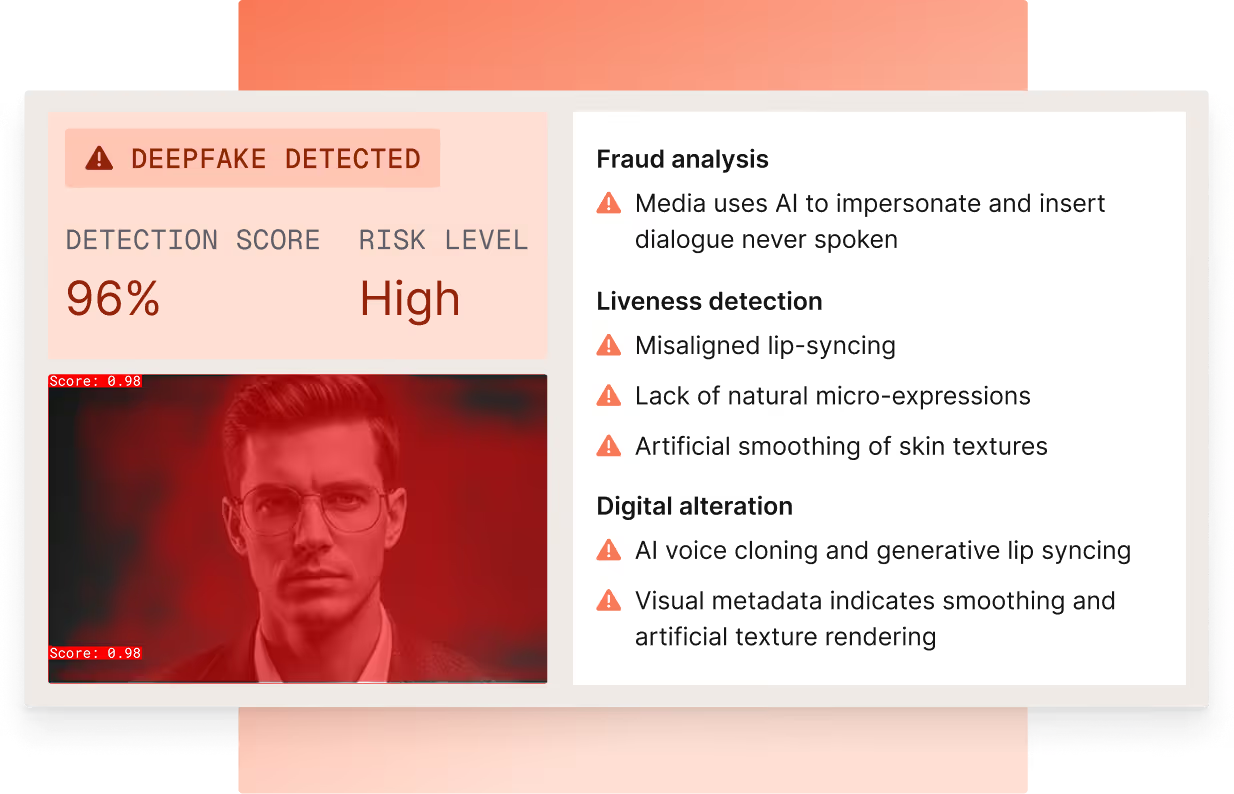
Frame-by-frame analysis for deepfake artifacts, including temporal consistency checks across the video sequence.
Per-frame confidence + temporal flag
Confidence score with temporal consistency signal. Anomalous sequences flagged with frame-level evidence.
AI-generated identity documents
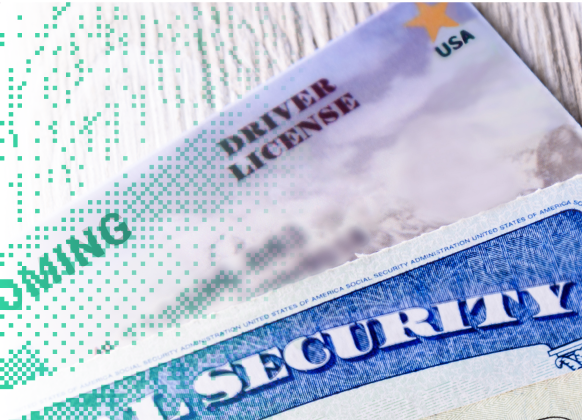
Synthetic or inpainted IDs with correct fonts, lighting, and metadata that pass OCR and resolution checks.
Image synthesis analysis
Checks for synthesis artifacts in the image itself — not just metadata — catching patterns OCR cannot see.
Confidence score + tamper evidence
Per-document verdict with tamper evidence, structured for compliance and audit review workflows.