
AI-generated content is no longer easy to distinguish from real media, and that’s creating real risks for your business. From deepfake scams to unauthorized content manipulation across audio, video, and images, synthetic media is increasingly being used to manipulate communication, impersonate individuals, and bypass traditional verification systems. In fact, deepfake fraud attempts have surged over 2,000% in recent years, making content authenticity a growing concern for enterprises and developers alike.
If you’re building or using AI-driven media technologies, this puts your brand, users, and systems at risk. You need a way to prove that your content is genuine, trace where it’s being used, and prevent misuse, without compromising quality or performance across formats.
AI watermarking addresses this challenge by embedding invisible, verifiable markers directly into your multimodal content. It allows you to maintain control over your media assets, support compliance, and strengthen trust across your platforms.
In this blog, we’ll break down two prominent players in this space, Resemble AI and Steg.ai, to determine which platform offers the best watermarking capabilities for different business needs.
Key Highlights:
- AI watermarking helps protect digital content by embedding invisible identifiers that ensure authenticity, traceability, and protection against misuse across audio, video and image.
- Choosing the right platform depends on factors like security, ethical AI practices, integration capabilities, output quality, and the ability to scale across enterprise workflows.
- Resemble AI focuses on multimodal AI workflows by combining AI content generation, watermarking, and deepfake detection into a single, integrated system.
- Steg.ai offers broader multimedia watermarking with strong forensic tracing, making it suitable for protecting images, videos, documents, and distributed media assets.
- The right choice ultimately depends on your use case, whether you need built-in watermarking for AI-generated multimodal content (audio, video, and image) or comprehensive protection and tracking across diverse digital media.
Resemble AI vs Steg.ai: A Closer Look at Leading AI Watermarking Tools
AI watermarking is no longer just about tagging content; it’s about how deeply that protection is built into the creation process and how reliably it holds up in the real world.
Resemble AI and Steg.ai both address content authenticity, but they approach it from very different angles. One embeds trust at the point of multimodal content generation (audio, video, and image), while the other focuses on broader forensic protection across digital media.
Before comparing features, it’s important to understand this difference, because it shapes everything from performance to real-world use cases.
- Resemble AI
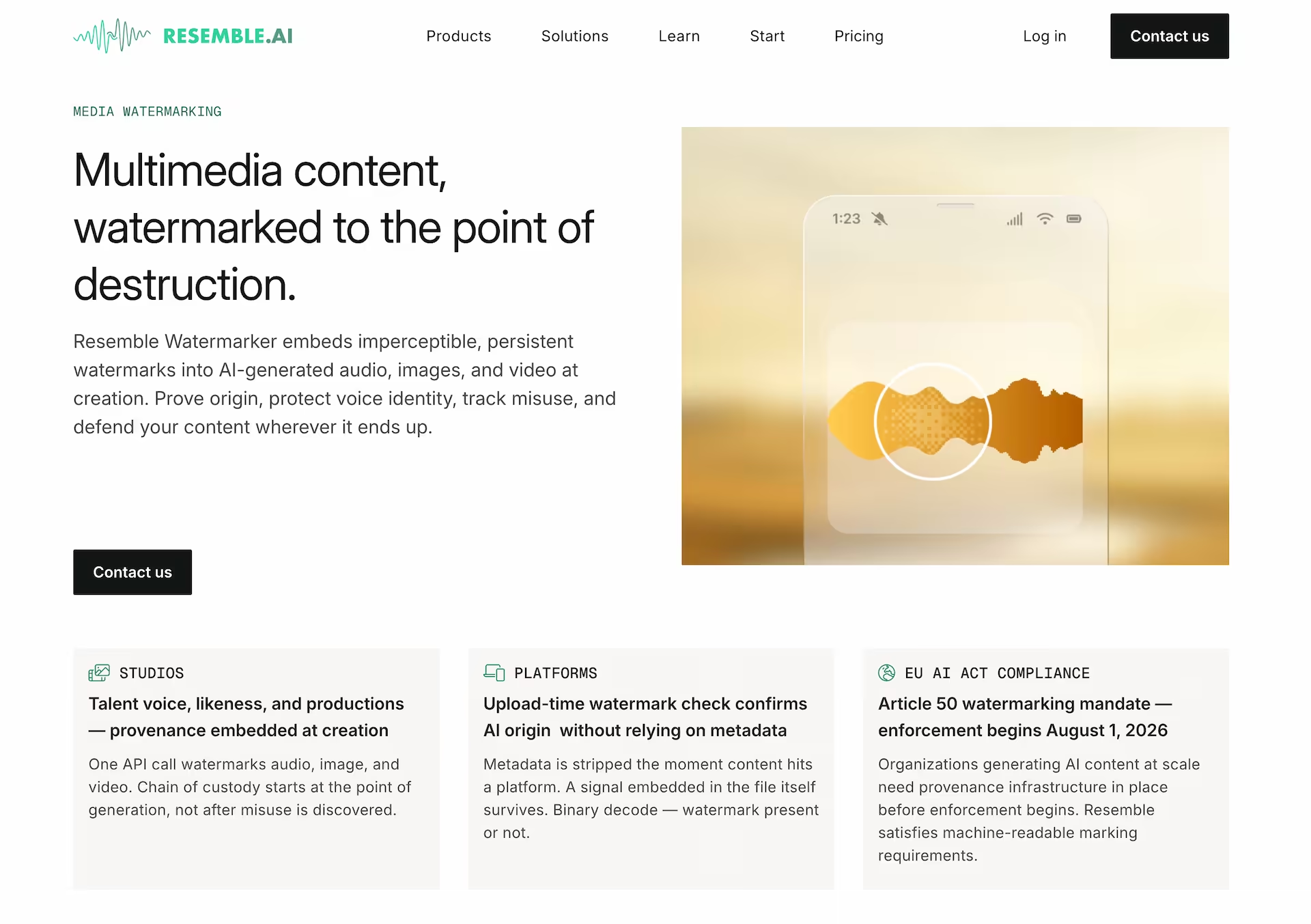
Resemble AI is an advanced AI platform that builds watermarking into the generation process, helping teams trace synthetic audio, video, and image content back to its source while maintaining high output quality.
Its watermarking and detection tools support authenticity checks, deepfake defense, and responsible use across multimodal workflows.
Key Features:
- Neural audio watermarking (PerTh): Embeds inaudible, imperceptible signals directly into generated audio, ensuring traceability without affecting quality.
- Generation-time embedding: Watermarks are applied during content creation, not after, making them more resistant to tampering or removal across formats.
- Persistent verification signals: Watermarks remain intact even after compression, reformatting, or redistribution across platforms.
- C2PA integration + Inspector SDK: Combines watermarking with industry standards for content authenticity and automated verification workflows.
- Built-in detection capabilities: Verify whether content contains embedded watermark signals through dedicated detection APIs across audio, video, and image formats.
- Advanced AI generation services: Supports multimodal content generation, including text-to-speech, and real-time transformations, enabling teams to create high-quality, multilingual outputs with watermarking embedded by default.
Ideal For:
- Enterprises and developers building secure, scalable multimodal AI solutions with traceability built into the generation process.
- Media, gaming, and entertainment teams that need authentic audio, video, and image outputs with clear verification signals.
- Cybersecurity and compliance teams focused on multimodal content validation and deepfake protection.
- Steg.ai
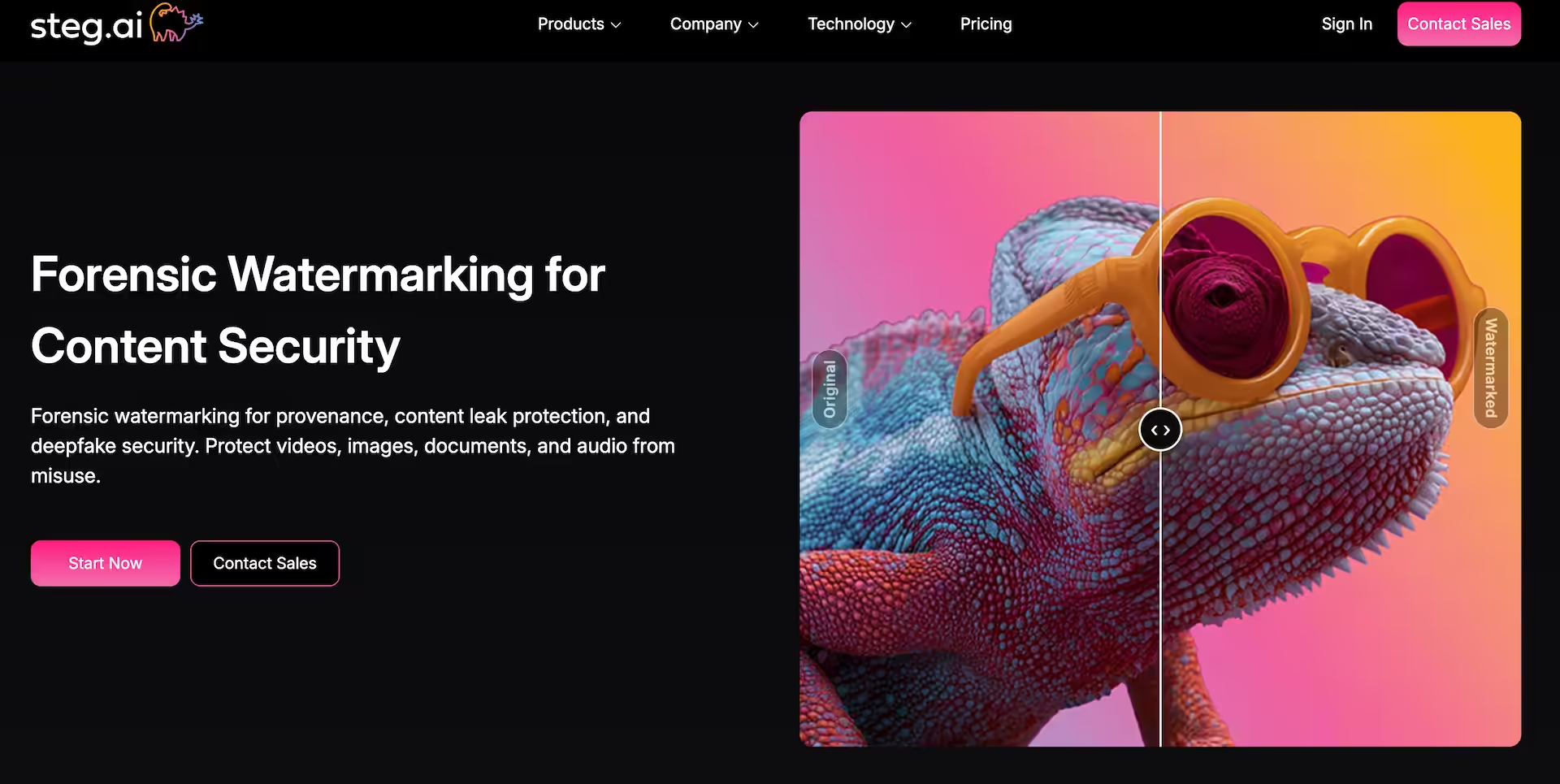
Steg.ai is a deep learning‑powered digital watermarking platform that specializes in protecting a wide range of digital media, from images and videos to documents and audio, using visible and invisible forensic watermarks.
The platform focuses heavily on tamper‑resistant watermark embedding for leakage prevention, content provenance, and deepfake protection.
Ideal For:
- Enterprises and creative teams that require strong watermarking capabilities for media assets beyond just audio.
- Organizations that prioritize forensic tracing of content leaks, copyright protection, and tamper detection.
- Security‑oriented workflows where attribution, traceability, and ownership of digital assets are critical.
Also Read: Audio Watermarking Techniques and Applications Explained
Resemble AI vs Steg.ai: Comparing Core Features for Content Security
Resemble AI and Steg.ai both aim to solve the same growing problem: how to prove what’s real in a world where AI-generated media can no longer be trusted. But they approach it from opposite ends of the pipeline.
One focuses on real-time, generation-stage trust in AI-generated multimodal content (audio, video, and images), while the other focuses on tracking and securing content after it enters circulation.
The differences show up in subtle but important ways, from how watermarking is applied to how content is traced, verified, and protected in real-world environments. The table below breaks down these contrasts so you can quickly see where each platform truly stands.
This comparison shows that Resemble AI excels where multimodal AI content generation with integrated watermarking and detection is the priority, while Steg.ai is better suited for broad media watermarking and forensic content protection workflows.
Also Read: Audio Watermarking News and Trends: What's Next?
Pricing and Licensing Models: Resemble AI vs Steg.ai
At first glance, pricing for AI watermarking tools may look like a simple comparison of monthly plans or per-credit costs. But the real difference between Resemble AI and Steg.ai lies in how each platform thinks about scale, ownership, and long-term control over your content pipeline.
To better understand the practical impact, let's break down how each pricing and licensing model works in real-world usage.
Resemble AI’s flexible credit model allows teams to pay only for what they use, which can be more cost-effective for multimodal workflows that require generation, watermarking, and detection. Steg.ai’s basic subscription caters to media protection but moves to enterprise pricing for higher volumes and broader capabilities.
Use Case Comparison: Which Platform Fits Your Needs?
Resemble AI and Steg.ai approach watermarking from different stages of the content lifecycle; one builds trust directly into AI-generated multimodal output, while the other focuses on securing and tracing content after it is created and shared.
This difference matters depending on whether your priority is creating verifiable audio, video, and image content in real time or protecting and tracking digital assets across distribution channels.
Here’s where each platform delivers the most value in real-world use cases.
- AI-Generated Content & Multimodal Authenticity: Resemble AI embeds watermarking during generation across audio, video, and images for built-in authenticity. Steg.ai focuses on securing and tracking already created media.
- Gaming & Entertainment: Resemble AI enables real-time multimodal content creation with watermarking for trust. Steg.ai protects finished assets like visuals and promotional media.
- Digital Asset Protection: Steg.ai specializes in forensic watermarking for images, videos, and documents for tracking and ownership. Resemble AI focuses more on multimodal content authenticity at the generation stage.
- Deepfake Detection & Verification: Resemble AI combines watermarking with deepfake detection across media types. Steg.ai focuses on forensic traceability and origin verification.
- Enterprise Security & Compliance: Resemble AI supports governance through embedded watermarking in multimodal generative workflows. Steg.ai is stronger for audit trails and copyright enforcement at scale.
- Content Distribution & Leak Tracking: Steg.ai enables strong leak tracing via forensic watermarks. Resemble AI focuses on authenticity at the creation stage.
- Marketing & Brand Protection: Resemble AI ensures trust in AI-generated multimodal content. Steg.ai protects distributed brand assets from misuse and alteration.
Conclusion
Watermarking has emerged as a key technology for building trust, authenticity, and responsible AI usage in 2026. As generative systems produce more content and misinformation risks rise, embedding traceable identifiers into media has shifted from optional to essential for organizations that prioritize content integrity.
When selecting a platform, consider factors such as the intended use case, scale of content generation, budget, and the level of security needed. For organizations seeking a versatile solution that combines realistic multimodal content creation with ethical AI safeguards, Resemble AI offers a comprehensive and scalable option.
Schedule a demo with Resemble AI to explore enterprise‑grade watermarks, deepfake detection, and secure multimodal media governance tailored to your needs.
FAQs
- Is Resemble AI’s watermark embedded directly inside its own content generation pipeline?
Yes, Resemble AI embeds watermarking directly into its content generation pipeline for audio, video and images. This ensures every synthesized audio output carries an imperceptible, persistent identifier, enabling traceability and authenticity verification without requiring additional post-processing or external tools.
- Does Resemble AI integrate with standards like C2PA for content provenance?
Resemble AI is aligned with emerging provenance standards such as C2PA, but full native integration may vary. It focuses on watermarking and verification, with potential compatibility or roadmap alignment toward broader content authenticity frameworks like C2PA.
- Does Steg.AI support integration with DAM or creative workflow platforms?
Yes, Steg.AI supports integrations with Digital Asset Management (DAM) systems and creative workflows. Its APIs enable seamless embedding and detection of watermarks within content pipelines, helping teams maintain asset protection across editing, storage, and distribution stages.
- Are there API or SDK options for integrating Resemble AI watermarking into custom apps?
Yes, Resemble AI offers APIs and SDKs that allow developers to integrate watermarking into custom applications. These tools support automated multimodal content generation, embedding, and detection across audio, video, and image workflows, making it easier to build scalable, secure, and verifiable AI-driven media solutions.
- Can Steg.AI detect third-party watermarks or only its own?
Primarily, Steg.AI is optimized to detect its own proprietary watermarks. While it may support some interoperability, robust detection and reliability are typically strongest within its own ecosystem rather than across third-party watermarking solutions.
- Why is AI Watermarking critical for protecting AI-generated voice content?
AI watermarking embeds inaudible or imperceptible markers into generated multimodal content to verify authenticity and trace origin. It helps detect misuse, prevent deepfake fraud, and maintain trust in digital communications, especially as synthetic media technologies become more realistic and widely accessible.