How Does Intonation Impact Communication? A Simple Guide for 2025

Say “I’m fine” in three different tones, calmly, sharply, and sarcastically. The words don’t change, but the meaning does. That’s intonation, the rise and fall of your voice that adds emotion, emphasis, and clarity to speech.

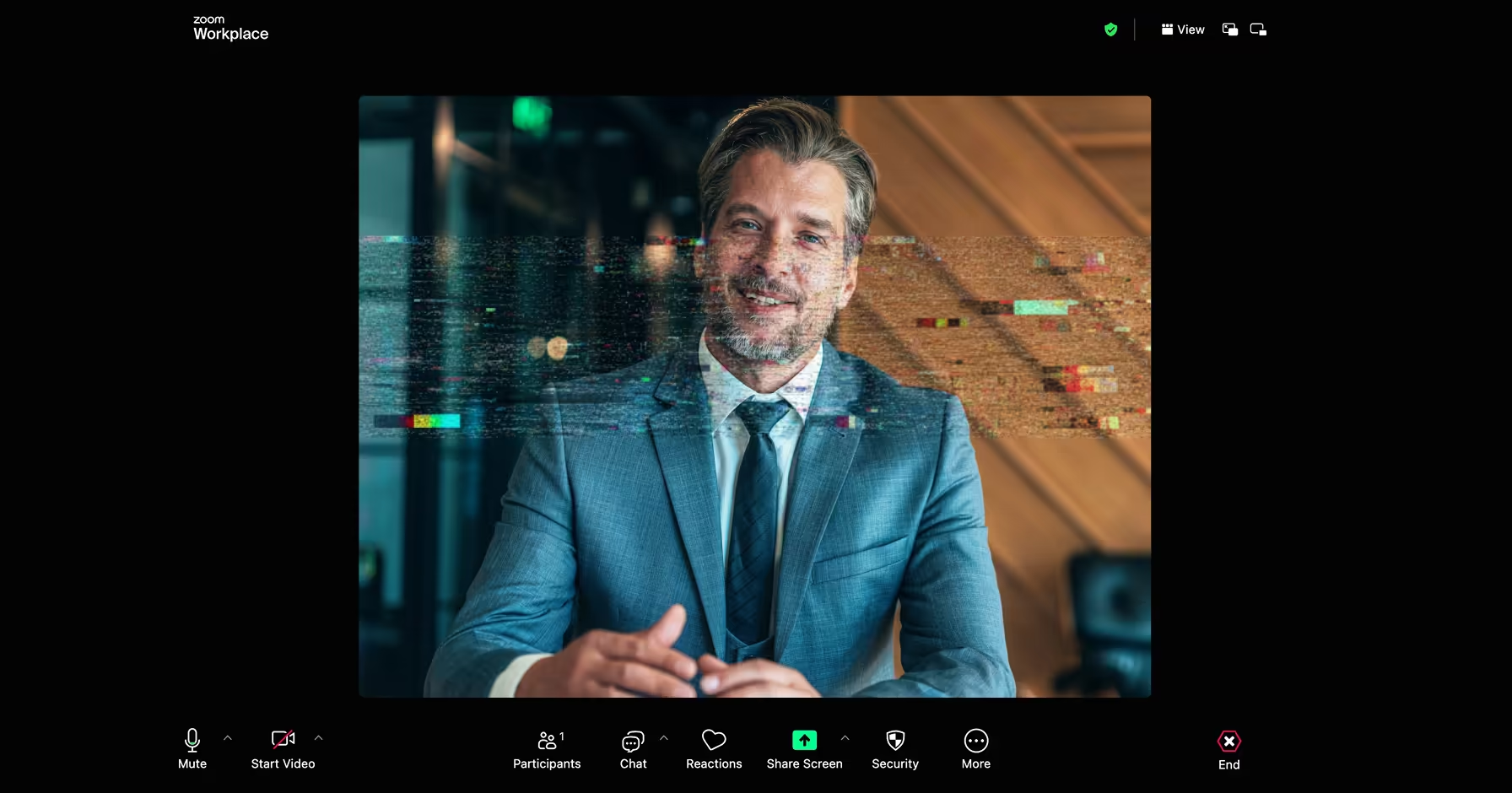
With conversations increasingly happening through voice assistants, AI agents, and video calls, understanding how intonation shapes communication is increasingly relevant today. Whether it’s a teacher inspiring students online, a customer support bot responding to frustration, or a manager leading a hybrid team meeting, tone can define connection, trust, and intent.

This blog breaks down how intonation impacts communication, why it matters in human and AI speech alike, and what it means for the future of digital interaction.

At a Glance

  • Intonation changes meaning and emotion in speech; the same words can convey different messages depending on tone and pitch.
  • Businesses benefit from intonation in customer service, marketing, and internal communication to boost trust and engagement.
  • Five key intonation patterns, including flat, rising, falling, dipping, and peaking, shape clarity, emotion, and listener perception.
  • AI voice systems can use prosody controls and emotion modulation to make speech sound human, empathetic, and context-aware.
  • Tools like Resemble AI enable expressive, multilingual, and secure voice synthesis, transforming AI communication experiences.

What is the Relevance of Intonation for Businesses in 2025?

What is the Relevance of Intonation for Businesses in 2025?

Intonation has become a key differentiator in how businesses communicate, both with customers and within teams. With rising remote collaboration, AI-powered customer service, and global operations, the tone of voice, whether human or synthetic, can make or break trust, engagement, and clarity.

Here are some key reasons why intonation matters for businesses:

1. Enhancing customer experience: A warm, empathetic tone can turn a transactional call into a meaningful customer interaction. 

Brands are increasingly training AI voice systems and support agents to use tone modulation that conveys reassurance, attentiveness, and sincerity. For instance, an apologetic tone after a service issue feels more authentic than a neutral response.

2. Building brand personality: Intonation now plays a central role in shaping brand identity across voice-based touchpoints like virtual assistants, ads, and IVR systems. 

A retail brand may use an upbeat, energetic tone to express friendliness, while a financial institution might opt for calm authority to build confidence and trust.

3. Improving internal communication: As hybrid work continues, managers rely heavily on virtual meetings and recorded messages. The right tone helps avoid misunderstandings, boosts morale, and strengthens leadership presence. 

A manager emphasizing appreciation or urgency through tone ensures their message lands as intended, even across screens.

4. Driving engagement in marketing and sales: Consumers increasingly connect with voices that sound “human.” Marketing campaigns using emotionally rich voiceovers see higher engagement and recall. 

AI voice tools like Resemble AI help brands fine-tune tone for storytelling, making ads more personal and relatable at scale.

5. Supporting AI-human collaboration: Businesses integrating conversational AI find that intonation humanizes automation. 

From chatbots to virtual receptionists, intonation helps machines sound context-aware, softening reminders, expressing gratitude, or showing enthusiasm when announcing offers.

In short, intonation is no longer just about sounding pleasant, it’s about sounding authentic. Companies that get it right are able to connect better with its partners and customers.

Also Read: Top AI Voice Cloning Tools

The 5 Essential Intonation Patterns in Spoken Communication

The 5 Essential Intonation Patterns in Spoken Communication

Intonation shapes how messages are perceived. It adds rhythm, emotion, and nuance to language. It guides listeners on how to interpret meaning, whether a statement sounds confident, curious, or uncertain. Beyond words, it’s what makes speech sound human, expressive, and emotionally intelligent, turning plain sentences into genuine communication.

Here are the five key types of intonation that influence meaning, tone, and listener response:

1. Flat Intonation (Monotone Speech)

Flat intonation refers to speech with little or no pitch variation. It can sound robotic, detached, or emotionally neutral. While often unintentional, it’s sometimes used in professional settings to sound serious or factual.

Use case: Effective for announcements or reading data, but overuse can make communication dull or disengaging.

Example: “The report will be submitted tomorrow.” (spoken evenly throughout)

2. Rising Intonation

Rising intonation occurs when the pitch increases toward the end of a sentence. It’s commonly used in questions, expressions of surprise, or to signal uncertainty. In conversational English, it can also indicate friendliness or openness to response.

Use case: Used in yes/no questions and casual conversations to keep dialogue flowing.

Example: “Are you joining the meeting today?” (pitch rises at the end)

3. Falling Intonation

In falling intonation, the pitch begins high and drops at the end. This is the most common pattern in English, signaling completion, certainty, or authority. It gives statements and commands a confident, final tone.

Use case: Ideal for declarative sentences, factual statements, or when giving instructions.

Example: “The shipment arrived this morning.” (pitch falls toward the end)

4. Dipping Intonation (Fall–Rise)

The voice falls in the middle of the sentence and rises again toward the end. This pattern often conveys uncertainty, hesitation, or politeness. It’s common when the speaker wants to leave room for response or soften disagreement.

Use case: Used in diplomatic speech, negotiations, or when implying “there’s more to say.”

Example: “I could help… if you really need me?” (falling, then slightly rising at the end)

5. Peaking Intonation (Rise–Fall)

Peaking intonation starts low, rises mid-sentence, and falls again by the end. It’s expressive and adds emphasis or contrast, often used in emotionally charged or persuasive speech.

Use case: Ideal for storytelling, public speaking, or emphasizing key points.

Example: “That presentation was incredible!(tone rises on ‘incredible’ and falls at the end)

Mastering these five patterns allows speakers, and even AI voice systems, to convey intent, emotion, and credibility more effectively. Understanding intonation is a competitive advantage in leadership, branding, and customer engagement.

Also Read: AI Voice Generators for YouTube Videos

Practical Steps to Add Natural Intonation to Your Speech AI

Practical Steps to Add Natural Intonation to Your Speech AI

For businesses deploying AI voice assistants or customer interaction systems, intonation is what makes speech sound authentic, empathetic, and trustworthy. Proper intonation helps AI convey intent, detect emotion, and respond appropriately to human cues. 

Whether it’s a banking bot delivering payment reminders or a virtual sales rep handling inquiries, tone modulation can make the difference between sounding robotic and sounding human.

Here are some steps to apply intonation into the AI systems:

Step 1: Define the Goal and Design the Voice Experience

Start by deciding how your voice assistant should sound in different situations, like calm during errors, warm during support, or confident during payments.

Create a simple prosody style guide that defines tone, pitch range, and speaking speed for each intent (for example, “refund = soothing,” “confirmation = firm”). Link these styles to business goals like higher customer satisfaction or faster task completion.

Platforms like Resemble AI make this easy through its custom voice creation and emotional modulation tools, allowing teams to set consistent tone parameters across automated interactions.

Step 2: Collect and Label Real Conversations

Gather a mix of real and scripted audio samples that reflect how your customers actually speak, including different accents, ages, and emotions.

Add annotations to highlight tone changes, pauses, emphasis, and emotions so the AI can learn when and how human voices vary naturally.

This data helps refine synthesis accuracy. When paired with Resemble AI’s voice cloning and multilingual synthesis, businesses can ensure voices sound human, inclusive, and adaptable to regional audiences.

Step 3: Choose and Train the Right Speech Model

Select a text-to-speech (TTS) system that supports expressive control, where developers can adjust pitch, speed, or tone. 

Train or fine-tune it using both sound quality and emotional accuracy objectives so the system doesn’t just sound clear but also feels natural. 

For smaller datasets, use transfer learning (teaching the model new styles based on existing ones) instead of starting from scratch.

Step 4: Add Real-Time Expressiveness Controls

Give product teams access to runtime controls for pitch, emotion, and emphasis so they can fine-tune voice responses by intent. This ensures your AI doesn’t sound robotic, but adjusts tone dynamically, just like a skilled human agent.

During deployment, integrate APIs that let systems adjust tone dynamically; for example, lowering pitch for empathy or increasing energy for promotions.

With Resemble AI’s API and SSML-style controls, developers can specify emotional state, pitch offset, or speaking rate per intent, ensuring each response feels natural and context-aware.

Step 5: Test, Monitor, and Keep Improving

Measure both technical metrics (like speech accuracy and timing) and human feedback (like perceived empathy or clarity). Run A/B tests across different user groups to check how tone impacts satisfaction.

Continuously monitor performance, retrain with new voice data, and review regularly for bias, inclusivity, and compliance, especially when using emotional tones or gendered voices.

For example, Resemble AI’s analytics and version control allow ongoing voice fine-tuning, ensuring consistency, brand alignment, and regulatory compliance.

By following these five steps, businesses can transform standard voice systems into emotionally intelligent, trustworthy communicators. Proper control over intonation and prosody strengthens customer trust, improves accessibility, and directly supports business outcomes.

Also Read: How to Resell AI Voice Agents for Maximum Profit

Common Pitfalls and Practical Fixes in AI Intonation Design

Creating lifelike intonation in AI speech isn’t just a technical challenge, it’s a design, cultural, and ethical one. Businesses must ensure expressiveness without distortion, empathy without stereotype, and realism without latency trade-offs.

Here are some common challenges of implementing intonation and their corresponding solutions:

ChallengeExplanationSolution
1. Maintaining natural prosody across contextsMany voice systems sound either too flat or overly animated because they don’t adjust tone or rhythm based on user intent or emotional context.Define prosody rules linked to interaction goals. Map intents to tone profiles (e.g., calm for error messages, upbeat for confirmations) and test across real conversational scenarios.
2. Balancing emotion and realismOver-synthesized voices can feel artificial or exaggerated, breaking user trust. Flat delivery, on the other hand, lacks engagement and warmth.Use fine-grained emotion control during model tuning. Validate expressiveness through perceptual tests with diverse listeners to ensure tone feels authentic and balanced.
3. Handling multilingual and cultural variationIntonation and rhythm patterns differ by language and culture—what sounds confident in one may seem abrupt or rude in another.Incorporate diverse training datasets with regional accents and cultural tone markers. Localize pitch and emphasis patterns to suit target audiences.
4. Managing latency in real-time synthesisRich prosody models require more computation, which can slow response times in real-time systems like assistants or IVRs.Optimize model architectures for low-latency inference or edge deployment. Use simplified prosody templates or caching for high-frequency utterances.
5. Addressing bias, ethics, and privacyEmotional tone generation can reinforce stereotypes or misuse recorded voices without consent.Conduct bias audits and emotional tone reviews. Use anonymized datasets and transparent data governance to ensure fairness and compliance.

Businesses investing in prosody-aware systems and responsible data design will lead the next generation of emotionally intelligent communication.

Also Read: 10 Best Professional Text-to-Speech Tools

How Resemble AI Powers Intonation-Rich Voice Interactions

Resemble AI equips businesses with tools to design voices that sound expressive, emotionally adaptive, and tuned for natural communication. Through its advanced synthesis engine, neural voice cloning, and real-time processing, organizations can integrate authentic intonation patterns that reflect tone, emotion, and context in every interaction.

Here’s how Resemble AI enhances intonation design in speech systems:

  • Neural Voice Cloning with Watermarking: Generates expressive, lifelike voices while embedding inaudible watermarking (PerTH) to protect identity and authenticity. This allows businesses to deploy realistic voices safely, ensuring trust and compliance while preserving emotional depth and natural intonation.
  • Low-Latency Voice Generation: Delivers speech in milliseconds, preserving the rhythm and pacing required for natural intonation in real-time conversations. Whether for virtual assistants or live interactive agents, low latency ensures consistent prosody even under dynamic, multi-turn dialogue flows.
  • Multilingual & Localized Voices: Supports over 120 languages and dialects, capturing native-like stress and intonation patterns. This helps businesses create voice experiences that sound regionally authentic, essential for customer service, e-learning, and marketing in global or multicultural contexts.
  • Speech-to-Speech Conversion: Transforms recorded or live input into expressive, context-aware output, maintaining emotional tone, rhythm, and phrasing. Ideal for use cases like empathetic virtual assistants or accessibility tools, it ensures responses “feel” right, not just sound correct.
  • Chatterbox (Open Source): An MIT-licensed model for developers to experiment with intonation, emotion modulation, and prosody transfer. Teams can test and refine conversational styles or emphasize brand personality without starting from scratch.
  • Audio Intelligence & Security: Integrates emotion detection, speaker recognition, and sentiment cues to adapt intonation dynamically based on user emotion or conversation context. Secure voice biometrics and compliant processing ensure safe deployment across regulated sectors like healthcare or finance.

By combining expressive intonation modeling, multilingual adaptability, and secure synthesis frameworks, Resemble AI empowers businesses to deliver voice experiences that speak, and sound, human.

Wrapping Up

Even with advanced speech technologies, businesses often struggle to deliver voice interactions that sound natural, expressive, and contextually aware. Traditional TTS or scripted systems frequently fail to capture the nuances of intonation, emotion, and emphasis, making conversations feel flat or robotic.

Resemble AI addresses this gap with prosody-aware voice synthesis, multilingual support, emotion modulation, and secure deployment. Companies can implement voice experiences that not only convey information clearly but also sound engaging, empathetic, and human-like across customer service, education, healthcare, and media applications.

Book a free demo to see how Resemble AI can bring natural intonation and expressive speech to your voice systems.

Frequently Asked Questions

1. How do intonation patterns correlate with specific phonetic features across different languages and dialects, and can AI models reliably capture this?

Advanced linguistic research intersecting phonetics and AI explores modeling intonation contour variations robustly across diverse languages, a challenge for accurate machine transcription and natural language understanding.

2. What acoustic signal processing methods best isolate intonation cues from background noise in real-time speech recognition systems?

Techniques like pitch tracking, fundamental frequency estimation, and harmonicity analysis are leveraged alongside noise reduction algorithms, but implementation trade-offs affect latency and accuracy in live environments.

3. How does neural TTS incorporate intonation variability without artificially flattening prosody, while maintaining intelligibility?

State-of-the-art neural networks integrate hierarchical prosody modeling and adversarial training to produce more natural intonation shifts, but balancing expressiveness and clarity remains an open research issue.

4. Can intonation pattern extraction be used to detect speaker emotions or stress levels for cybersecurity voice authentication?

Emerging voice biometrics research exploits subtle intonation dynamics as a behavioral signature, enhancing multi-factor verification but requiring large adaptive datasets and privacy safeguards.

5. What are the challenges in developing universal intonation normalization techniques for cross-lingual voice assistants?

Differences in sentence melodies and emphasis patterns complicate normalizing intonation so multilingual assistants can produce consistent and culturally sensitive responses.

6. How do deep learning models differentiate between syntactic and paralinguistic intonation cues in conversational speech?

Models classify intonation signals as semantic (syntax-driven) or affective (emotion/attitude-driven), with hybrid architectures using attention mechanisms to separate and interpret these overlapping layers.

7. How does auditory perception research inform the tuning of synthesized intonation to optimize comprehension in hearing-impaired users?

Research on frequency resolution and temporal cue perception guides voice synthesis systems to prioritize specific intonation contours, improving clarity and reducing listening effort in assistive technologies.

More Related to This

Introducing Telephony Optimized Deepfake Detection Model

Introducing Telephony Optimized Deepfake Detection Model

Resemble AI is raising the bar for inline in-call detection with new support for leading telephony codecs — G.711, G.729, AMR-WB, and Opus — combined with a significant accuracy breakthrough in detecting synthetic and manipulated speech across compressed audio...

read more