AI voice technology has become a core part of modern content production. Whether it’s generating voiceovers for videos, localizing content in multiple languages, or creating consistent brand voices, AI voice technology is changing how creators build and distribute content. With over 157 million voice assistant users expected in the USA by the end of 2026, the demand for high-quality voice experiences is growing.
For creators who depend on realistic narration and scalable audio workflows, choosing the right platform matters. Factors such as voice realism, cloning accuracy, language coverage, customization controls, and integration capabilities can directly influence production quality and productivity.
This guide compares Resemble AI and Play.ht across key areas – voice quality, language support, creator workflows, pricing, and practical use cases to help you decide which platform aligns best with your content strategy.
Key Takeaways:
- AI voice platforms differ in realism, cloning accuracy, language coverage, customization, workflow speed, and ethical safeguards.
- Resemble AI excels in expressive voice cloning, emotion control, real-time speech-to-speech, and developer integrations.
- Play.ht offers a large voice library, multilingual support, easy text-to-speech workflows, and adaptable narration for creators.
- Pricing models cater to different needs: Resemble AI offers flexible usage-based and enterprise plans, while Play.ht uses predictable subscription tiers with defined character limits.
- Platform suitability depends on use cases like video narration, podcasts, gaming, multilingual content, marketing, and interactive applications.

What to Look for in AI Voice Tools
Before choosing an AI voice platform, creators should understand the features that define a reliable voice synthesis solution.
Several factors typically influence the decision:
- Voice Realism and Natural Sound: Look for platforms that produce natural speech with realistic pacing, tone variation, and pauses. This helps keep narration sounding human and engaging, especially for long-form content like podcasts, courses, or videos.
- Voice Cloning Accuracy: A strong voice cloning system should accurately capture vocal traits such as pitch, tone, and speaking rhythm. This helps maintain a consistent voice identity across multiple pieces of content.
- Language and Accent Support: Multilingual support allows creators to produce localized content for global audiences. Platforms that include multiple accents and languages make international expansion easier.
- Voice Customization Controls: The ability to adjust tone, speed, emphasis, and emotion helps match the voice with different content styles. This flexibility is useful for storytelling, marketing narration, or character-driven content.
- Editing and Workflow Efficiency: Platforms that allow editing audio by simply modifying text can significantly improve production speed. This reduces the need for complex audio editing tools and helps maintain quality.
- Integration and Scalability: API access and integrations enable creators and developers to automate voice generation. This makes it easier to scale audio production across applications and platforms.
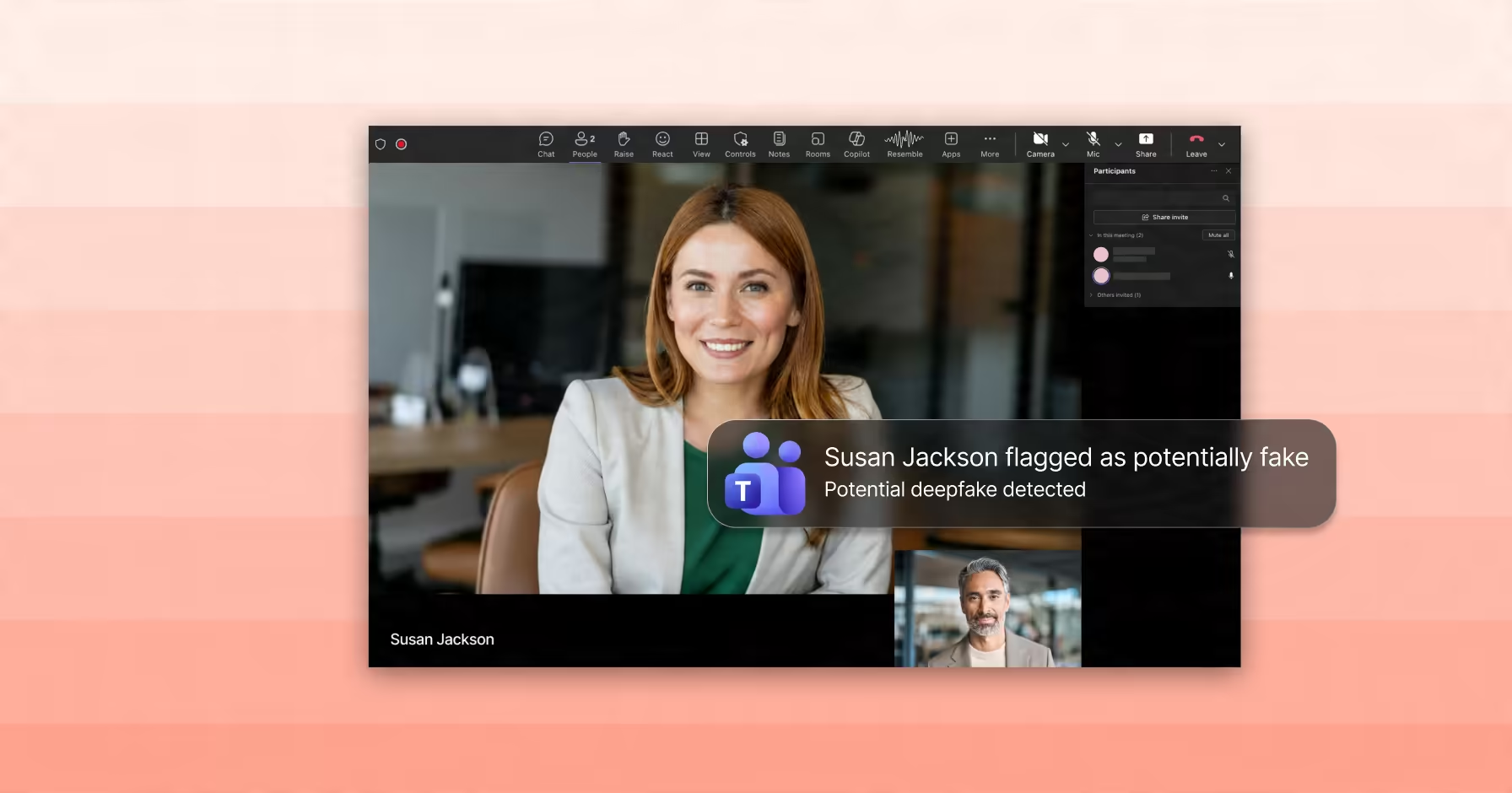
- Ethical AI and Security Safeguards: Responsible platforms protect users with safeguards such as consent-based cloning, AI watermarking, and deepfake detection. These features help maintain ethical and transparent use of AI voices.
Understanding the key evaluation criteria can help you select a platform that fits both creative and technical requirements.
With these factors in mind, let’s take a closer look at how two leading platforms compare in real creator workflows.
Also Read:Voice Design: Transforming Text into Unlimited AI Voices
A Closer Look at Leading AI Voice Tools
Several AI voice platforms make voice generation and cloning easier for creators. Here’s a brief overview of how these platforms serve creators and their main capabilities.
1. Resemble AI

Resemble AI is an AI voice platform designed to deliver highly realistic voice cloning, text-to-speech, and real-time speech-to-speech capabilities. It helps creators produce expressive, customizable voices that integrate into content platforms, applications, and creative workflows.
The platform supports multilingual voice generation and allows creators to design unique voices or replicate existing ones. Its tools are widely used in gaming, entertainment production, customer service automation, and voice-driven applications.
Ideal For:
- Developers building voice-enabled applications: Resemble AI offers API access and real-time voice generation features that help developers integrate voice technology into apps and platforms.
- Content creators who need realistic voice cloning: Creators can replicate voices with high accuracy and maintain consistent narration across large content libraries.
- Enterprises building conversational AI systems: Companies deploying voice assistants, virtual agents, or interactive gaming characters benefit from the platform’s customization and real-time voice transformation features.
2. Play.ht
Play.ht is a popular AI voice generator primarily known for its large library of synthetic voices and easy-to-use text-to-speech tools. Creators use the platform to quickly produce scalable voiceovers for videos, podcasts, and educational content.
Play.ht focuses heavily on voice variety and multilingual capabilities. With hundreds of AI voices and extensive language support, you can quickly generate voiceovers for global audiences without recording new audio.
Ideal For:
- Content creators producing large volumes of narration: Play.ht’s voice library and simple interface make it easy to generate voiceovers for videos, blogs, and podcasts.
- Educators and e-learning platforms: Multilingual voice support allows course creators to localize training materials for international learners.
- Marketing teams creating audio content at scale: Brands can produce promotional videos, product explainers, and audio advertisements quickly using AI-generated narration.
Understanding the strengths of each platform can help you choose the right solution for your workflow.
Voice and Language Comparison: Resemble AI vs Play.ht
Creators prioritize voice quality and language flexibility when selecting an AI voice platform. A tool that delivers realistic speech and offers multiple languages can significantly improve content reach and engagement.
The following comparison highlights how Resemble AI and Play.ht perform across voice technology features that matter most to creators.
| Aspect | Resemble AI | Play.ht |
| Voice realism | Highly expressive voices with emotional control and customizable tone | Natural-sounding voices optimized for narration and content creation |
| Voice cloning | Rapid and professional voice cloning with customizable voice models | Instant voice cloning available for creating custom voices |
| Speech-to-speech | Real-time speech-to-speech transformation for live applications | Primarily text-to-speech voice generation |
| Voice library | Smaller but highly customizable voice models | Large library of 900+ voices |
| Language support | Supports over 120 languages and dialects | Supports more than 140 languages and accents |
| Emotion control | Strong emotional modulation and voice design features | Emotion and style options for narration voices |
| Integration options | API access for developers and enterprise integrations | API available for app integrations and automation |
| Ethical AI Safeguards | Includes watermarking and deepfake detection initiatives for responsible AI use | Focuses on content generation but provides fewer publicized safeguards |
While both platforms provide high-quality AI narration, their strengths differ. Resemble AI focuses on advanced voice generation and customization, while Play.ht prioritizes straightforward narration workflows for creators.
Also Read:Introducing Resemble Identity & Audio Intelligence

Pricing and Plans Comparison: Resemble AI vs Play.ht
Pricing is often a key factor when creators choose an AI voice platform. Different tools offer varying pricing models based on usage limits, available features, and enterprise capabilities.
1. Resemble AI
Resemble AI offers flexible, usage-based pricing that scales from individual creators to enterprise teams, supporting advanced voice cloning and real-time audio generation.
- Flex Plan (Pay‑As‑You‑Go)
- Start at $0 to begin, load credits, and pay as you go; credits do not expire.
- Includes full API access and all voice models.
- Voice cloning and deepfake detection tools included.
- Billing is on a per‑second basis across features like TTS, voice agents, and speech‑to‑speech.
- Ability to add team seats and voice types as needed.
2. Enterprise (Custom Pricing)
- Pricing customized based on volume, features, and SLAs.
- Offers volume discounts up to ~80% for large commitments.
- Enterprise‑grade features such as SSO/SAML, dedicated support, custom model training, and on‑premise deployment.
- Includes security and compliance options for teams requiring strict data controls.
3. Add‑Ons & Usage Rates
- Team seats (e.g., ~$20/mo per user) for collaborative access.
- Rapid voice clones (~$2/mo per voice) and Pro voice clones (~$5/mo per voice) for customizable voices.
- Per‑second costs for features like text‑to‑speech (~$0.0005/sec), voice agents (~$0.001/sec), and deepfake detection (~$0.04/sec).
2.Play.ht
Play.ht offers subscription-based plans with tiered character or word limits, making budgeting predictable for creators.
- Free:
- $0 forever with limited usage (e.g., 2,500 words/characters).
- Well-suited for small projects or testing the platform.
- Includes basic voices and downloads without a paid commitment.
- Creator (~$31–$39/mo):
- Higher voice generation limits.
- Provides a larger selection of realistic AI voices.
- Good fit for creators producing regular narration or podcast audio.
- Pro (~$49–$99/mo):
- Significantly more characters/words included.
- Priority processing and access to expanded voice and language options.
- Helpful for larger monthly output or more complex content needs.
- Enterprise (Custom):
- Tailored plan with custom usage limits and support.
- Best for teams or enterprises that require large‑scale voice outputs and integrations.
- Contact sales to discuss specific enterprise needs.
Knowing each platform’s pricing model helps creators choose the best value for their production needs, customization, and scalability.
Use Case Comparison: Which Tool Fits Your Needs?

Different creators have different audio production requirements. Comparing common use cases helps clarify which platform is better suited for specific workflows.
- Video Content and YouTube Narration: AI voices help creators narrate tutorials, explainer videos, or documentaries without recording manually, saving time while maintaining a consistent tone and clarity.
- Podcast Production: Podcasters can generate intros, story segments, or supplementary audio in multiple styles and languages, simplifying episode creation and localization.
- Game Development and Character Voices: Developers can create multiple character voices with distinct personalities, using voice cloning and real-time transformation for dynamic in-game dialogue.
- Multilingual Content Creation: Creators producing content for global audiences can generate localized audio in different languages while preserving brand voice consistency and emotional tone.
- AI Voice Applications and Interactive Platforms: Developers building voice assistants, chatbots, or interactive apps can integrate real-time voice generation and APIs to deliver scalable, engaging audio experiences.
- Marketing and E-learning: Teams can produce high-quality narration for marketing videos, explainer content, or online courses without hiring professional voice talent for each project.
By aligning the tool with the intended use case, creators can maximize the value of AI voice technology in their production workflows.

Conclusion
AI voice technology has become a powerful tool for creators who want to produce professional audio content quickly and efficiently. The right platform ultimately depends on your priorities, whether you value voice realism, broad language support, voice cloning precision, or developer integrations. Ultimately, testing different platforms can help you determine which solution aligns best with your production process.
If you’re looking to build scalable voice content or develop interactive voice experiences, consider booking a demo with Resemble AI to explore how advanced voice cloning, multilingual speech generation, and real-time voice capabilities can support your next project.
FAQs
1. Which platform has lower latency for real-time voice generation, Resemble AI or Play.ht?
Play.ht generally offers lower latency, with ~130–180 ms response times, making it more suitable for real-time applications. Resemble AI supports real-time streaming, but Play.ht is typically faster in time-to-first-audio scenarios.
2. How does Resemble AI’s voice security features impact creators versus Play.ht?
Resemble AI emphasizes consent-based voice cloning and secure data handling, giving creators stronger control over voice ownership and misuse prevention. Play.ht focuses more on deployment security, like on-premise hosting, rather than creator-level voice protection.
3. What voice customization options make Resemble AI preferable for gaming creators?
Resemble AI offers emotional tone control, multi-voice dialogue creation, and deep voice modulation, making it ideal for dynamic characters and in-game interactions. These features help gaming creators build immersive, expressive voice experiences.
4. How does Play.ht‘s SSML support compared to Resemble AI’s for expressive speech?
Both platforms support SSML, but Play.ht provides more granular control over pauses, pitch, emphasis, and emotional delivery. Resemble AI also supports SSML, though it leans more on built-in emotional modeling than extensive manual tagging.
5. What are the file export options in Resemble AI versus Play.ht?
Both platforms support standard exports like MP3 and WAV. Resemble AI may offer additional formats like OGG or Linear16, while Play.ht includes embeddable audio links alongside downloadable files.