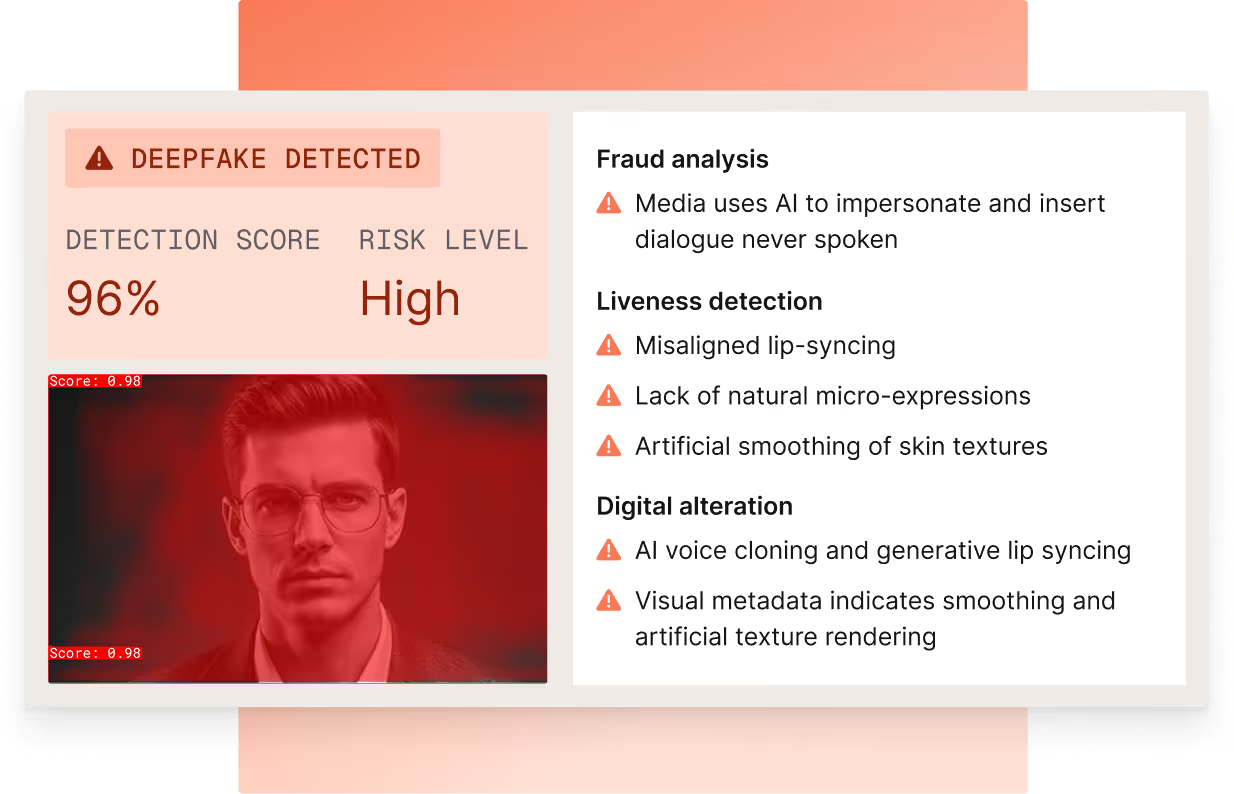
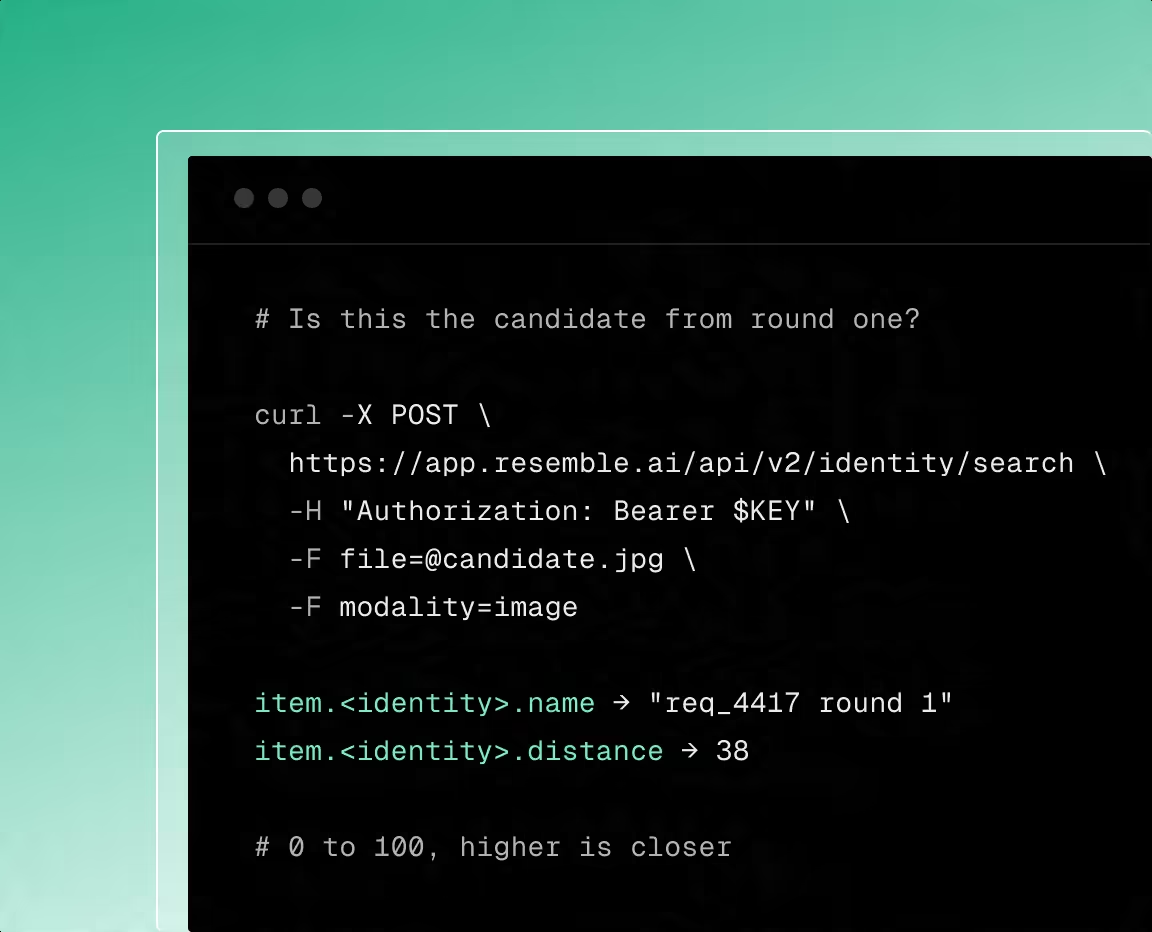
Resemble analyzes audio and video during interviews, alerting recruiters to suspicious activity while the call is still underway. It also checks whether the same person appears across interview rounds and gives your team evidence to review before making a hiring decision.
A recruitment automation platform runs over 250,000 candidate screening calls a month and scores every candidate afterwards. At that volume nobody is listening for a cloned voice, and nothing in the stack is checking for one today.

Candidate substitution
A proxy interview happens when someone other than the applicant takes part in an interview, often sitting the technical round before the actual candidate starts the job. This kind of candidate fraud can go unnoticed when interviewers don't compare identities across rounds.
Face swaps on the live call
Free tools can now put a different face on a live video call through a virtual camera. A convincing deepfake interview can make it difficult for recruiters to know who's actually on screen, even when the person looks and sounds like the candidate.
Cloned voices on the phone screen
Phone screens are often less closely monitored than video interviews, making them a target for cloned voices and automated calls. Voice cloning detection analyzes the audio for signs of synthetic speech, helping recruiters flag suspicious calls before moving a candidate forward.
Documents at onboarding
Candidate fraud can continue after an offer is accepted. IDs, work authorization documents and professional certifications may be generated or altered to support a false identity or set of credentials. Standard checks can confirm a document's format and expiry date without establishing whether it's genuine.