If someone can fake your voice, they can fake your authority. That’s the reality companies are dealing with today. Attackers are cloning executives, customers, and support agents to authorize payments, reset accounts, and slip into internal conversations. And it’s working. A 2024 survey found that 49% of businesses reported experiencing audio or video deepfake fraud in the past 12 months.

For teams that rely on voice, customer support, finance approvals, identity verification, or branded voice experiences, this hits at the core of your operations. A convincing fake voice isn’t just a nuisance. It’s a direct path to fraud, data loss, and reputational damage.

This blog breaks down how voice deepfakes are being used right now, what real attacks look like, the early signs to watch for, and the steps companies can take to protect their voice identity before it’s exploited.

Key Takeaways

  • Voice deepfake attacks are rising fast, targeting executives, support teams, and finance workflows using highly realistic cloned audio.
  • Attackers only need a few seconds of recorded speech to impersonate someone, making traditional voice-based trust and authentication unreliable.
  • Real-world incidents include fraudulent wire transfers, account takeovers, customer impersonation, and even live meeting infiltration.
  • Organizations can protect themselves through layered defenses: stronger verification, real-time deepfake detection, secure voice asset management, and employee training.
  • Modern tools like Resemble AI’s detection, watermarking, and identity safeguards help businesses secure their voice channels before attackers exploit them.

What Are AI-Generated Voice Deepfakes?

AI-generated voice deepfakes are synthetic audio clips designed to mimic a real person’s voice, tone, accent, pacing, and even emotional style. They’re created using machine-learning models that can learn a voice from just a few seconds of audio scraped from calls, videos, podcasts, or social posts.

Once cloned, an attacker can make that voice say anything: approve a payment, request account access, escalate a support ticket, or join a live meeting.

For teams in customer support, fraud prevention, brand safety, or product design, this matters because:

  • Voice used to be a trusted signal of identity.
    Deepfakes remove that trust completely.
  • Legacy voice biometrics can be fooled.
    Synthetic voices can bypass systems built for human audio.
  • Attackers don’t need high-quality recordings anymore.
    A 10-second clip from a conference call or YouTube interview is enough to clone someone.

It’s important to distinguish this malicious use from legitimate voice-AI applications, like TTS, AI dubbing, and brand voice creation. The technology itself isn’t the threat; it’s how easily it can be abused without the right safeguards in place.

Why Voice Deepfakes Are a Growing Security Threat

Voice deepfakes are rising faster than most organizations can adapt. What used to require specialized audio engineering can now be done in minutes with off-the-shelf tools, and attackers are taking full advantage.

For businesses, the risk isn’t theoretical. It’s operational.

1. Voice Is Still Treated as a Trusted Signal

Most organizations rely on voice as proof of identity. If something sounds like a CEO, customer, or colleague, it’s often believed. Attackers exploit that trust, using AI-generated voices to impersonate familiar figures and trigger high-stakes actions.

2. The Entry Barrier Is Extremely Low

It takes only a few seconds of recorded audio, from a meeting, podcast, or social media post, to create a convincing clone. With that, a fraudster can authorize payments, reset passwords, or contact support teams pretending to be legitimate users.

3. Real-Time Deepfakes Are Escalating the Risk

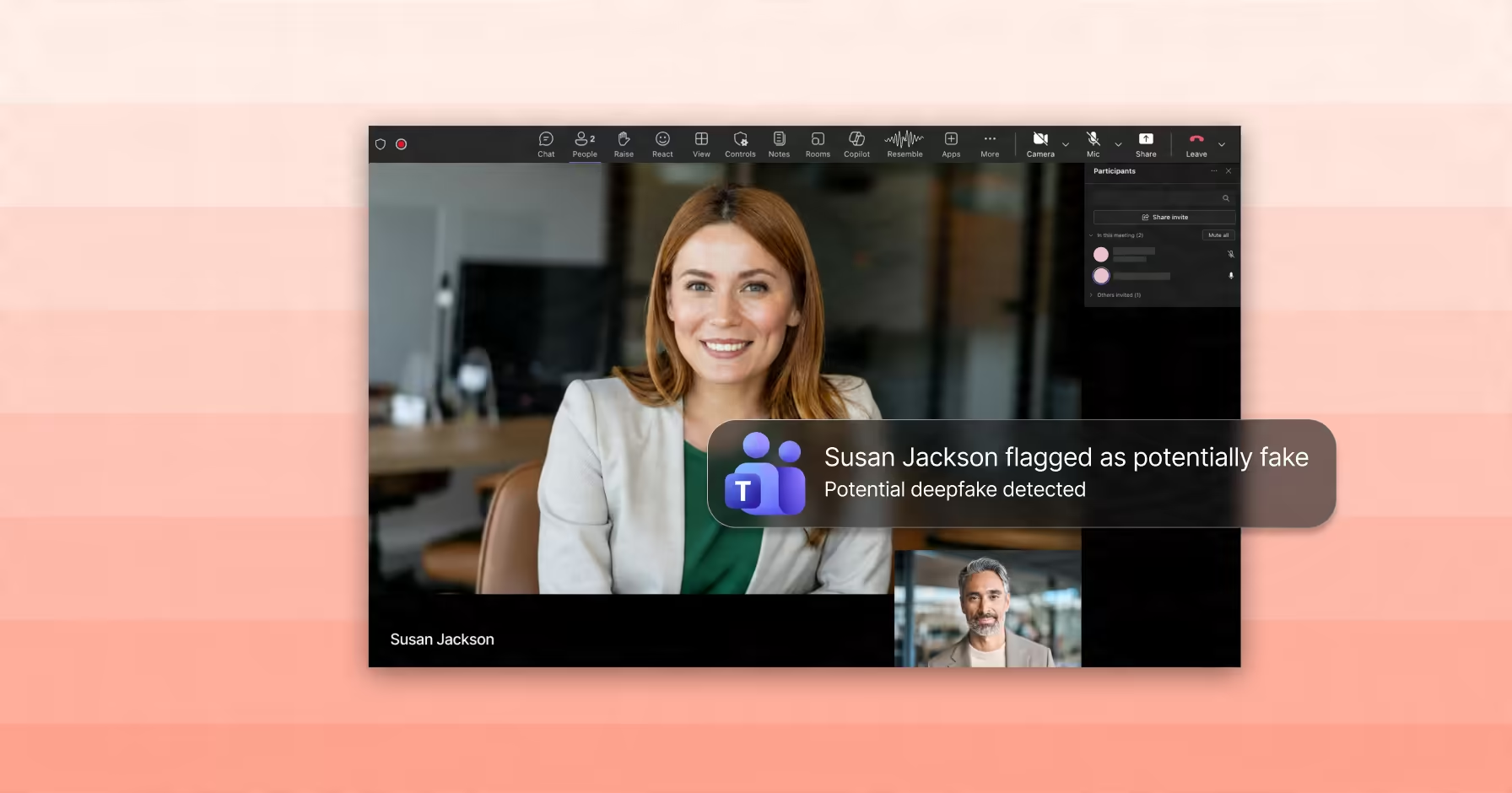
Attackers are no longer limited to prerecorded clips. They can now join live Zoom or Teams calls, speaking in real time with someone else’s voice. This makes impersonation harder to detect, especially in remote or hybrid work environments.

4. Traditional Voice Biometrics Are Losing Accuracy

Conventional systems were built to analyze human vocal traits such as breath and tone variation. AI-generated voices can now replicate or bypass these cues, rendering older biometric defenses unreliable.

5. The Impact Extends Beyond Financial Loss

A single cloned voice can trigger reputational damage, compliance breaches, and internal disruption. Once trust in the voice channel erodes, the entire organization, from finance to IT to customer service, is affected.

How Voice Deepfake Attacks Actually Work

To defend against voice deepfakes, organizations first need to understand how these attacks come together. Most incidents follow a predictable pattern. The sophistication varies, but the core mechanics remain the same, and they’re far easier for attackers to execute than many teams expect.

How Voice Deepfake Attacks Actually Work

1. Collecting the Voice Sample

Every attack starts with capturing a target’s voice. This used to require hours of clean audio, but now just a few seconds from a video clip, webinar, interview, or even a casual phone call is enough. Executives, public-facing employees, influencers, and support agents are especially vulnerable because their voices are easy to find online or inside customer interactions.

2. Training the Voice Model

Once attackers have a sample, they run it through a cloning model. These tools are publicly available and don’t require meaningful expertise. In minutes, the system learns the target’s tone, pacing, accent, and emotional characteristics. The attacker now has a synthetic version of the person’s voice that can say anything they type or speak.

3. Crafting the Pretext

The most successful deepfake attacks mirror real business workflows. Attackers study:

  • Internal org charts,
  • Common approval chains,
  • Typical communication styles,
  • Recurring vendor relationships, and
  • Recent public announcements.

This allows them to create requests that sound plausible. “Can you sign off on this urgent transfer?” or “I need access to the client files before the meeting.” The goal is to reduce friction so the fake voice doesn’t feel out of place.

4. Delivering the Voice Deepfake

Attackers use whichever channel creates the most urgency or the least scrutiny. That might be a phone call, voicemail, voice note, WhatsApp message, or a live appearance on a meeting platform. Real-time tools have made it possible for attackers to respond dynamically, correcting mistakes or adjusting tone in the moment.

5. Exploiting the Outcome

Once the victim trusts the voice, the attacker moves to the actual objective: money transfer, account takeover, access credentials, confidential documents, or influence over a sensitive decision. Often, these actions happen quickly, before the impersonation can be verified by other teams or channels.

How Voice Deepfake Attacks Actually Work

To defend against voice deepfakes, organizations first need to understand how these attacks come together. Most incidents follow a predictable pattern. The sophistication varies, but the core mechanics remain the same — and they’re far easier for attackers to execute than many teams expect.

1. Collecting the Voice Sample

Every attack starts with capturing a target’s voice. This used to require hours of clean audio, but now just a few seconds from a video clip, webinar, interview, or even a casual phone call is enough. Executives, public-facing employees, influencers, and support agents are especially vulnerable because their voices are easy to find online or inside customer interactions.

2. Training the Voice Model

Once attackers have a sample, they run it through a cloning model. These tools are publicly available and don’t require meaningful expertise. In minutes, the system learns the target’s tone, pacing, accent, and emotional characteristics. The attacker now has a synthetic version of the person’s voice that can say anything they type or speak.

3. Crafting the Pretext

The most successful deepfake attacks mirror real business workflows. Attackers study:

  • internal org charts,
  • common approval chains,
  • typical communication styles,
  • recurring vendor relationships, and
  • recent public announcements.

This allows them to create requests that sound plausible. “Can you sign off on this urgent transfer?” or “I need access to the client files before the meeting.” The goal is to reduce friction so the fake voice doesn’t feel out of place.

4. Delivering the Voice Deepfake

Attackers use whichever channel creates the most urgency or the least scrutiny. That might be a phone call, voicemail, voice note, WhatsApp message, or a live appearance on a meeting platform. Real-time tools have made it possible for attackers to respond dynamically, correcting mistakes or adjusting tone in the moment.

5. Exploiting the Outcome

Once the victim trusts the voice, the attacker moves to the actual objective — money transfer, account takeover, access credentials, confidential documents, or influence over a sensitive decision. Often, these actions happen quickly, before the impersonation can be verified by other teams or channels.

Early Warning Signs and Red Flags

Voice deepfakes are getting better, but they still leave clues. Most attacks succeed because they catch people off guard, not because the audio is perfect. Training teams to slow down and look for small inconsistencies can make the difference between a safe interaction and a costly mistake.

1. The Timing Feels Off

Deepfake audio often has unusual pacing. Responses may feel slightly delayed, overly fast, or too evenly spaced. In real conversations, people pause, think, interrupt, and adjust their tone. Synthetic voices sometimes lack this natural rhythm.

2. The Emotion Doesn’t Match the Message

AI-generated voices can sound flat or oddly controlled during moments that should feel emotional or urgent. Conversely, they can sound overly expressive in situations where the real person wouldn’t be. If the tone doesn’t fit the context, it’s worth pausing.

3. Words and Phrases Sound Repetitive

Attackers often rely on short scripts or stock phrasing. You might hear unusual repetition, phrases the person doesn’t normally use, or an overly formal communication style. It’s a subtle signal, but a common one.

4. The Background Is Too Clean

Most real calls have ambient noise — keyboard clicks, room tone, movement, or other people in the background. Deepfake audio often sounds unnaturally isolated, even when the caller claims to be in a busy environment.

5. High-Pressure or Unusual Requests

Almost every successful deepfake scam involves urgency:
“I need this done right now,”
“This has to stay between us,”
“Please don’t loop anyone else in.”

Attackers rely on pressure because it reduces the chance that the victim will verify identity through other channels.

6. The Caller Avoids Video or Secondary Verification

If a known colleague insists on staying audio-only during a normally video-based interaction — or avoids confirming identity through a simple callback — that’s a strong sign something is off.

7. Small Glitches in Pronunciation or Breathing

Some deepfake systems struggle with:

  • Unusual names
  • New terminology
  • Foreign words
  • Natural breathing patterns
  • Overlapping speech

These glitches are subtle, but when they appear, they suggest the voice may not be authentic.

How Organizations Can Protect Themselves (A Practical Defense Framework)

Protecting against voice deepfakes requires more than a single tool or policy. It involves building layers of defense across people, processes, and technology. Below is a clear framework organizations can apply regardless of size or industry.

1. Secure the Voices That Matter Most

Start by identifying the voices that attackers are most likely to target:
executives, finance approvers, customer support agents, and anyone who interfaces with sensitive accounts or high-value transactions.

Protect these voices like other forms of identity:

  • Limit where and how recordings of them appear publicly.
  • Store internal voice assets securely.
  • Use watermarking or traceable synthetic audio for any AI-generated voice content.

When a company treats its voice identity as a protected asset, attackers have fewer openings.

2. Add Stronger Verification to Voice-Based Workflows

Any workflow that relies on recognizing someone’s voice — approvals, escalations, account access, or support calls — should include an additional verification step.

This can look like:

  • A challenge-response question only the real person would know.
  • A callback on a known internal channel.
  • Identity checks that use more than audio alone.

The goal is not to remove voice from workflows, but to stop treating it as the only proof of identity.

CTA

3. Detect Deepfakes in Real Time

Modern attacks often happen in the moment, on calls, in meetings, and in support interactions. Real-time detection tools can analyze audio characteristics as the conversation is happening and flag anomalies that suggest synthetic speech.

These systems look for patterns humans can’t reliably hear, such as:

  • Spectral inconsistencies
  • Unnatural prosody
  • Generative artifacts
  • Mismatched acoustic environments

Real-time detection doesn’t disrupt conversations; it quietly gives teams a layer of assurance that the voice is real.

4. Monitor High-Risk Channels

Some communication paths are more vulnerable than others. Companies should regularly monitor and secure:

  • Customer support lines
  • Vendor and partner communication channels
  • Internal Slack/Teams escalation workflows
  • Finance approval paths
  • External-facing brand voice content

Even basic monitoring can reveal unusual audio patterns or request behavior before it becomes a major incident.

5. Train Employees to Recognize Deepfakes

Technology can block a lot, but not everything. Employees still play a critical role.

Effective deepfake training includes:

  • Realistic examples of voice impersonation attempts
  • Common pretexts attackers use
  • Guidance on slowing down and verifying identity
  • Clear escalation paths

Training isn’t about fear, it’s about giving employees the confidence to question something that doesn’t feel right.

Conclusion

Voice is becoming one of the most important identity signals in business — and one of the easiest to exploit. As AI-generated voice deepfakes continue to rise, organizations can no longer rely on familiarity or intuition to confirm who they’re speaking with.

The good news is that the defenses are catching up. With stronger verification practices, protected voice identities, real-time detection, and proper internal training, companies can confidently navigate this new threat landscape.

The responsibility now is to take proactive steps. The sooner businesses secure their voice channels, the harder it becomes for attackers to weaponize them.

If your organization is exploring ways to strengthen voice authentication, detect synthetic speech, or protect your official voice assets, tools like Resemble AI’s detection, watermarking, and identity safeguards can help you build a more secure voice environment. Start by assessing where your teams currently rely on voice, and where intelligent protection can have the biggest impact. Book a demo with Resemble AI today.

FAQs

1. Are voice deepfakes common?
Yes. Reported cases are rising quickly, and many incidents go undetected because the audio sounds familiar enough to pass basic checks.

2. How much audio is needed to clone a voice?
Often just a few seconds. Public recordings or short clips from calls are usually enough.

3. Can voice biometrics still be trusted?
Legacy systems struggle with synthetic audio. They should be paired with deepfake detection or multifactor verification.

4. How can brands protect their voice identity?
By securing voice assets, watermarking synthetic audio, limiting exposure, and verifying identity wherever voice is used.

5. Can deepfakes be detected in real time?
Yes. Modern detection systems can analyze live calls and meetings to identify traits associated with synthetic speech.