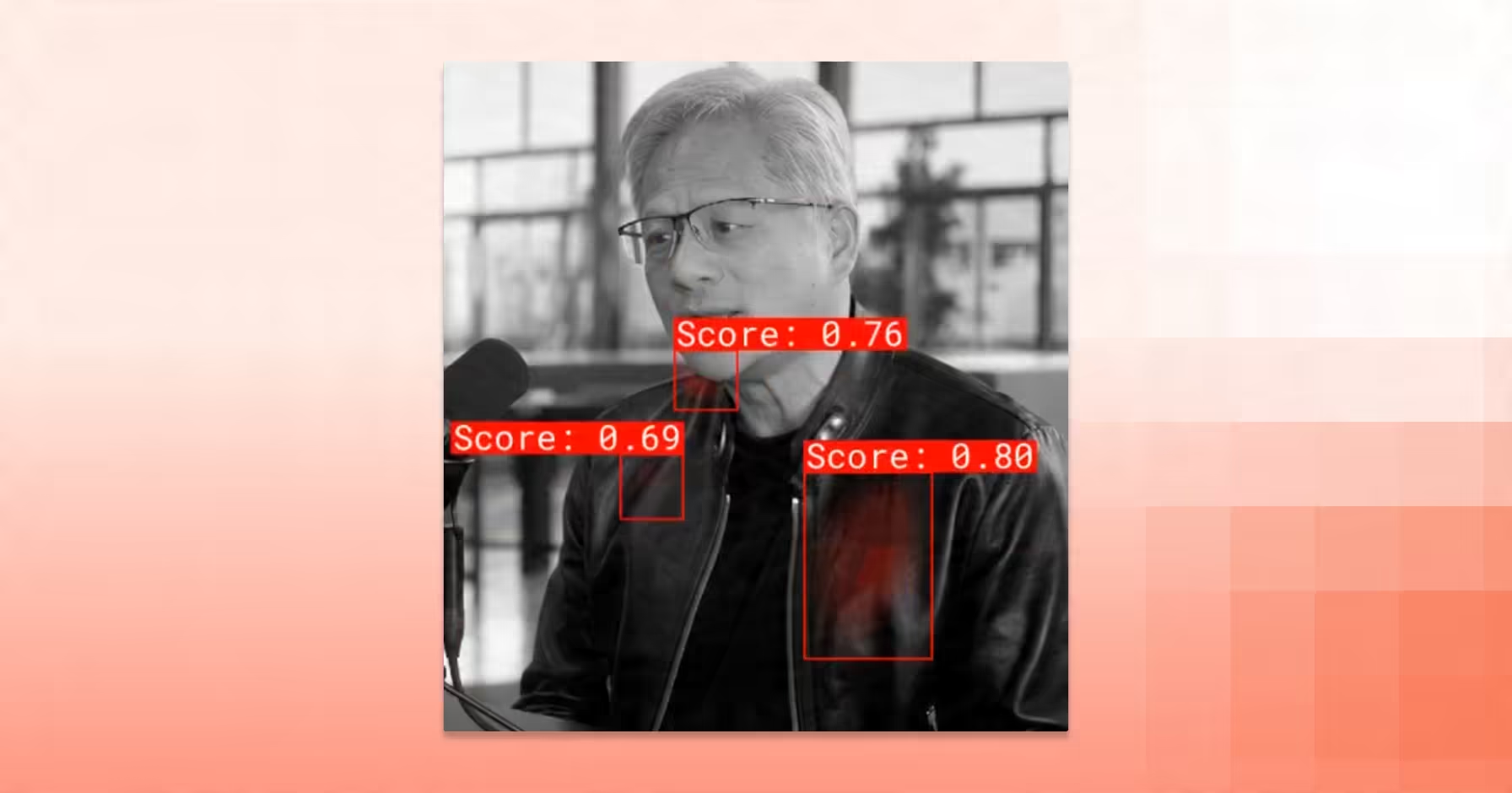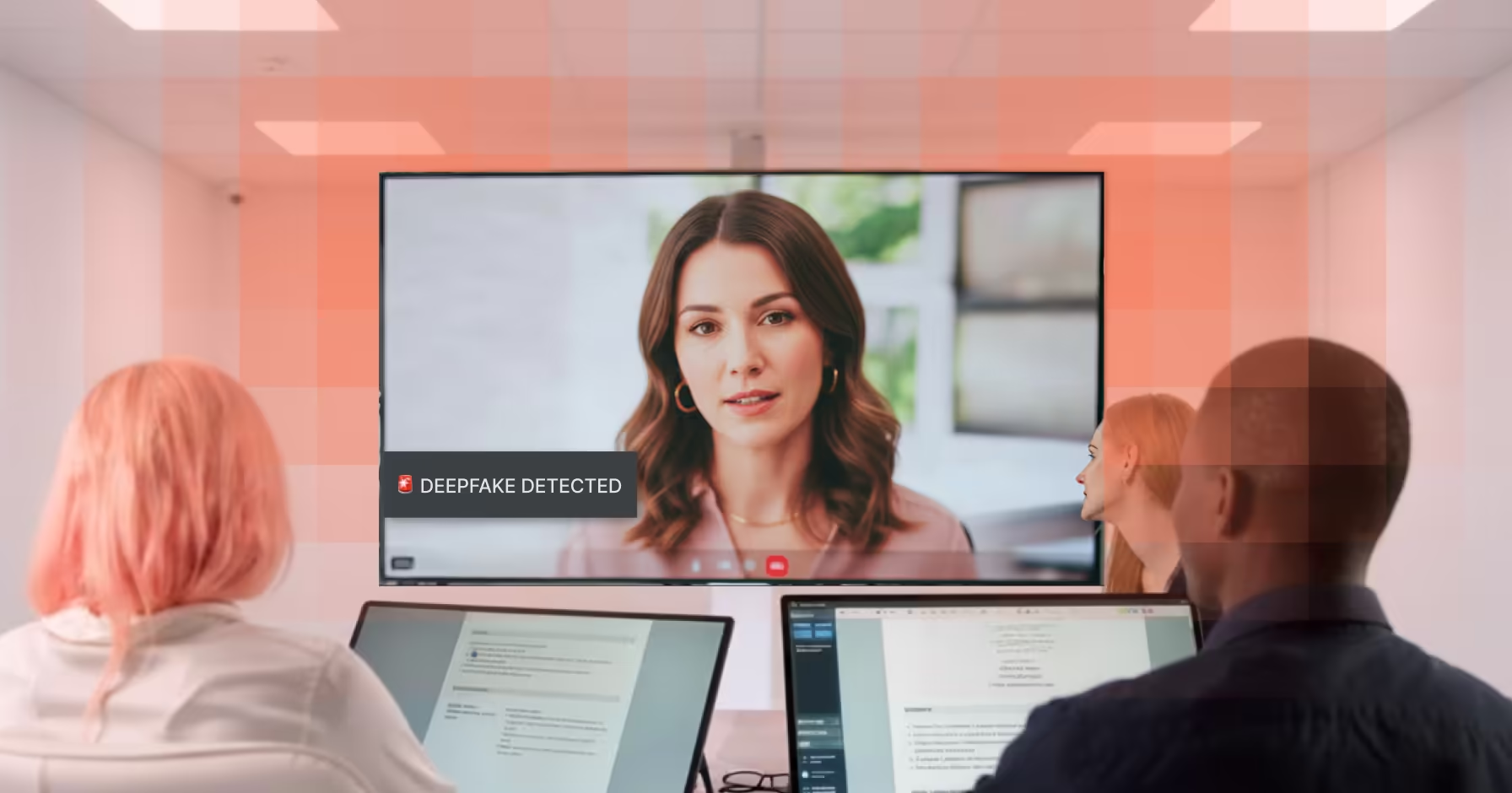

Remote onboarding has quietly become an increasingly common entry point for identity fraud. HR teams, security analysts, and hiring managers are now expected to verify candidates they may never meet in person, often relying on video calls, submitted documents, and recorded introductions.
At the same time, AI-generated voices and synthetic video identities are getting harder to detect. Recent enterprise research shows that 41% of organizations have unknowingly hired fraudulent candidates. This increases exposure to fraud, data risk, and reputational harm.
What changes the situation is the need to verify identity in real time while keeping onboarding fast and smooth for legitimate candidates. This is where deepfake detection becomes part of your security and onboarding workflow, not as an extra layer but as a necessary checkpoint. When you bring detection into remote onboarding, you are better positioned to identify synthetic identities early, reduce impersonation risk, and support more confident hiring decisions without slowing down the process.
This blog explores where deepfake risks appear in remote onboarding and how detection methods can support more reliable identity verification during hiring.
Key Takeaways:
- Remote onboarding has become vulnerable to identity fraud due to realistic AI-generated voice, video, and document manipulation, making real-time identity verification essential for secure hiring processes.
- Deepfake-driven attacks can appear at multiple stages of onboarding, including interviews, follow-up calls, document checks, and cross-platform identity reuse, making isolated verification steps unreliable.
- The impact of onboarding fraud extends beyond recruitment, potentially leading to unauthorized system access, data exposure, and compliance risks, which require stronger, layered verification approaches.
- Effective protection relies on multi-layer deepfake detection combined with audio-video analysis, behavioral signals, risk-based checks, and human review to support more accurate hiring decisions.
Common Deepfake Attack Scenarios in Remote Onboarding
Remote onboarding workflows typically involve structured steps such as interviews, identity verification, background checks, and system access provisioning. Each of these steps can be manipulated if synthetic identity tools are used to impersonate real individuals.
- Interview impersonation: An AI-generated voice or video can be used to imitate a candidate during live interviews. These outputs may closely replicate facial expressions and speech patterns, making surface-level checks less reliable.
- Voice spoofing in communication: Cloned voices may be used during recruiter or HR calls to impersonate candidates or internal stakeholders. This can influence scheduling decisions or bypass certain verification steps.
- Synthetic video presence: Manipulated video streams can simulate real-time presence during onboarding verification calls. In some cases, these signals may appear sufficiently consistent to pass manual review under standard video-quality conditions.
- Document-media mismatch: Forged identity documents combined with synthetic voice or video can create a seemingly consistent identity profile. This layered setup makes single-point verification methods less effective.
- Live call manipulation: AI-generated responses may be introduced during onboarding conversations to influence or respond in real time. This can create inconsistencies in expected human interaction patterns during verification.
- Cross-platform identity reuse: A single synthetic identity may be reused across multiple applications or onboarding attempts. Without cross-checking signals across systems, such patterns can be difficult to detect.
Understanding these scenarios allows HR and security teams to shift from reactive verification to more proactive detection approaches.
Why Deepfake Detection is Essential for Remote Onboarding
Remote onboarding depends heavily on trust built through digital interactions. When identity signals can be artificially generated or manipulated, that trust becomes harder to establish using traditional methods alone.
- AI-generated identities can bypass surface-level verification layers
Deepfake tools can now replicate human appearance and speech closely enough to pass basic onboarding interactions. Most systems are not failing; they are just not designed for this level of synthetic realism.
Many onboarding flows rely on short video calls, document uploads, or lightweight verification steps. These may not capture subtle inconsistencies introduced by AI-generated media.
- Cloned voices can replicate tone and cadence in voice checks
- Synthetic video can simulate facial expressions during interviews
- Combined media can create consistent but artificial identities
- Low-friction steps reduce deeper verification opportunities
The risk is that systems may appear normal while still being bypassed by synthetic inputs.
- Identity fraud now spreads across multiple onboarding stages
Onboarding fraud is increasingly distributed across multiple stages rather than a single weak point. Synthetic identities can appear consistent even as they are constructed across multiple verification steps. Each stage may look valid in isolation, but inconsistencies appear only when signals are combined.
- Synthetic video may be used during interviews
- A cloned voice may support follow-up calls
- Fabricated documents may pass initial screening
- Multiple inputs create a consistent but artificial profile
This makes detection harder when systems evaluate steps separately instead of collectively.
- The impact of onboarding fraud extends beyond hiring teams
The impact of fraudulent onboarding does not stay within HR. Once access is granted, the identity may interact with internal systems, sensitive data, or customer environments.
This creates downstream risks across the organization, not just in recruitment workflows.
- Unauthorized access to internal systems
- Exposure of sensitive business or customer data
- Compliance risks in regulated environments
- Breakdown of internal trust in identity verification
In many cases, the impact appears long after onboarding, making early detection critical.
- Deepfake detection introduces a signal-based verification layer
Deepfake detection adds an additional layer that evaluates whether audio and video inputs show signs of synthetic generation or manipulation. It strengthens onboarding without replacing existing checks.
Instead of acting as a standalone gate, it supports a deeper review of identity signals.
- Audio analysis detects speech irregularities or synthetic artifacts
- Video analysis identifies facial or frame inconsistencies
- Cross-signal checks validate alignment between voice and visuals
- Risk scoring helps prioritize manual review cases
This layer is particularly relevant where physical verification is not possible.
- Detection alone is not a solution, but a decision support system
Deepfake detection does not provide absolute certainty. It helps improve decision-making by highlighting potential risks during onboarding.
Its effectiveness depends on input quality, model design, and environmental conditions.
- Results vary with audio or video quality
- False positives and negatives can occur
- Advanced synthesis can reduce detectable signals
- Human review is often needed for high-risk cases
Because of this, detection works best within a layered verification system.
- Remote onboarding is becoming a high-value target for AI-driven impersonation
Remote onboarding is increasingly targeted due to its scale and reduced physical oversight. AI-generated media makes it easier to attempt impersonation across multiple organizations.
This increases pressure on early-stage verification systems.
- High hiring volume enables automated fraud attempts
- Distributed teams reduce in-person checks
- Standard workflows are easier to replicate
- AI tools lower the cost and effort for synthetic identities
Deepfake detection helps reduce risk exposure by adding an early risk-identification layer to onboarding workflows.
Resemble Meetings helps organizations analyze authenticity signals during remote onboarding and virtual interviews across Microsoft Teams, Zoom, Webex, and Google Meet, enabling consistent verification within existing collaboration workflows.
Key Technologies Used to Detect Deepfakes in Remote Onboarding
Deepfake detection systems typically rely on multiple layers of analysis rather than a single detection method. This is important because synthetic media can vary significantly depending on the generation model, input data, and intended use case.
- Audio pattern analysis (voice signal inspection): This method examines tone, pitch, rhythm, and speech consistency. While synthetic voices can sound realistic, they may still show subtle irregularities in speech flow or acoustic behavior.
- Video integrity analysis (frame-level verification): This approach checks facial movements, blinking patterns, lighting stability, and lip-sync accuracy. AI-generated video may contain small visual inconsistencies that are difficult to detect in real time.
- Audio–video synchronization checks: This technique compares spoken audio with facial movements to detect misalignment. Even slight delays between lip movement and speech can indicate possible synthetic generation.
- Metadata and signal consistency checks: Systems analyze metadata such as encoding details, device signals, or stream patterns. Any mismatch or inconsistency across these signals can suggest potential manipulation.
- Behavioral and interaction signals: This method evaluates response timing, interaction flow, and engagement behavior. Unnatural consistency or irregular response patterns may act as supporting indicators of synthetic activity.
- Multi-layer detection frameworks: Instead of relying on one method, modern systems combine audio, video, and behavioral analysis. This layered approach improves detection reliability in complex onboarding environments.
Best Practices for Building a Deepfake-Resistant Remote Onboarding Process
Designing a secure onboarding workflow requires more than isolated verification steps. It involves combining multiple identity checks, aligning them with role-based risk levels, and integrating detection systems into existing HR and security processes to reduce exposure to synthetic identity threats.
- Risk-based controls: Apply stronger verification for high-access or high-impact roles while maintaining lighter workflows for lower-risk positions to balance security and resource use, rather than operational efficiency.
- Detection as support: Treat deepfake detection as an additional signal in the onboarding process rather than a standalone decision-making system, ensuring results are interpreted in context alongside other checks.
- Live interaction checks: Assess consistency across audio, video, and behavioral responses during real-time interviews to identify subtle irregularities that may indicate manipulation.
- Human review layer: Escalate ambiguous or flagged cases to manual review, allowing contextual judgment where automated detection may not provide clear outcomes.
- Ongoing verification: Extend identity validation beyond initial onboarding by using early-stage checkpoints to reduce the risk of delayed or staged impersonation attempts.
- System integration: Embed onboarding security tools into HR platforms and identity management systems so detection outputs directly support operational decision-making.
- Adaptive updates: Continuously refine onboarding controls in response to emerging deepfake techniques and fraud patterns to maintain long-term effectiveness.
How Resemble AI Can Strengthen Deepfake Protection During Remote Onboarding
Resemble AI’s detection approach is built on a multimodal deepfake detection system (DETECT-3B Omni) designed to analyze patterns across multiple media formats and detect synthetic manipulation generated by a wide range of AI models. This enables more context-aware evaluation of identity signals during remote onboarding.
Here’s how we can assist you:
- Unified media checks: Audio, video, and image signals are evaluated together rather than in isolation, helping to surface inconsistencies among voice, facial behavior, and submitted identity documents during onboarding.
- Live signal processing: In controlled benchmarks, detection systems can process inputs in under 300ms, enabling near-real-time feedback during interviews or verification calls.
- Cross-input validation: Identity signals from documents, voice interactions, and video streams can be compared for consistency to help identify mismatches that may indicate synthetic manipulation.
- Model coverage breadth: Detection systems trained across 160+ generative AI models improve resilience against varied attack methods, including voice cloning, avatar-based video generation, and synthetic image fabrication.
- Explainable outputs: Instead of only providing a binary result, systems surface reasoning signals such as audio anomalies, facial inconsistencies, or image-level irregularities that support security and compliance review.
- Liveness signals: Onboarding workflows can be evaluated for active human presence, helping reduce risks from replayed recordings or pre-generated synthetic interactions.
- Document integrity checks: Identity document images can be analyzed for manipulation artifacts and structural inconsistencies that may indicate tampering or synthetic generation.
- Language adaptability: Systems trained across 50+ languages help support global onboarding scenarios while accounting for natural speech variation across regions.
- Workflow integration: Detection outputs can be embedded into existing onboarding systems, such as HR platforms or identity verification tools, without requiring major process redesign.
- Audit support logs: Detection events can be stored with structured metadata to support post-onboarding review, compliance tracking, and incident investigation when required.
Resemble AI helps evaluate authenticity across multimodal signals to support more reliable identity checks in remote onboarding environments.
Conclusion
Remote onboarding has become a core part of modern hiring strategies, but it has also expanded the attack surface for identity-based fraud. As AI-generated voices, videos, and synthetic identities become more realistic, traditional verification methods are no longer sufficient on their own.
Deepfake detection is emerging as a necessary layer within onboarding systems, helping organizations evaluate authenticity across audio, video, and behavioral signals. While it does not eliminate risk entirely, it strengthens the decision-making process by introducing additional verification context.
Organizations that invest early in AI-aware onboarding systems are better positioned to reduce fraud risk, maintain trust, and protect operational integrity across distributed teams.
If you are evaluating how deepfake detection fits into your onboarding or identity verification workflow, exploring platforms like Resemble AI can help clarify how detection and voice AI systems may be applied in real enterprise environments.
FAQs
- How do regulatory and compliance requirements influence the need for deepfake detection in onboarding? Regulatory frameworks require organizations to verify identity accurately during onboarding. Deepfake detection helps meet KYC/AML and data protection obligations, reduces fraud risk, and ensures compliance with audit and verification standards set by financial and identity governance authorities.
- What are the privacy-preserving approaches for sharing flagged onboarding samples with law enforcement or vendors? Privacy-preserving methods include encryption, anonymization, and secure tokenization of biometric data. Organizations also use federated sharing, consent-based disclosures, and redacted media to ensure only necessary evidence is shared while protecting personal identity information.
- How can organizations measure the ROI of investing in deepfake detection for remote onboarding? ROI is measured by reduced fraud losses, lower manual review costs, faster onboarding, and fewer false approvals. Additional value comes from improved compliance outcomes, reduced chargebacks, and stronger trust in digital identity verification processes.
- What vendor and solution criteria should hiring teams use when evaluating deepfake detection technologies? Teams should assess detection accuracy, false-positive rates, real-time performance, scalability, and integration ease. Security certifications, model transparency, compliance alignment, and proven performance on diverse datasets are also key evaluation criteria.
- How can onboarding processes be designed to remain user-friendly while integrating deepfake detection? Processes should embed detection seamlessly in the background, minimize extra user steps, and use real-time verification. Clear instructions, fast processing, and adaptive risk-based checks help maintain a smooth and frictionless onboarding experience.
- What incident response steps should be taken if a deepfake is detected during onboarding? The process should include immediate session flagging, manual review by verification teams, account suspension, and evidence logging. Escalation to compliance or security teams ensures proper investigation and potential reporting to relevant authorities if needed.
- How do advances in generative AI change the threat landscape for remote onboarding over the next 1–3 years? Generative AI increases the realism and scalability of synthetic identities and facial forgeries. This makes detection more complex, requiring continuous model updates, multimodal verification, and stronger behavioral and liveness-based authentication systems.
- Are there industry standards or certifications for deepfake detection solutions used in onboarding? There are emerging frameworks like ISO/IEC identity verification standards and NIST digital identity guidelines. However, dedicated deepfake-specific certifications are still evolving, with organizations relying on security audits and vendor compliance certifications.
- What logging and audit capabilities are essential for proving due diligence when deepfake incidents occur? Systems should maintain immutable logs of verification attempts, model decisions, timestamps, and user interactions. Detailed audit trails with explainability reports help demonstrate compliance and support investigations or regulatory reviews.
- What metrics and KPIs indicate an effective deepfake detection strategy in onboarding? Key metrics include detection accuracy, false-positive and false-negative rates, time-to-decision, and fraud prevention rate. Additional KPIs include onboarding completion time, escalation rate, and manual review workload reduction.
- How can synthetic data be used safely to test and validate deepfake detection systems for onboarding? Synthetic data should be generated in controlled environments with anonymized or simulated identities. It helps test edge cases, improve model robustness, and avoid exposure of real user data while ensuring system reliability under varied attack scenarios.
- How should SLAs with verification vendors account for accuracy and response times in deepfake detection? SLAs should define minimum accuracy thresholds, maximum false-positive rates, and strict response time limits. They should also include uptime guarantees, incident escalation timelines, and penalties for non-compliance to ensure consistent verification performance.