



Deepfake audio and video are no longer threats to the future. They're here, spreading faster and manipulating more people than ever. With generative AI lowering the barrier for attackers, businesses, governments, and even elections have become prime targets.
As a result, deepfake detection tools are quickly becoming as essential as email or application security. Investors are placing significant bets on this shift, fueling both startups and established players alike. From real-time audio detection to content watermarking and identity verification, leading companies are taking the lead to safeguard digital trust against this rapidly evolving threat.
This blog will explore the top deepfake technology companies, their core competencies, and how they're helping organizations stay secure in an era where seeing and hearing is no longer enough to be believed.
Overview:
- Rising Threat: Deepfake audio and video are increasingly used to manipulate, deceive, and commit fraud across finance, politics, and social platforms.
- Critical Defense: Deepfake technology companies develop tools for detection, watermarking, identity verification, and content authentication to safeguard trust.
- Multimodal Approach: Modern solutions analyze audio, video, images, and metadata simultaneously, using AI, neural networks, and blockchain.
- Wide Applications: From corporate security and elections to journalism and personal identity protection, these tools address diverse misinformation risks.
- Market Evolution: Investment and innovation in deepfake detection are accelerating, making these technologies essential for organizations, governments, and individuals.
What is the Relevance of Deepfake Technology Companies in 2025?
Deepfakes have become a serious security, ethical, and trust issue. From financial fraud to political misinformation, malicious actors are using increasingly realistic AI-generated audio and video to deceive, manipulate, and exploit.
Deepfake technology companies play a critical role in addressing these threats by developing detection, watermarking, and verification tools that safeguard individuals, businesses, and even governments.
Common misuses and how deepfake technology companies are responding:
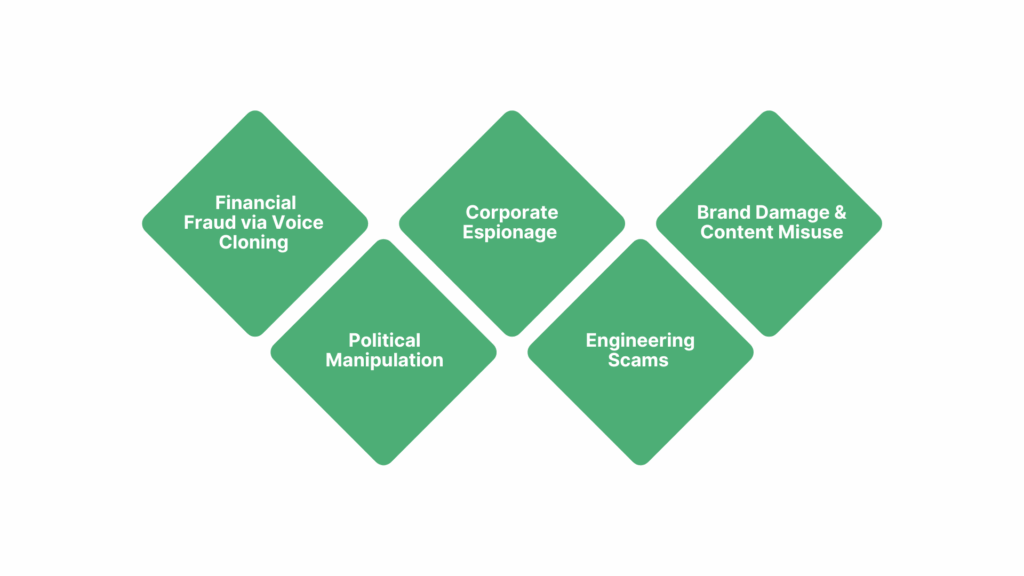
1. Financial fraud via voice cloning: Criminals use cloned executive voices to trick employees into authorizing wire transfers.
In response, deepfake technology companies have developed spectral voice analysis and acoustic fingerprinting to detect subtle frequency distortions and irregular cadence patterns that distinguish synthetic voices from real ones.
2. Election and political manipulation: Deepfakes of politicians spread misinformation during campaigns or live broadcasts.
In response, deepfake technology companies have developed video frame anomaly detection with AI classifiers to scan pixel-level inconsistencies, lighting mismatches, and unnatural facial transitions to flag manipulated footage in real time.
3. Corporate espionage and fake meetings: Attackers impersonate leaders in video calls to extract sensitive information.
In response, deepfake technology companies have developed multimodal verification systems to cross-check facial micro-expressions, lip synchronization, and vocal tone alignment to ensure participant authenticity.
4. Social engineering scams: Deepfakes of trusted contacts are used in phishing or romance scams.
In response, deepfake technology companies have developed biometric identity verification that combines faceprint mapping, liveness detection, and keystroke biometrics to confirm genuine human presence.
5. Brand damage and content misuse: Fake ads or manipulated endorsements harm brand reputation.
In response, deepfake technology companies have developed cryptographic watermarking and provenance tracking to embed invisible signatures at the point of creation, allowing instant verification of authentic content.
Using these technologies has made it possible to detect, verify, and neutralize synthetic threats before they spread. The tools offered by deepfake technology companies ensures that as generative AI evolves, so does the ability to protect digital trust.
Also Read: Introducing Real-Time Deepfake Detection for Google Meet: Ensuring Authenticity in Video Conferences
Top 10 Deepfake Technology Companies to Combat Misinformation
What sets today’s deepfake detection leaders apart is the sophistication of their underlying technology. Instead of relying on outdated forensic cues or pixel-based anomaly checks, modern platforms leverage transformer architectures, multimodal AI, neural watermarking, and blockchain-backed provenance to spot synthetic media with near real-time accuracy.
The solutions developed by these companies don’t just analyze faces or voices in isolation. They capture micro-expressions, voice cadence, contextual mismatches, and provenance metadata to identify even the most convincing fakes. They also integrate seamlessly into video conferencing, media workflows, and enterprise security systems, making them practical for day-to-day use.
Before diving into the top companies shaping this space, let’s compare them side by side to see which fits your needs best:
| Company | Focus | Key Technology | Best Use Case |
| Resemble AI | Audio detection & synthesis | Neural watermarking, DETECT-2B voice model, STS cloning | Voice fraud prevention, secure communications |
| Truepic | Media authenticity | Computer vision + blockchain provenance | Elections, journalism, evidence capture |
| Reality Defender | Multimodal detection | Explainable AI, real-time API & dashboard | Enterprise, gov, media monitoring |
| TrueMedia | Disinformation defense | Lightweight detection for video/image/audio | Campaigns, journalists, fact-checking |
| Loti | Identity protection | Facial/voice matching + online likeness monitoring | Public figures, corporate leaders |
| Certifi AI | Detection + credibility | Content manipulation detection + source scoring | Trust & safety, anti-harassment |
| GetReal Labs | Forensic authentication | Voice/video anomaly detection with enterprise integration | Finance, fraud prevention |
| Clarity | Deepfake detection | Transformer-based multimodal AI | Compliance, ID verification |
| Intel | Biological signal detection | Blood flow analysis (photoplethysmography) | Forensics, academic research |
| Sensity | Disinformation monitoring | Visual threat intelligence + metadata forensics | Regulators, media watchdogs |
Now that we’ve compared the top deepfake technology companies, let’s explore each of them in more detail:
1. Resemble AI
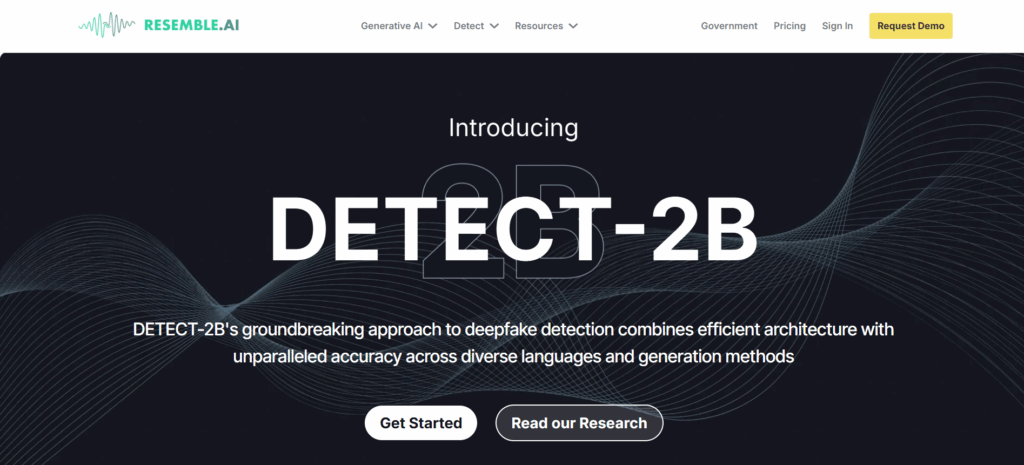
Resemble AI stands out as one of the few platforms actively working to combat voice-based deepfakes. Its technology blends advanced speech synthesis with built-in detection and verification, ensuring that AI voices are both realistic and secure. This dual approach makes it particularly relevant in the fight against misinformation, impersonation, and fraud.
Key Features for Combating Deepfakes:
- Neural Voice Cloning with Watermarking: Generates lifelike synthetic voices while embedding invisible watermarks (PerTH) to verify authenticity and prevent misuse in scams or fake recordings.
- Synthetic Voice Detection (DETECT-2B): A detection model based on Mamba-SSM that identifies AI-generated audio with up to 98% accuracy across 30+ languages, even in noisy or compressed conditions.
- Low-Latency Generation: Produces speech in ~200 ms, enabling real-time authentication and secure communication workflows.
- Chatterbox (Open Source): Offers developers access to open-source voice cloning and emotional modulation, with safeguards that highlight authenticity verification.
- Audio Intelligence: Includes speaker recognition and identity verification tools to flag suspicious content or impersonation attempts.
- Deepfake Detection for Meetings: Monitors live video and audio streams in conferencing platforms to prevent AI-generated impersonation and ensure secure, authentic communications in real-time.
- Security Awareness Training: Provides simulations and training tools to educate employees on spotting deepfakes, reinforcing cybersecurity hygiene, and minimizing organizational risk.
In 2024, Resemble AI’s technology powered real-time, personalized character voices in Crayola Adventures, an Apple Design Award–winning game. While this showcased creative applications, the same real-time synthesis and watermarking capabilities are now being applied to detect and prevent fraudulent voice manipulation in sensitive industries like finance and media.
By combining expressive voice AI with strong detection models, Resemble AI addresses one of the fastest-growing deepfake threats, which is audio-based misinformation and fraud.
2. Truepic

Truepic is a pioneer in content authenticity, specializing in verifying photos and videos at the point of capture. Instead of only detecting manipulated media after it spreads, Truepic embeds trust signals into digital content from the start. This makes it a critical defense against misinformation, especially in journalism, elections, and corporate communications.
Key Features for Combating Deepfakes:
- Provenance Verification: Uses computer vision and metadata analysis to confirm that media is original, time-stamped, and unaltered.
- Cryptographic Watermarking: Applies secure, tamper-evident signatures to photos and videos, ensuring transparent authenticity trails.
- Blockchain-Based Record Keeping: Anchors verified content to immutable ledgers, providing a permanent record for auditing and trust.
Differentiating Factor: Unlike most detection-first solutions, Truepic focuses on authenticity at the source, preventing misinformation before it circulates. By securing media at creation, it builds digital trust in environments where fake visuals can have global consequences.
3. Reality Defender
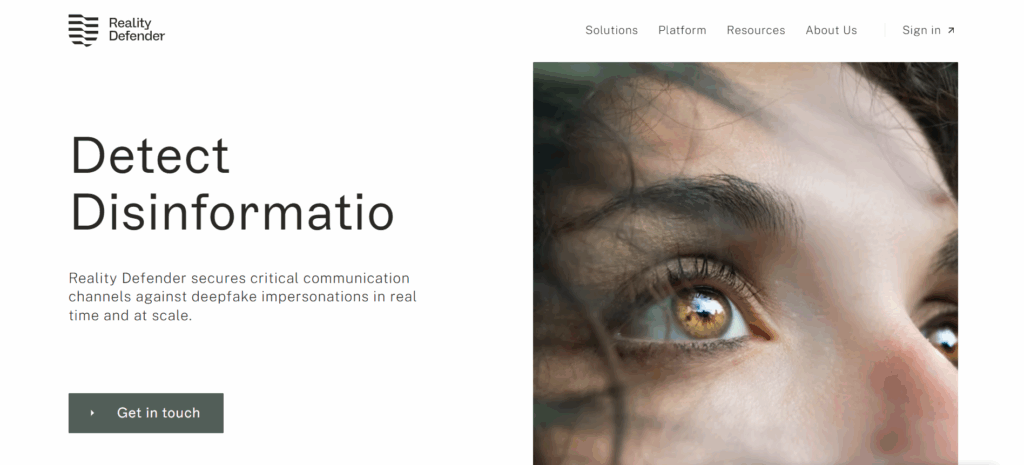
Reality Defender is a leading deepfake detection platform designed for enterprises, governments, and media organizations. It tackles misinformation by scanning and flagging manipulated content across multiple modalities, from video and audio to images and text, in real time.
Key Features for Combating Deepfakes:
- Multimodal Detection: Identifies synthetic content across video, voice, images, and text using advanced neural networks.
- Real-Time Monitoring: Continuously scans live streams, uploads, and communications for potential deepfakes.
- Explainable AI: Provides transparent reports that show why content was flagged, improving trust and usability.
Differentiating Factor: Reality Defender’s strength lies in its broad coverage and explainability. It doesn’t just detect manipulated content but helps organizations understand the how and why, making it easier to act against misinformation.
4. DuckDuckGoose AI
DuckDuckGoose AI develops advanced AI detection software to help organizations identify deepfakes in both audio and video. Its platform provides real-time monitoring as well as forensic analysis capabilities, enabling teams to detect manipulations immediately or investigate suspicious content after the fact.
Key Features for Combating Deepfakes:
- Real-Time Detection: Flags deepfake content as it occurs, ideal for live broadcasts, meetings, and streaming platforms.
- Forensic Analysis: Provides detailed post-event investigations to verify content authenticity and track manipulation patterns.
- Cross-Modal Support: Detects anomalies in both audio and video, ensuring comprehensive coverage against high-quality deepfakes.
Differentiating Factor: DuckDuckGoose AI stands out for its dual focus on real-time monitoring and forensic investigation, making it suitable for organizations that need both immediate alerts and detailed post-analysis capabilities.
5. Datambit

Datambit specializes in multimedia forensics and synthetic media detection, offering tools that help governments, media outlets, and enterprises verify content authenticity. Its platform focuses on analyzing audio, video, and images to detect manipulations with high precision.
Key Features for Combating Deepfakes:
- Multimedia Forensics: Examines images, videos, and audio to detect inconsistencies and alterations.
- Enterprise-Grade Detection: Designed to support large organizations with high volumes of media content.
- Government & Media Support: Tailored for sensitive sectors that require rigorous verification of critical information.
Differentiating Factor: Datambit stands out for its focus on high-stakes verification, providing enterprise and governmental clients with robust, reliable tools to safeguard content integrity and prevent misinformation at scale.
Also Read: Resemble AI at US Senate: Key Learnings and Takeaways from the Senate Hearing on Election Deepfakes
6. Sentinel AI

Sentinel AI takes a proactive approach to deepfake detection, helping organizations counter information warfare and disinformation campaigns. Its platform is designed to monitor, flag, and analyze manipulated media across multiple channels before it spreads.
Key Features for Combating Deepfakes:
- Proactive Monitoring: Continuously scans digital channels to detect potential deepfake content early.
- Disinformation Mitigation: Identifies and flags manipulated media aimed at spreading false information.
- Cross-Channel Analysis: Works across video, audio, and image content to ensure comprehensive detection.
Differentiating Factor: Sentinel AI stands out for its focus on information security and disinformation prevention, making it ideal for organizations, media outlets, and public agencies that need to protect their audiences and maintain trust.
7. Adaptive Security

Adaptive Security focuses on preventing deepfake persona attacks, AI-driven phishing, and multi-channel social engineering threats. Its platform helps organizations protect employees and customers from sophisticated synthetic identity fraud and manipulative content.
Key Features for Combating Deepfakes:
- Deepfake Persona Protection: Detects AI-generated profiles and synthetic identities used in scams or impersonation attempts.
- AI-Driven Phishing Prevention: Identifies malicious messages that leverage deepfake audio or video.
- Multi-Channel Threat Detection: Monitors email, social media, messaging apps, and other platforms for manipulative content.
Differentiating Factor: Adaptive Security stands out for its focus on protecting against persona-based and social engineering attacks, offering organizations a security-first approach to combat evolving AI-driven threats.
8. Pindrop

Pindrop combines deepfake detection with liveness check technology to secure voice interactions and prevent synthetic identity fraud. Its solutions are particularly suited for financial institutions and customer service operations that rely heavily on voice authentication.
Key Features for Combating Deepfakes:
- Voice Deepfake Detection: Identifies AI-generated or manipulated voice recordings in real time.
- Liveness Checks: Ensures the speaker is genuine and actively participating, preventing impersonation attempts.
- Fraud Prevention for Enterprises: Designed for high-risk sectors like banking and finance to protect sensitive transactions and customer accounts.
Differentiating Factor: Pindrop stands out for its focus on voice-based identity verification, merging deepfake detection with liveness checks to secure financial and enterprise communications against sophisticated synthetic attacks.
9. Intel

Intel’s FakeCatcher uses biological signal analysis to detect deepfakes in video content. Instead of relying solely on visual artifacts, it examines subtle physiological cues like blood flow patterns in the face that are difficult for synthetic media to replicate. This makes it particularly effective for high-stakes verification in media, security, and corporate communications.
Key Features for Combating Deepfakes:
- Biometric Signal Analysis: Detects unnatural blood flow and micro-expressions in faces, revealing subtle physiological inconsistencies,
- Real-Time Detection: Provides instant alerts during video playback or live streaming, allowing organizations to act immediately on suspected deepfakes.
- Cross-Platform Compatibility: Integrates seamlessly with enterprise video workflows, ensuring monitoring can be applied across multiple platforms.
Differentiating Factor: FakeCatcher’s uniqueness lies in its biologically informed detection methodology, which is difficult for deepfake creators to circumvent. By analyzing physiological cues, it offers a layer of verification beyond conventional AI pattern recognition, making it highly reliable for detecting sophisticated fake video content in sensitive or high-impact environments.
10. Paravision
Paravision specializes in AI-driven biometric verification and deepfake detection, helping organizations authenticate identities and detect manipulated media in real time. Its platform is widely used in security, financial services, and enterprise access control systems.
Key Features for Combating Deepfakes:
- Facial Deepfake Detection: Identifies AI-generated facial videos and images with high accuracy.
- Biometric Verification: Combines detection with identity authentication to prevent fraud and unauthorized access.
- Enterprise Security Integration: Works seamlessly with security systems, access controls, and customer verification workflows.
Differentiating Factor: Paravision stands out for its integration of biometric authentication with deepfake detection, offering enterprises a dual-layer approach to verify identity and safeguard against synthetic media threats.
Also Read: Democratizing Truth: Why We Built a WhatsApp Deepfake Detector Anyone Can Use
How to Choose the Right Deepfake Technology Company to Work With?
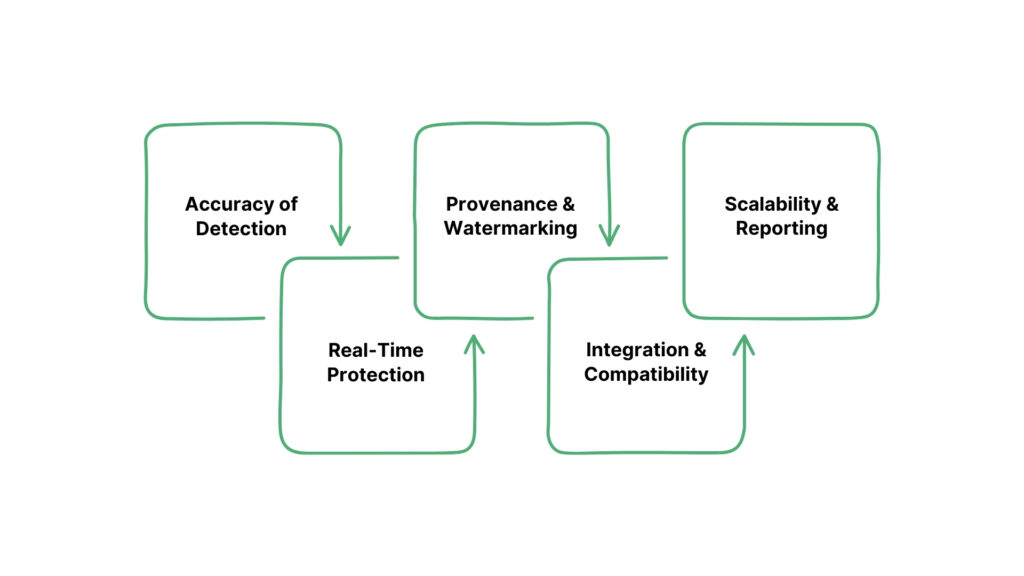
Picking the right deepfake technology partner goes beyond just picking a tool, it’s about finding a company that can reliably protect your media, data, and reputation. Start by assessing your organization’s needs.
Are you focused on real-time detection during live meetings, forensic analysis of existing content, or ongoing monitoring across multiple platforms? The ideal company should combine advanced AI detection, content verification, and seamless integration into your workflow.
Here’s a quick guide to help you decide:
- Accuracy of Detection: Look for companies using advanced AI and multimodal analysis to identify deepfakes across audio, video, and images.
- Real-Time Protection: Solutions that provide immediate alerts during live calls or broadcasts are crucial for preventing fraud and misinformation.
- Provenance & Watermarking: Companies offering watermarking or digital verification add an extra layer of authenticity and trust.
- Integration & Compatibility: Ensure the solution works with your existing tools, conferencing platforms, and media systems.
- Scalability & Reporting: Choose a partner that can handle multiple channels, deliver detailed forensic reports, and grow with your needs.
By considering these factors, you can select a deepfake technology company that not only detects and prevents manipulated media but also strengthens trust and compliance across your organization.
Resemble AI checks most of these boxes, offering real-time detection, multimodal analysis, watermarking, and seamless integration with major conferencing platforms. This makes it a strong choice for businesses looking to embed deepfake detection directly into their security strategy.
Also Read: Resemble AI's Commitment to the AI Voluntary Code of Conduct
Conclusion
Deepfake technology is evolving rapidly, and so are the tools to combat misinformation. Modern solutions go beyond simple detection, offering real-time analysis, multimodal verification, watermarking, and identity protection.
Resemble AI stands out by combining cutting-edge deepfake detection with features like real-time synthetic media monitoring, multimodal analysis, and seamless platform integration, making it one of the most comprehensive solutions for organizations seeking to safeguard trust and compliance.

If you are ready to strengthen your defenses against deepfake threats and protect sensitive communications, schedule a demo with Resemble AI.
FAQs
1. How quickly can deepfake detection tools analyze live video or audio?
Most advanced platforms can process and flag suspicious content in real time, often within milliseconds to a few seconds, depending on the media complexity and platform integration.
2. Can deepfake detection tools identify manipulated content that uses partial or subtle edits?
Yes. Modern tools analyze multimodal signals such as audio cues, visual inconsistencies, and contextual anomalies to detect even small manipulations that traditional methods might miss.
3. Do these technologies work on encrypted video calls or private streams?
Some solutions can operate within secure or encrypted environments using on-device analysis or enterprise-level API integration, ensuring privacy while still detecting synthetic media.
4. Are deepfake detection systems effective across different languages and accents?
Yes. Leading detection models are trained on diverse multilingual datasets, enabling them to recognize synthetic voices and video content across multiple languages and regional speech patterns.
5. How can organizations integrate deepfake detection into existing security workflows?
Most platforms offer APIs, SDKs, or browser integrations, allowing seamless deployment alongside compliance monitoring, identity verification, and incident response systems.


.avif)