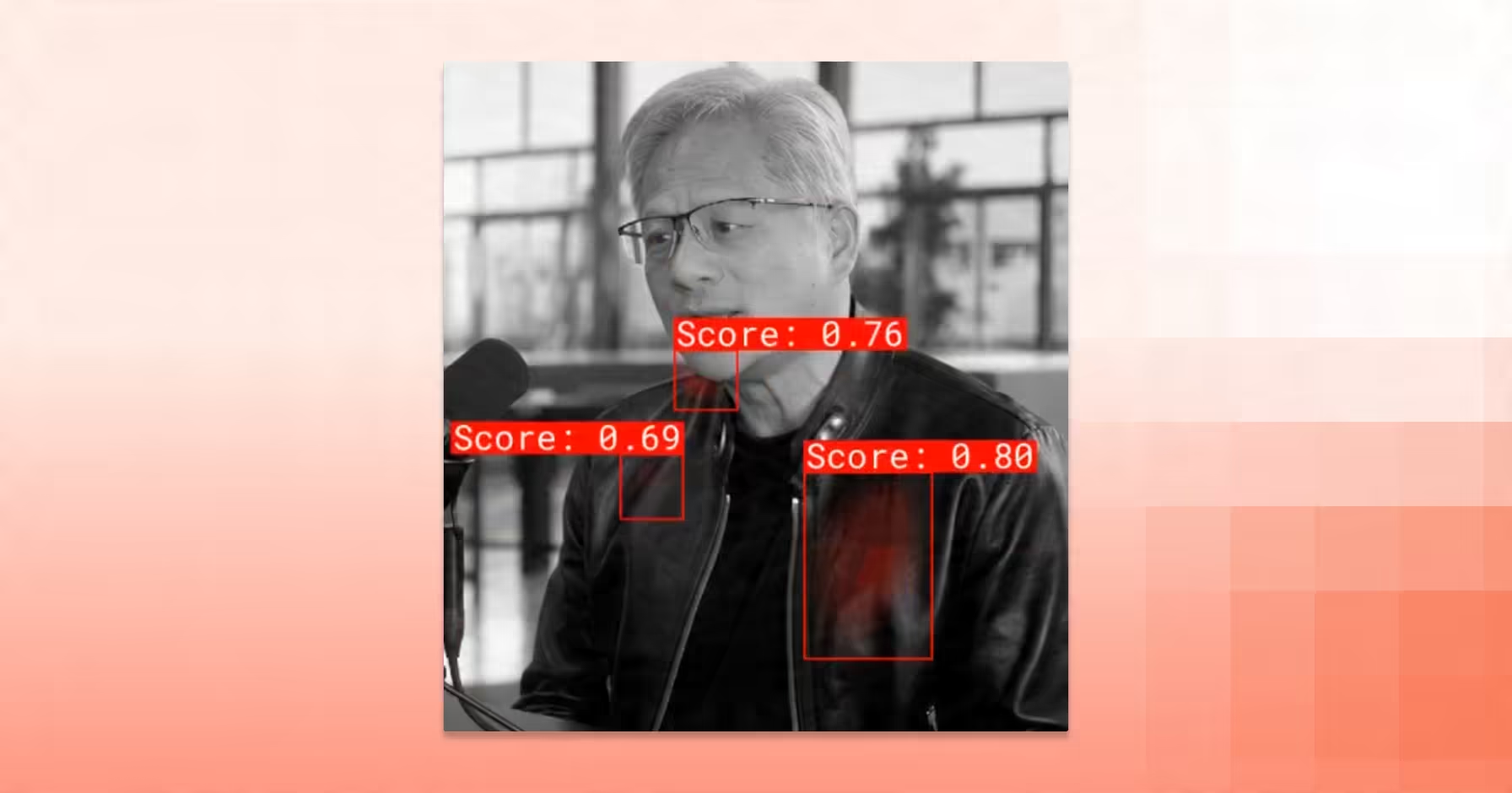

Hiring teams are under increasing pressure to make fast decisions across remote and global talent pools. In a 2025 Gartner survey of 3,000 job candidates, 6% admitted to engaging in interview fraud, either by posing as someone else or having someone else pose as them.
This growing risk is making candidate fraud harder to detect, especially as AI-generated resumes, credential misrepresentation, impersonation, and synthetic media become more common. If you work in talent acquisition, HR, security, or workforce operations, a fraudulent hire can create financial, security, compliance, and productivity challenges that extend far beyond recruitment.
This is why candidate fraud detection has become a critical part of modern hiring. By combining identity verification, structured screening processes, credential validation, and modern detection technologies, organizations can reduce hiring risks and improve decision confidence. A structured candidate fraud detection strategy can help you identify red flags earlier and strengthen trust in remote hiring workflows.
This article explores what candidate fraud looks like today, the most common tactics hiring teams encounter, warning signs to watch for, and practical strategies to support a modern hiring fraud-prevention framework.
Key Highlights:
- Candidate fraud has evolved beyond résumé exaggeration to include identity fraud, proxy interviews, AI-generated applications, deepfakes, and fake references in modern hiring environments.
- Hiring teams can spot potential fraud by watching for inconsistencies in candidate information, unusual interview behavior, resistance to verification, and mismatches between claimed and demonstrated skills.
- A strong fraud prevention strategy combines identity verification, structured interviews, skills assessments, credential checks, synthetic media detection, and ongoing verification practices.
- As remote and global hiring expands, organizations are increasingly adopting layered security measures and AI-powered detection tools to improve confidence in hiring processes and reduce recruitment risks.
What is Candidate Fraud in Modern Recruitment?
Candidate fraud refers to the intentional misrepresentation of information during the hiring process. This can include false credentials, fabricated work experience, identity manipulation, or the use of technology to deceive recruiters and hiring managers.
While some forms of candidate fraud have existed for years, digital hiring environments have introduced new methods that are more difficult to detect through conventional screening processes.
The Most Common Types of Candidate Fraud Hiring Teams Encounter
Candidate fraud can occur at multiple stages of the recruitment process. Understanding the most common forms helps hiring teams identify where additional verification controls may be needed.
- Résumé and Employment History Fraud
Résumé fraud remains one of the most common forms of recruitment deception. Candidates may exaggerate or fabricate professional experience to appear more qualified than they are.
Candidates may:
- Inflate job titles
- Extend employment dates
- Misrepresent responsibilities
- Claim experience with technologies they have not used
- Invent positions entirely
While not every discrepancy constitutes intentional fraud, significant inconsistencies can affect hiring decisions and lead to performance issues after onboarding.
- Credential and Certification Fraud
This form of fraud involves misrepresenting educational achievements, licenses, certifications, or professional qualifications.
Examples include:
- Claiming degrees that were never earned
- Presenting altered certificates
- Listing expired credentials as active
- Misrepresenting professional licensing status
In regulated industries such as healthcare, finance, and engineering, credential verification may be particularly important because qualifications can directly affect compliance and operational risk.
- Identity Fraud
Identity fraud occurs when an applicant uses false personal information or attempts to impersonate another individual.
This may involve:
- Fake identity documents
- Synthetic identities
- Stolen personal information
- Altered identification records
Identity fraud creates concerns that extend beyond recruitment. It may expose organizations to security, compliance, and insider threat risks.
- Proxy Interviewing
Proxy interviewing occurs when someone other than the actual applicant participates in interviews or assessments.
For example:
- A technically skilled individual may complete coding assessments on a candidate's behalf.
- A different person may participate in virtual interviews.
Once hired, the actual employee may possess significantly different skills from those demonstrated during recruitment.
- AI-Generated Application Fraud
Generative AI can assist candidates with writing applications, portfolios, and supporting materials. Problems arise when AI-generated content includes fabricated experience or misrepresents actual skills.
While many candidates use these tools appropriately, problems arise when generated content includes false or misleading information.
Potential concerns include:
- Fabricated accomplishments
- Invented projects
- Artificially generated work samples
- Misrepresentation of expertise
Hiring decisions depend on accurate representations of skills and experience. Generated content that obscures a candidate's actual abilities may reduce the accuracy of evaluation.
- Deepfake and Synthetic Media Impersonation
One of the more recent concerns in candidate fraud detection involves synthetic media.
Deepfake technologies may be used to manipulate:
- Audio
- Video
- Facial movements
- Voice characteristics
While such incidents may still represent a relatively small portion of hiring fraud, organizations with remote recruitment workflows are increasingly assessing safeguards against synthetic media risks.
- Fake References
Reference fraud occurs when candidates provide references that cannot independently verify their claims.
Examples include:
- Friends posing as managers
- Fabricated reference contacts
- Fake companies created solely for verification purposes
Without independent verification methods, fraudulent references can be difficult to distinguish from legitimate references.
If you're assessing remote hiring risks, Resemble Meetings can help teams explore how voice and meeting analysis support candidate verification workflows.
Warning Signs That May Indicate Candidate Fraud
Fraud indicators do not automatically confirm deception. However, recognizing unusual patterns can help hiring teams identify situations that may require additional verification.
- Unusual responses during interviews: Candidates who struggle to explain their previous work, provide inconsistent details about projects, or give vague answers about their responsibilities may require further assessment.
- Knowledge gaps that don't align with claimed experience: Someone with extensive experience in a particular role or technology should generally be able to discuss workflows, challenges, and decision-making processes with confidence.
- Reluctance to participate in verification steps: Hesitation regarding identity checks, reference verification, skills assessments, or documentation requests may signal the need for additional due diligence.
- Unusual audio or video behavior in remote interviews: Unexpected voice changes, visual distortions, synchronization issues, or irregular communication patterns may justify further verification, particularly in fully remote hiring processes.
- Repeated changes to personal or professional information: Frequent updates to employment history, qualifications, contact details, or supporting documents during the hiring process may require additional scrutiny.
- Pressure to accelerate hiring decisions: Candidates who strongly discourage verification steps or push for unusually fast hiring timelines may create unnecessary risk if proper checks are skipped.
For organizations assessing synthetic media risks, Chrome Deepfake Detection can provide an additional layer of visibility during digital hiring interactions.
Key Strategies for Detecting Candidate Fraud
Candidate fraud detection is most effective when organizations combine multiple verification methods. No single process can address every risk scenario.
The following strategies can help create a more resilient hiring framework.
- Implement Multi-Layer Identity Verification
Identity verification is often the foundation of effective fraud prevention.
Organizations may consider combining:
- Government-issued ID verification
- Live video verification
- Employment validation
- Contact verification
A layered approach makes it more difficult for fraudulent candidates to exploit a single weakness.
- Use Structured Interviews
Structured interviews create consistency and reduce opportunities for deception.
Rather than relying on general conversations, hiring teams may ask:
- Experience-based questions
- Scenario-based questions
- Project-specific questions
- Follow-up verification questions
Candidates with genuine experience are often better able to explain context, decisions, challenges, and outcomes.
- Validate Skills Through Real-World Assessments
Skills verification can be more effective when candidates demonstrate capabilities directly.
Examples include:
- Coding exercises
- Case studies
- Role simulations
- Portfolio walkthroughs
These assessments help organizations evaluate practical competency rather than relying solely on claims.
- Monitor For Deepfake and Synthetic Media Risks
As remote hiring expands, organizations may want to consider safeguards that help identify manipulated audio and video content.
Potential approaches include:
- Identity confirmation checkpoints
- Live interaction verification
- Video authentication processes
- Deepfake detection technologies
It is important to recognize that detection technologies cannot reliably identify every manipulated asset. Their effectiveness may vary depending on content quality, attack methods, and deployment context.
- Train Hiring Teams To Recognize Fraud Indicators
Technology alone cannot solve candidate fraud challenges.
Recruiters, hiring managers, and interviewers often play an important role in identifying potential fraud risks.
Training may cover:
- Identity fraud indicators
- Deepfake awareness
- Interview inconsistencies
- Verification procedures
- Escalation processes
Awareness helps teams identify situations that require additional review.
- Establish Continuous Verification
Candidate verification should not necessarily end after onboarding.
Organizations increasingly evaluate:
- Ongoing credential validity
- Access reviews
- Security monitoring
- Identity assurance processes
Continuous verification may help reduce long-term risks associated with identity-related threats.
- Build a Risk-Based Hiring Framework
Not every role carries the same level of risk.
Organizations may want to apply enhanced verification procedures for positions involving:
- Financial authority
- Sensitive customer data
- Administrative system access
- Security responsibilities
- Executive decision-making
Risk-based hiring frameworks help organizations focus verification resources on roles with the highest potential risk.
How Resemble AI Helps Hiring Teams Detect Candidate Fraud
Resemble AI helps organizations detect manipulated media, verify identities, secure live communications, and establish content provenance across audio, image, video, and text. Its security platform is built to help teams assess synthetic media risks and respond with clearer evidence when authenticity is in question.
Here’s how we can help you:
- Audio detection: Resemble AI is designed to identify synthetic or manipulated audio in interviews and recordings. The platform supports 54 languages and reports detection speeds under 300 ms.
- Video analysis: The platform can analyze video content for signs of manipulation, helping teams review virtual interviews for potential impersonation risks.
- Image verification: Hiring teams can also assess images, profile photos, and identity-related visuals for signs of AI-generated or altered content.
- Broad model coverage: Resemble AI says its detection systems have been tested against 250+ generative AI models, helping organizations evaluate a wide range of synthetic media threats.
- Explainable findings: Detection results include supporting context and explanations, making it easier for recruiters and security teams to review flagged content.
- Real-time monitoring: The platform can operate in real time, allowing organizations to assess media authenticity during live virtual interactions.
- Multimodal detection: Rather than focusing only on voice cloning, Resemble AI evaluates audio, video, and images within a single detection framework.
- Layered security: Detection works best when combined with identity verification, background checks, and structured interviews as part of a broader fraud prevention strategy.
- Flexible deployment: Organizations can integrate detection through APIs or deploy it in environments that align with their security and compliance requirements.
For teams evaluating modern hiring safeguards, exploring Resemble AI's approach to synthetic media detection can provide useful context on how voice authentication and fraud detection technologies fit into broader recruitment security workflows.
Conclusion
Candidate fraud is becoming more complex as remote hiring, AI-generated content, and synthetic media technologies continue to evolve. While traditional background checks remain valuable, they may not address every modern recruitment risk.
A stronger approach combines multiple layers of validation. Identity checks, credential verification, skills assessments, structured interviews, reference validation, and synthetic media awareness can work together to improve hiring confidence while reducing organizational exposure to fraud-related risks.
As organizations continue evaluating approaches to global candidate fraud detection, it is important to recognize that no detection method is foolproof. Verification processes should be regularly reviewed and adapted as hiring technologies and fraud techniques evolve.
If your organization is evaluating candidate verification processes or exploring ways to address emerging synthetic media risks, reviewing solutions such as Resemble AI can provide useful insight into how modern detection technologies fit within a broader hiring security strategy.
Frequently Asked Questions
- How can asynchronous video or live coding assessments reduce fraud risk?
Asynchronous video interviews and live coding assessments make it harder for candidates to rely on external assistance or impersonation. They allow recruiters to evaluate communication skills, problem-solving abilities, and real-time thinking while verifying that a candidate’s skills match their application.
- What data sources should recruiters use to validate employment and education claims?
Recruiters should verify claims using official employment records, educational institutions, professional licensing bodies, background screening providers, and candidate-provided references. Cross-checking information across multiple trusted sources helps identify discrepancies and reduce the risk of fraudulent credentials.
- What legal and privacy concerns arise when conducting candidate fraud checks?
Candidate fraud checks must balance verification needs with privacy rights. Employers should obtain informed consent, collect only relevant information, ensure data security, and avoid discriminatory practices. Compliance with local employment and privacy regulations is essential throughout the screening process.
- How do data protection laws (like GDPR) affect candidate verification processes?
Data protection laws such as GDPR require organizations to process candidate information lawfully, transparently, and for specific purposes. Employers must obtain appropriate consent, limit data collection, secure personal information, and provide candidates with rights regarding their data.
- What internal policies should organizations implement to deter candidate fraud?
Organizations should establish clear hiring policies that include identity verification, background screening, reference checks, document validation, and fraud reporting procedures. Consistent enforcement and regular staff training help create accountability and discourage misrepresentation during recruitment.
- How can structured interview guides help reduce deception and bias?
Structured interview guides ensure every candidate is assessed using the same questions and evaluation criteria. This consistency reduces subjective judgments, improves fairness, and makes it easier to identify conflicting or misleading responses across different stages of the hiring process.
- How can behavioral interviewing techniques uncover dishonest responses?
Behavioral interviews require candidates to describe specific past experiences and actions. Follow-up questions often reveal inconsistencies, vague details, or exaggerated achievements, helping recruiters assess credibility while gaining deeper insights into actual workplace behaviors and performance.
- What steps can organizations take to recover from hiring-related fraud losses?
Organizations should investigate the incident, document findings, review legal options, and address any security or operational risks. Updating verification procedures, retraining hiring teams, and strengthening screening controls can help prevent similar incidents and reduce future losses.
- How often should organizations update their candidate verification procedures?
Candidate verification procedures should be reviewed at least annually or whenever significant regulatory, technological, or workforce changes occur. Regular updates help organizations address emerging fraud tactics, maintain compliance, and ensure screening processes remain effective and relevant.
- What third-party verification services are recommended for high-volume hiring?
High-volume hiring often benefits from professional background screening providers that offer employment verification, education checks, identity validation, criminal record screening, and reference verification. Organizations should select providers that meet industry standards, compliance requirements, and scalability needs.
- How do automated reference-check platforms compare to manual reference calls?
Automated reference-check platforms improve efficiency, consistency, and scalability by collecting structured feedback from multiple references. Manual reference calls provide deeper context and allow follow-up questions, making a combined approach effective for evaluating critical or senior-level roles.
- What are the risks of over-reliance on automated fraud detection tools?
Automated tools can improve screening efficiency but may produce false positives, overlook nuanced information, or inherit biases from underlying data. Human review remains important to validate findings, interpret context, and make fair, informed hiring decisions.