



In a world where seeing and hearing no longer guarantees authenticity, enterprises, developers, and media teams face a growing digital trust crisis. AI-generated content, across audio, video, and images, is being weaponized in scams that cost billions and erode confidence in digital channels. In fact, there were 1,567 verified deepfake incidents in 2025, resulting in $1.28 billion in documented losses and affecting both corporate and consumer targets.
For US businesses, this is more than a theoretical threat: nearly half of organizations report audio, video, or image-based deepfake scams targeting their systems, and average losses per incident can reach hundreds of thousands of dollars. As AI tools become easier and cheaper to access, traditional detection methods can’t keep up, and human judgment alone can't reliably spot sophisticated fakes.
This blog explores how two leading platforms, Resemble AI and iMatag, approach AI watermarking, helping you evaluate which tool best fits your needs.
At a Glance:
- AI watermarking helps protect digital content by embedding traceable signatures that ensure authenticity, prevent misuse, and support compliance across media types.
- Choosing the right tool depends on factors like built-in watermarking during content creation, verification workflows, security controls, and ease of API integration.
- Resemble AI offers watermarking across audio, video, and images, with integrated multimodal content generation capabilities and real-time verification, while iMatag specializes in forensic-grade watermarking for visual content and asset tracking.
- Both platforms differ in capabilities, pricing models, and deployment options, with one offering flexible usage-based pricing and the other relying more on customized plans and monitoring solutions.
- The best choice ultimately depends on your use case, whether you need scalable multimodal AI with embedded watermarking or strong protection and traceability for visual and multimedia assets.
Resemble AI vs iMatag: What Do Top AI Watermarking Tools Offer
Not all AI watermarking technologies are solving the same problem, and that’s exactly where most teams make the wrong choice. Some tools are built to protect how multimodal content (audio, video, and images) is created, while others focus on where it gets distributed and potentially misused.
The gap between these two approaches is often where content security either holds up or breaks down.
Resemble AI and iMatag approach this challenge from two different angles; one integrates watermarking directly into AI-generated multimodal content workflows, while the other focuses on forensic-level protection for visual media.
Understanding this distinction is key before comparing features, because the right choice depends on where you need control in the content lifecycle.
- Resemble AI
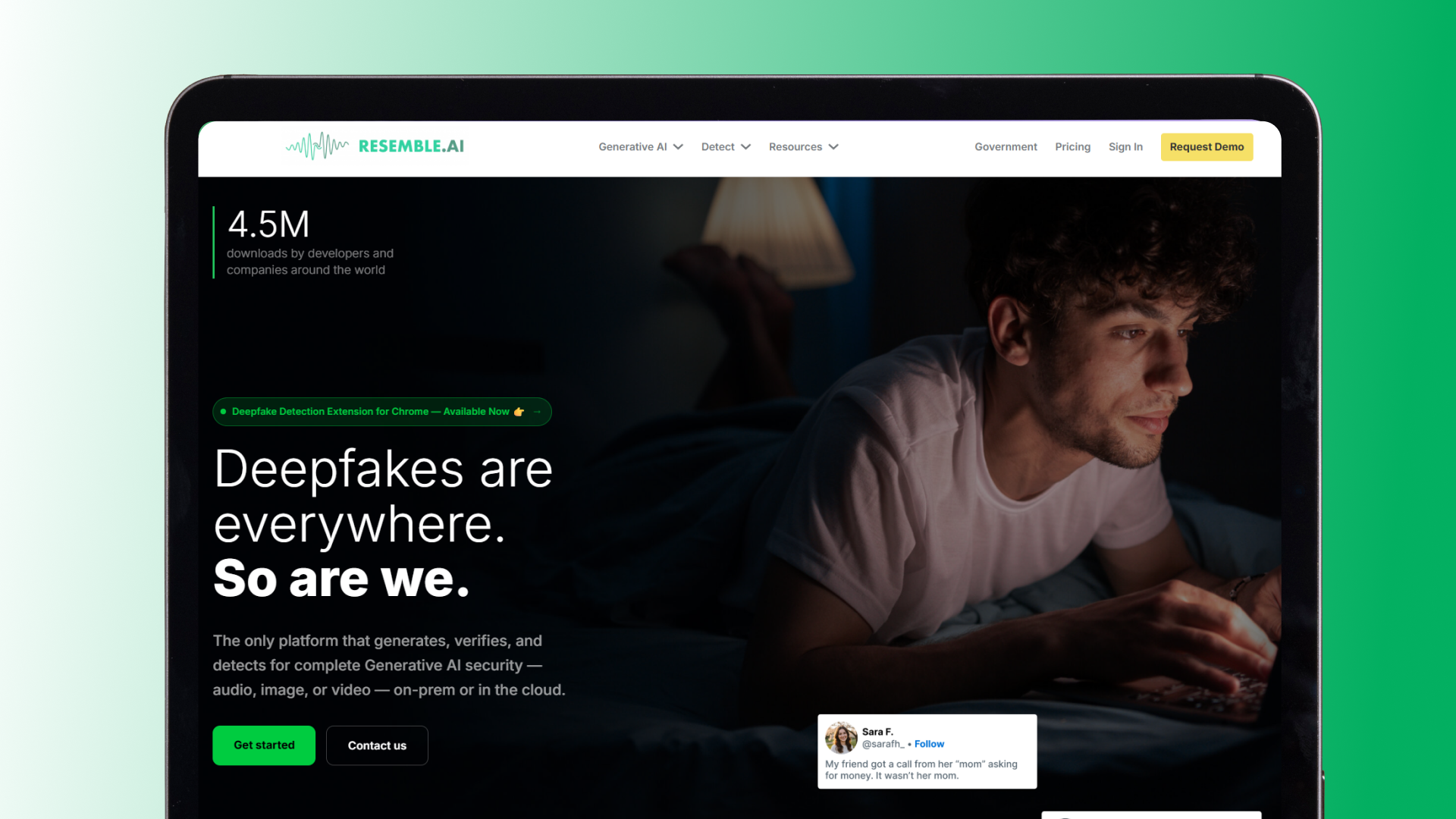
Resemble AI combines high-quality generative capabilities with advanced watermarking and deepfake detection, making it ideal for organizations that need authentic multimodal content(audio, image and video) experiences
Key highlights include:
- Neural Watermarking (PerTh): Embeds imperceptible watermarks in generated audio using psychoacoustic principles, ensuring traceability and protection against unauthorized reuse.
- C2PA Integration: Strengthens content provenance by attaching verifiable manifests and digital certificates, enabling bulletproof verification even if audio is edited or re-uploaded.
- Real-Time Verification: SDK allows automated verification and authentication with minimal integration overhead.
- AI Content Capabilities: Supports multimodal content, text-to-speech, speech-to-speech, and scalable API access for developers and enterprises.
Ideal For:
- Developers building secure, multimodal AI applications that require built-in watermarking and real-time verification across content types.
- Enterprises needing scalable, audit-ready AI solutions for customer service, media, or cybersecurity workflows involving audio, video, and image assets.
- Creators and publishers seeking reliable AI-generated multimodal content with provenance tracking built in.
- iMatag
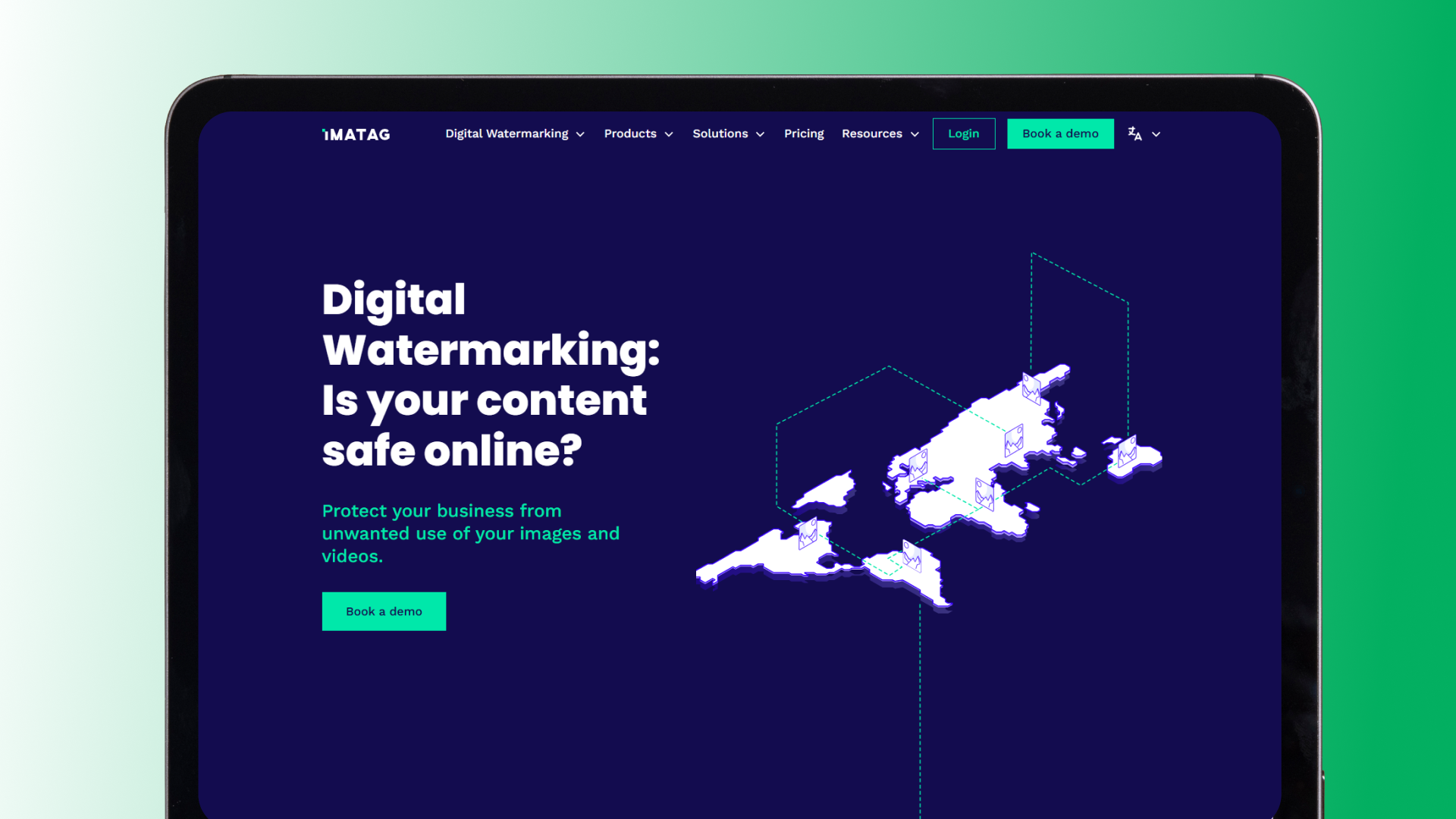
iMatag specializes in invisible digital watermarking solutions for visual content, offering reliable tools for protecting, monitoring, and authenticating images and videos. Its watermarking operates at the pixel level to embed identifiers that survive typical transformations like resizing or compression.
iMatag’s product suite helps brands and media companies trace leaks, verify provenance, and monitor usage across the web. While it doesn’t natively provide multimodal AI watermarking, its strength lies in delivering forensic-grade visual watermarking and tracking for asset management workflows.
Ideal For:
- Brands and agencies that depend on visual assets and need imperceptible, resilient digital watermarking.
- Media publishers and content platforms that need provenance verification and leak detection for images and video.
- Organizations with IP‑centric assets that must track usage, prevent unauthorized distribution, and enforce rights.
Comparing Key Features: Resemble AI vs iMatag for Content Protection
AI watermarking is no longer just about embedding invisible markers—it’s about what happens after content is altered, compressed, remixed, or redistributed across platforms. That’s where the real difference between platforms becomes visible.
Resemble AI and iMatag don’t just differ in features; they represent two different philosophies of content protection. One is built around AI-driven multimodal media creation (audio, video, and image) with built-in provenance, while the other focuses on pure-play watermarking for visual authenticity and ownership verification.
To understand what that actually means in practice and which approach aligns better with your workflow, let’s break down how each platform performs across core dimensions of content protection.
Pricing & Deployment: Resemble AI vs iMatag
When evaluating watermarking platforms, the real question goes beyond cost; it’s about the value delivered when watermarking must scale across audio, video, and image content.
Let's break down how both platforms approach cost efficiency and deployment flexibility, revealing what it actually means for teams operating in fast-moving creative environments versus large-scale content protection systems.
Comparing Tools by Use Case: Which Tool Fits Your Needs
At first glance, both Resemble AI and iMatag appear to solve a similar problem: protecting and managing digital content in an AI-driven world. But the way they approach watermarking is fundamentally different, and that difference only becomes clear when you look at real-world usage.
The real question isn’t just what each tool does, but what kind of digital risk or creative workflow you’re actually trying to solve across multimodal content environments.
This is where the distinction between Resemble AI and iMatag starts to matter in practical scenarios:
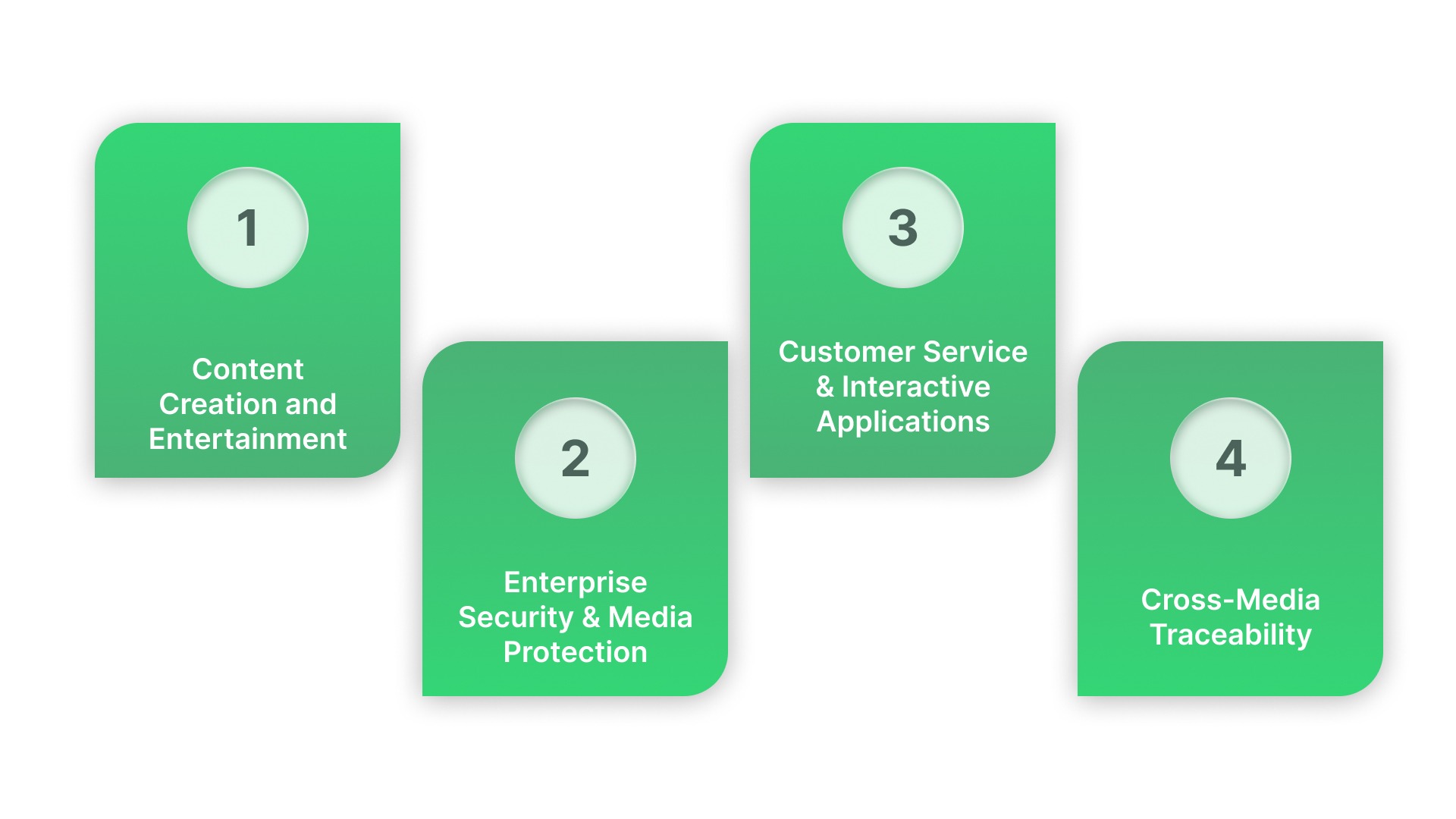
- Multimodal Content Creation: Resemble AI supports watermarking across AI-generated audio, images, and video workflows, making it suitable for creators and teams working with generative media pipelines. Its focus on content authenticity ensures traceability without compromising media quality or creative flexibility.
- Enterprise Security and Media Protection: iMatag is ideal for organizations needing strong content authentication across multiple media types. Legal compliance, piracy prevention, and digital rights management are key strengths.
- Customer Service and Interactive Applications: Resemble AI enables real-time, AI-driven interactive applications across voice, video, and image, making it useful for enterprises building scalable, dynamic customer engagement systems.
- Cross-Media Traceability: iMatag’s advanced watermarking across audio, images, and video provides a unified approach to content verification, useful for enterprises managing extensive digital media portfolios.
Ultimately, the choice depends on whether your priority is AI-driven multimodal content generation with embedded watermarking and authenticity controls (Resemble AI) or enterprise-grade, large-scale digital asset protection and traceability across media formats (iMatag).
Conclusion
As the use of generative AI continues to expand across industries, AI watermarking is quickly becoming foundational for trust, verification, and compliance. It is no longer optional; it is essential for organizations that generate, distribute, or rely on synthetic audio, video, and image content at scale.
Choosing the right watermarking tool depends on your primary content type and operational needs. Resemble AI offers a versatile solution that addresses both content creation and ethical AI considerations, making it suitable for developers, content creators, and enterprises looking to enhance user experience while safeguarding their digital assets.
Book a demo with Resemble AI to explore how secure, scalable AI solutions for audio, video, and images can enhance your workflows.
FAQs
- How traceable are leaks when using Resemble AI versus iMatag?
Resemble AI enables highly granular traceability in multimodal content through embedded, user-specific watermark signatures, making leak attribution precise, while iMatag focuses on image/video tracking with forensic watermarking, offering strong traceability but typically at asset-level rather than user-level granularity.
- Do Resemble AI and iMatag support on-premise watermarking, or are they cloud-only?
Resemble AI offers flexible deployment, including cloud and enterprise-grade on-premise options for sensitive environments handling audio, video, and image data, whereas iMatag primarily operates as a cloud-based SaaS solution, with enterprise access to private or controlled deployments depending on requirements.
- How easy is it to integrate watermarking via API with Resemble AI compared to iMatag?
Resemble AI provides developer-friendly APIs with clear documentation for embedding watermarking into multimodal workflows, enabling fast integration, while iMatag also supports API integration but may require more configuration depending on media pipelines and asset management systems.
- Can Resemble AI watermarks survive common edits such as trimming and clipping?
Resemble AI uses robust, imperceptible watermarking designed to withstand common edits such as trimming, clipping, and compression in audio, and similar transformations in video and image formats. While minor degradation can occur under heavy manipulation, the watermark typically remains detectable for continued traceability.
- How do policies and governance features around AI watermarking differ between Resemble AI and iMatag?
Resemble AI emphasizes AI governance with controls for synthetic media usage across audio, video, and images, including consent tracking and misuse prevention, whereas iMatag focuses more on digital asset rights management, offering tracking dashboards and enforcement tools but less emphasis on AI-specific ethical governance frameworks.
- Why is AI Watermarking critical for content security?
AI watermarking helps verify content authenticity, detect tampering, and trace ownership across audio, video, and image assets. As synthetic media grows, it provides a reliable way to identify AI-generated or altered content, reduce misuse, and maintain trust across platforms and enterprise systems.

.avif)
