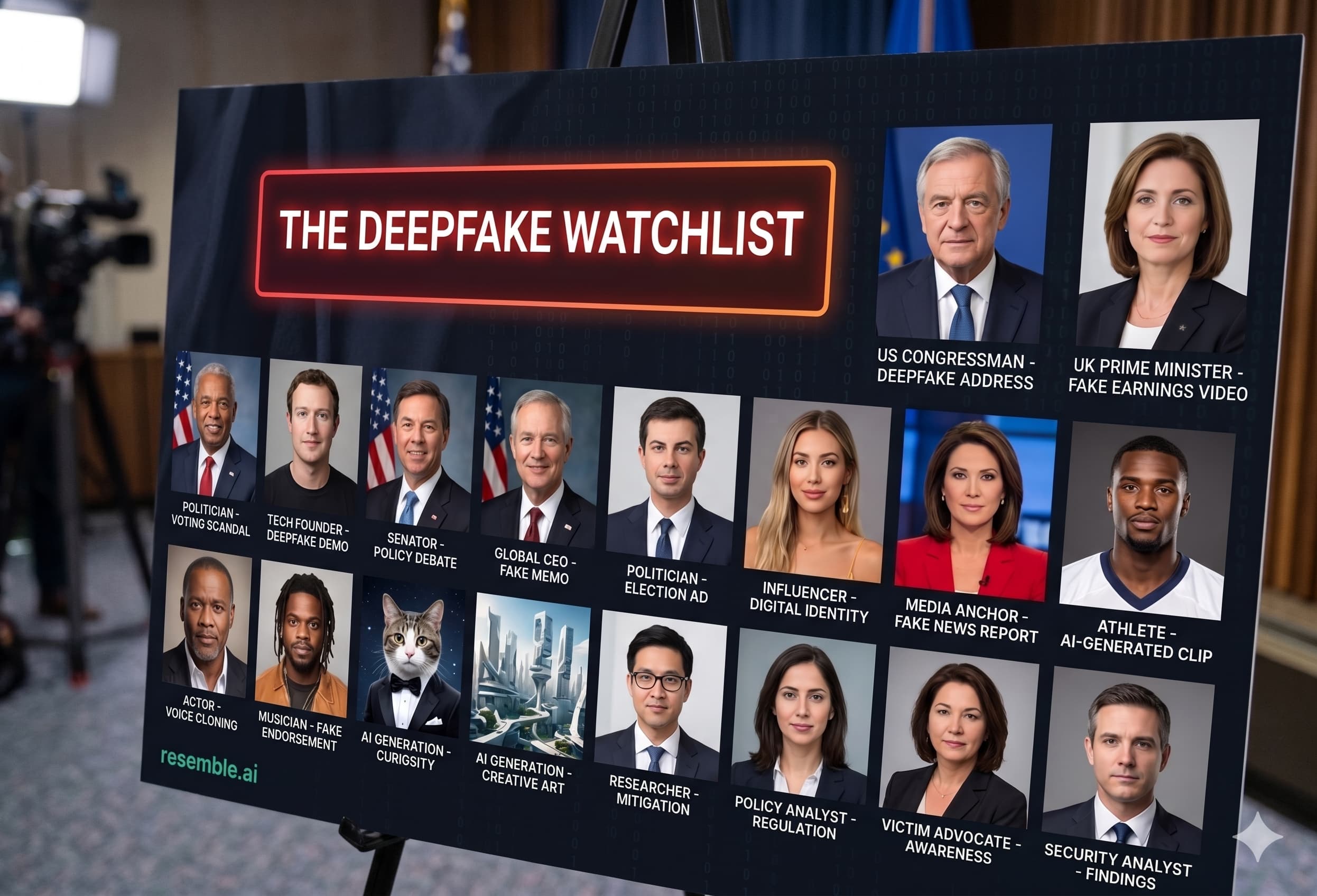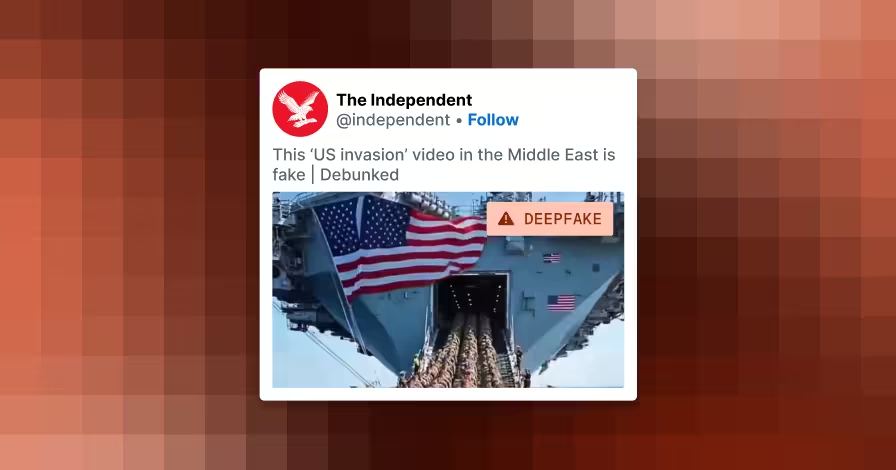
By 2025, deepfakes are projected to reach 8 million online, up from 500,000 in 2023, and Europol estimates that 90% of online content could be synthetically generated by 2026. This surge poses serious challenges for anyone creating, sharing, or consuming digital media.
For gamers, manipulated streams and in-game content can mislead audiences and harm credibility. Marketers risk synthetic ads or brand impersonations undermining consumer trust. Digital creators face falsified content that complicates ownership and protection of their work.
Video scanners offer a solution, detecting manipulated content, verifying authenticity, and safeguarding digital assets. Staying ahead of synthetic media is essential to maintain trust, protect intellectual property, and ensure the content audiences engage with is genuine.
At a Glance:
- Rising Threats: Deepfakes are projected to hit 8M by 2025, making content verification crucial for creators, brands, and gamers.
- Core Function: AI video scanners detect manipulation, verify authenticity, and protect content from piracy or misuse.
- Top Use Cases: From influencer verification and livestream protection to anti-phishing and IP defense — scanners secure every stage of content creation.
- Implementation Flow: Define goals, pick tools, preprocess data, integrate AI, monitor in real time, and ensure legal compliance.
- Resemble AI Edge: Offers deepfake detection, watermarking, identity verification, and explainable audio intelligence in one platform.
- Challenges & Fixes: Tackles false positives, dataset limits, and evolving deepfakes using continuous learning and scalable cloud models.
- Future Vision: Expect predictive detection, self-healing videos, dynamic watermarks, and decentralized verification networks for total content integrity.
What a Modern Video Scanner Does
Modern video scanners are advanced AI-powered tools designed to detect, verify, and protect digital content from manipulation and unauthorized use. These scanners utilize a combination of computer vision, deep learning, and machine learning techniques to analyze video content for signs of tampering or synthetic generation.
Key Functions:
- Detection of Manipulated Content: Identifies deepfakes, face swaps, lip-sync alterations, and other video manipulations.
- Verification of Authenticity: Analyzes metadata, compression artifacts, and visual/audio inconsistencies to confirm if a video is genuine or AI-generated.
- Protection of Intellectual Property: Detects unauthorized use or distribution of content to prevent piracy and maintain copyright.
- Content Moderation: Filters manipulated or synthetic videos on platforms to ensure authenticity.
- Security and Surveillance: Validates the integrity of surveillance footage and tamper-proof monitoring.
- Legal and Compliance Support: Assesses the authenticity of videos for legal evidence and regulatory purposes.
With these capabilities, video scanners are applied in a variety of scenarios to protect, verify, and manage digital content effectively.

Key Use Cases for Video Scanners

Modern video scanners, powered by AI and machine learning, are essential for detecting, verifying, and protecting digital content. Their applications span multiple sectors and address a wide range of challenges:
1. Authenticating Influencer Content
For marketers, ensuring that influencer videos are genuine is critical. Video scanners can detect if sponsored content has been manipulated, edited without approval, or generated synthetically, protecting brand reputation and campaign integrity.
Also Read: Celeb Deepfake: MrBeast TikTok Deepfake Ad and iPhone Scam
2. Protecting Livestreams and Gaming Content
Gamers and streaming platforms face the risk of pirated live streams or modified gameplay footage. Video scanners can monitor live broadcasts to flag unauthorized redistribution, overlays, or AI-manipulated gameplay clips.
3. Preventing AI-Generated Scams and Phishing
Fraudsters are increasingly using AI-generated video messages to impersonate executives, creators, or customer support agents. Video scanners can detect these deepfake messages before they reach audiences, safeguarding both users and brands.
Also Read: How to Detect Deepfakes Using AI
4. Content Moderation for Platforms
Social media and video platforms can utilize video scanners to automatically identify and flag manipulated or synthetic content uploaded by users. This ensures community safety, prevents the spread of misinformation, and reduces manual moderation workload.
5. Verifying User-Generated Campaigns
Brands running user-generated content campaigns need to verify authenticity. Video scanners can detect AI-generated submissions or tampered videos, ensuring only genuine user content is promoted in campaigns.
6. Legal Evidence and Intellectual Property Protection
Digital creators and studios can use video scanners to prove ownership or authenticity of their content when disputes arise. They help verify whether video material has been altered, reused without permission, or illegally shared.
Also Read: The COPIED ACT: Combatting Deepfakes and Protecting Creators
7. Enhanced Ad and Brand Safety
Marketers can scan video ads before distribution to ensure no deepfake manipulation or brand hijacking occurs. This prevents potential reputational damage and protects ROI on digital campaigns.
Worried about deepfakes or manipulated videos slipping through? Protect your content and verify every clip with Resemble AI’s Detect tool.
While video scanners offer powerful capabilities, deploying them comes with technical and operational challenges that organizations need to navigate carefully.
Technical and Operational Challenges
As AI-generated content becomes increasingly sophisticated, detecting manipulated videos presents several hurdles. Below is a detailed breakdown of these challenges and corresponding strategies to mitigate them:
| Challenge | Impact | Practical Workaround |
| High processing & real-time detection | Slower analysis, hard to monitor live streams | Use cloud GPUs, edge computing, selective frame sampling, and optimized algorithms. |
| Dataset limitations & false positives/negatives | Poor accuracy on diverse videos; genuine videos flagged or fakes missed | Retrain with varied datasets, combine multiple models, and use confidence scoring. |
| Lack of explainability | Hard to trust or justify decisions | Provide visual explanations and interpretable AI outputs. |
| Integration & scalability | Disrupts workflows; struggles with high-volume content | Use modular APIs, microservices, and cloud scaling. |
| Data privacy & resource constraints | Handling sensitive content, smaller teams may struggle | Anonymize data, follow regulations, and provide tiered solutions with training. |
| Evolving threats | Deepfakes advance faster than detection models. | Continuously monitor and retrain models. |
With these challenges in mind, it’s essential to approach video detection with a clear, structured process.
Step-By-Step Implementation Guide

Ensuring video content is authentic is a practical necessity. Take a gaming platform, for instance: live streams are constantly at risk of manipulated clips or AI-generated overlays that could mislead viewers or damage credibility. Implementing a structured video scanning process allows teams to catch these issues early, verify content in real time like on Google Meets, and protect both the platform and its creators.
The following steps outline how to build an effective video scanning workflow, from selecting tools to real-time monitoring and ongoing compliance.
1. Define Objectives and Scope
Determine the goals of your video detection system, such as identifying deepfakes, verifying content authenticity, or monitoring live streams. Define the types of videos to be analyzed, such as social media uploads, marketing content, or surveillance footage, and specify the platforms on which they will appear.
2. Select Tools and Technologies
Choose AI-powered detection tools like Resemble AI to identify manipulated content. Complement with computer vision libraries (OpenCV, TensorFlow, PyTorch) for custom analysis, cloud platforms (AWS, GCP, Azure) for scalable processing, and edge computing if real-time local analysis is needed.
3. Prepare and Preprocess Video Data
Collect a diverse set of video samples representing your target content. Preprocess by extracting frames, normalizing sizes and formats, and applying augmentations like rotation or scaling to create a robust dataset for analysis.
4. Integrate and Deploy Detection Tools
Connect AI tools for frame-by-frame analysis, and optionally develop custom models. Combine visual, audio, and metadata inspection for higher accuracy, then roll out the system across platforms with seamless integration.
5. Real-Time Processing and Monitoring
Set up pipelines for live video feeds with low-latency edge deployment. Implement alert systems to notify stakeholders of suspicious content, while continuously monitoring performance and updating models to adapt to evolving threats.
6. Evaluation, Fine-Tuning, and Compliance
Measure performance with accuracy, precision, recall, and F1-score. Conduct error analysis, refine models, and implement continuous learning pipelines. Ensure data privacy compliance (GDPR, CCPA), maintain transparency, and regularly audit for bias or unfair outcomes.
With a structured implementation in place, the next step is to see how Resemble AI applies these capabilities to deliver effective, real-world video scanning and content protection.
How Resemble AI Powers Video Scanning and More
Whether you’re a creator, a brand, or part of a team handling sensitive communications, having a reliable way to verify video authenticity can save time, prevent misuse, and ensure the content people see is accurate.
Resemble AI approaches this challenge by integrating multiple layers of detection, analysis, and protection into a single system. Its tools are designed to handle real-time video, audio verification, and identity protection, giving teams practical ways to safeguard content without slowing down workflows.
The platform breaks this down into actionable capabilities:
- Deepfake Detection: Identify manipulated videos quickly and accurately, including real-time monitoring of live streams or meetings for synthetic content.
- AI Watermarker: Safeguard your intellectual property with traceable watermarks.
- Identity: Enroll and verify voices for secure identity protection.
- Audio Intelligence: Use explainable AI with audio-enabled language models to verify content context.
- Deepfake Detection for Meetings: Detect manipulated content in platforms like Meet or Teams in real time.
- DETECT-2B: A high-accuracy approach to deepfake detection across languages and generation methods.
Building on how these tools verify and protect content today, AI will continue to evolve, shaping the future of video scanning with even faster, smarter, and more reliable detection.
The Role of AI in the Future of Video Scanning

As synthetic media grows more complex, the future of video scanning will move beyond detection and verification, toward anticipation, prevention, and context-aware intelligence.
Here’s what’s coming next:
1. Predictive Manipulation Detection
AI will begin to forecast potential deepfakes before they are even publicly released. By analyzing trends in content creation, editing patterns, and AI-generated media signatures, systems could flag videos that are likely to be manipulated in the near future, helping brands and platforms act proactively.
2. Context-Aware Verification
Future systems won’t just analyze the video itself, they’ll understand its context. AI could cross-reference content with historical uploads, social sentiment, regional events, or even creator intent. This is to detect suspicious anomalies that purely technical analysis would miss.
3. Self-Healing Video Integrity
Imagine AI that not only detects deepfakes but also automatically restores or reconstructs original content. Using generative models trained on verified source material, these systems could “repair” tampered videos, preserving authenticity for evidence, media, or IP protection.
4. Collaborative & Autonomous Networks
AI-powered video scanners will operate in decentralized networks, sharing threat intelligence in real-time. These systems could autonomously flag, quarantine, or alert users to manipulated content, creating a self-protecting content ecosystem.
5. Dynamic Digital Watermarks
Beyond passive markers, AI will generate evolving, invisible watermarks that encode creator, device, and audience data. Even if conventional metadata is stripped, these behavioral markers help detect unauthorized manipulations.
6. Immersive & Context-Aware Verification
Future AI will scan entire virtual environments, AR, VR, and mixed reality, analyzing avatars, objects, and interactions. Combined with ethical and explainable reasoning, AI will assess both authenticity and potential impact, allowing informed decisions without relying on black-box outputs.

Conclusion
Managing video content today is increasingly complex. Deepfakes and manipulated media evolve fast, making it essential to protect content, maintain audience trust, and safeguard brand integrity. Using an advanced video scanner helps detect potential issues early, secure intellectual property, and ensure every shared video is authentic.
Resemble AI combines real-time detection, identity verification, and content protection in a seamless platform. This allows teams to verify content efficiently and confidently, maintaining credibility across all digital channels.
See the difference a reliable detection tool can make. Book a demo with Resemble AI today.
FAQs
1. What is a video scanner and how does it work?
A video scanner is an AI tool that detects manipulated or synthetic videos. It analyzes visual, audio, and metadata signals to verify authenticity.
2. Why is using a video scanner important for creators and brands?
It ensures content integrity, protects intellectual property, and maintains audience trust. It also helps verify influencer or user-generated content before publishing.
3. Can a video scanner detect live-streamed or real-time video manipulation?
Yes, modern video scanners can monitor live streams or virtual meetings in real time. They flag manipulated or AI-generated content instantly.
4. How does a video scanner protect intellectual property?
It detects unauthorized use or tampering and can embed traceable watermarks. This ensures digital assets remain secure and properly attributed.
5. Can video scanners adapt to evolving deepfake technologies?
Advanced scanners continuously learn from new data and emerging threats. This keeps detection effective even as manipulation techniques evolve.