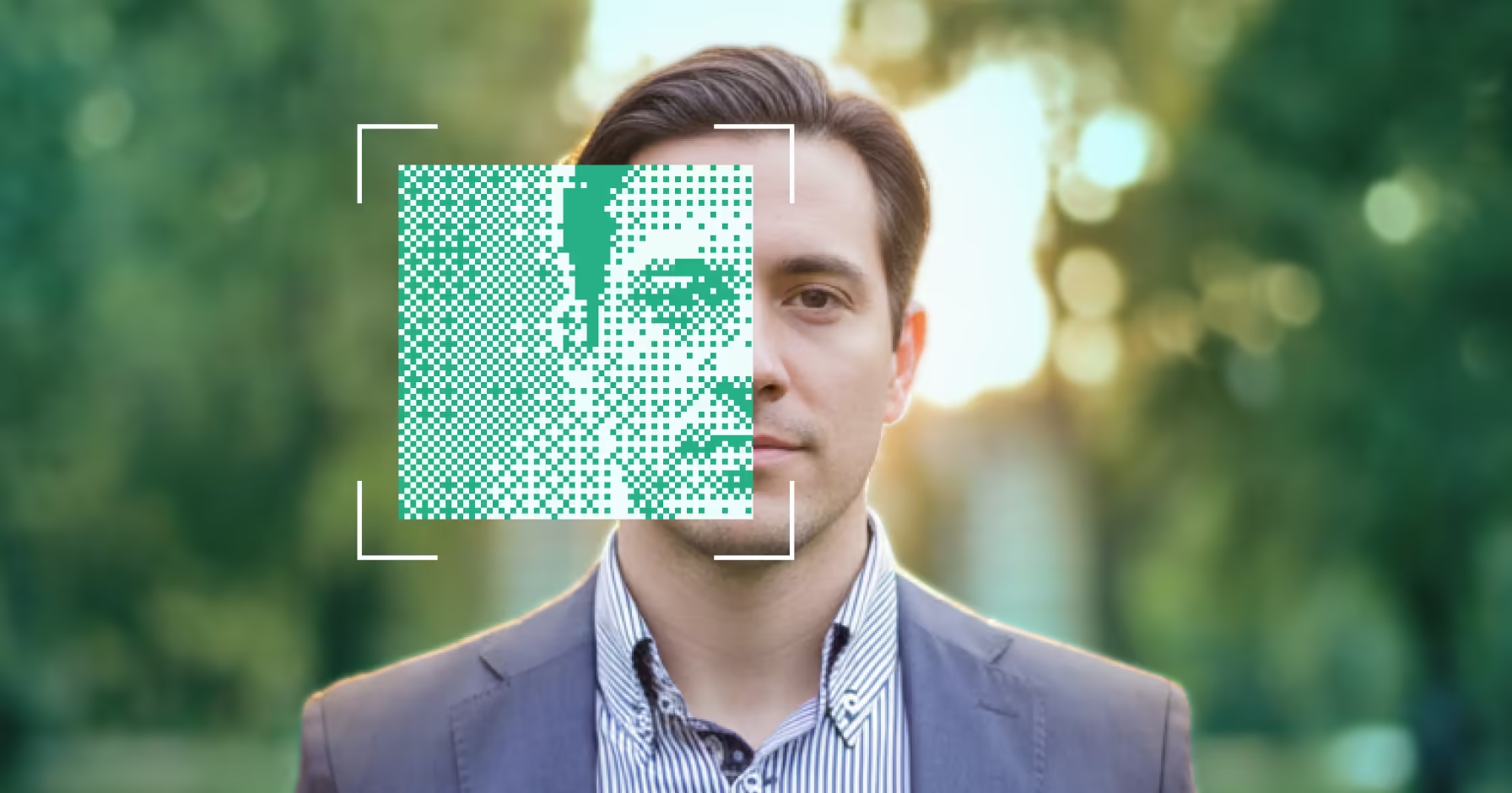
How to Spot Deepfakes and Real Images: A Practical Guide

The Growing Challenge of Deepfakes

In October 2023, Forbes reported on a concerning development where AI-generated deepfake news segments featured real journalists delivering fabricated stories. These hyper-realistic videos, created using advanced deepfake technology, showcased news anchors appearing to report fake news, raising alarms about the potential misuse of AI in media.

The proliferation of deepfakes has led to a surge in fraudulent activities. In 2023 alone, deepfake fraud attempts increased by over 3,000%, with a significant rise in North America. These realistic impersonations can undermine trust in digital communications, making it challenging to distinguish between genuine and manipulated content. As the technology advances, the potential for misuse expands, posing risks to individuals, businesses, and governments alike.

This blog will provide you with an in-depth understanding of how deepfakes are created, their growing impact on various sectors, and practical techniques for detecting them.

Key Takeaways

  • The Surge in Deepfake Fraud: Explore the alarming rise in deepfake fraud and the consequences it has on trust, security, and the media.
  • Understanding Deepfakes: Learn how deepfake technology works and the ways in which AI-generated content can deceive audiences.
  • How to Spot Deepfakes: Practical techniques and tools for identifying deepfakes, from facial analysis to AI detection software.
  • Best Practices and Detection Tools: Discover the tools and strategies, such as Resemble AI and other AI-driven detection platforms, that can help businesses safeguard their communications and media.

Understanding Deepfakes: How AI Can Deceive Audiences

Deepfakes are AI-generated images, videos, or audio files that mimic real content in such a convincing way that it becomes extremely difficult to distinguish them from authentic material. The technology behind deepfakes relies on sophisticated machine learning techniques, particularly Generative Adversarial Networks (GANs) and deep learning models, to create realistic simulations of individuals’ appearances, voices, and behaviors. Here’s how it works and why it’s so effective at deceiving audiences:

How Deepfake Technology Works

How Deepfake Technology Works

1. Training with GANs (Generative Adversarial Networks)

GANs are a type of machine learning model that consists of two networks: a generator and a discriminator. The generator creates new images or videos, while the discriminator evaluates them, distinguishing between real and fake content. This back-and-forth process allows the generator to continuously improve, creating highly realistic deepfake media.

2. Data Collection and Training

To create a deepfake, AI models require massive datasets of real images or videos of the person being impersonated. The more data the model has access to, the more realistic the deepfake becomes. For example, AI needs access to multiple videos of a person speaking to replicate their facial expressions, voice tone, and body language.

3. Deepfake Creation

Once the AI has been trained on enough data, it can begin to generate the deepfake content. For video, the AI manipulates the facial features of the target individual, adjusting elements like mouth movement, eye blinking, and facial expression to match the speech and actions of the person being mimicked.

For voice, AI uses voice cloning technology to replicate the target’s vocal tone, cadence, and inflection. This allows the creation of convincing synthetic voices that sound identical to real human speech.

As deepfakes continue to evolve, the need for effective deepfake detection becomes crucial. Detecting deepfakes involves using advanced AI and forensic techniques to analyze both visual and audio content, ensuring content authenticity.

Now, let’s turn our focus to the key signs and methods you can use to distinguish between real images and deepfakes. By recognizing these telltale indicators and using the right tools, you can better identify manipulated content with confidence.

How to Spot Deepfakes vs. Real Images: Essential Things to Know

How to Spot Deepfakes vs. Real Images: Essential Things to Know

As deepfake technology becomes more sophisticated, distinguishing between real and manipulated content can be challenging. However, with a few practical techniques and tools, you can effectively spot deepfakes. Here are the essential steps to help you identify deepfake images:

1. Examine Facial Features and Expressions

  • Inconsistent Skin Texture: Pay attention to unnatural smoothness or wrinkles that don’t match the person’s age or typical facial features. Deepfakes often fail to replicate the natural texture of skin, resulting in overly smooth or oddly placed wrinkles.
  • Unnatural Eye Movement: Deepfakes often feature unnatural blinking or eye movements. In real images, the eyes tend to move in a fluid, natural way, but deepfakes may exhibit erratic or static eye behavior.
  • Odd Facial Hair: Facial hair in deepfakes may appear inconsistent or poorly rendered. Be on the lookout for patchy beards or mustaches that look unnatural or out of place.
  • Misaligned Lip Sync: Pay attention to whether the mouth movements match the audio, especially in videos. A mismatch can be a key indicator that the media is altered.

2. Analyze Lighting and Shadows

  • Inconsistent Lighting: Deepfakes may have lighting that doesn’t match the environment. Look for shadows or highlights that seem out of place or inconsistent with the scene’s natural lighting.
  • Background Anomalies: Check for distorted or inconsistent backgrounds. Deepfakes may struggle to maintain seamless integration between the subject and the surrounding environment, often revealing awkward or unnatural background shifts.

3. Use Reverse Image Search

  • Google Images: Perform a reverse image search on Google Images. Upload the image or paste its URL to see where else it appears across the web, which can help trace its authenticity.

4. Leverage AI Detection Tools like Resemble AI

  • Resemble AIs advanced multimodal detection system can analyze both audio and visual components of images and videos, ensuring high accuracy in identifying deepfakes. It offers real-time detection, voice cloning detection, and video manipulation recognition to flag suspicious content instantly.

Did you know that DeepFakes can be anywhere, even while you are in a meeting? 

How Resemble AI Can Help in Deepfake Detection

How Resemble AI Can Help in Deepfake Detection

As deepfake technology continues to evolve, the need for robust detection tools is more critical than ever. Resemble AI offers one of the most advanced solutions for identifying and preventing deepfake content across audio, video, and images. Here’s how Resemble AI stands out in the fight against deepfake media:

1. Real-Time Multimodal Detection

Resemble AI provides a multimodal detection system, combining AI-driven video analysis and audio intelligence to spot inconsistencies across both visual and auditory content. Resemble AI’s DETECT-2B  leverages AI algorithms to compare the deepfake with known features of real human behaviors and media. Over time, these algorithms become better at spotting subtle manipulations that may go unnoticed by human viewers.

  • Video Analysis: Resemble AI analyzes key facial features, eye movements, and lip synchronization to detect visual inconsistencies that are often present in deepfake videos.
  • Audio Intelligence: The platform also examines cadence, pitch, and phoneme accuracy in speech to detect synthetic voices that mimic real human speech but fail to replicate natural human tones and rhythms.

2. PerTH Watermarking: Proactive Media Protection

One of Resemble AI’s standout features is its PerTH Watermarking technology, which embeds digital watermarks into audio and video content. This proactive tool ensures that content can be traced back to its original source, making it easier to verify authenticity.

  • Tamper-Resistant: Watermarking helps detect tampered media, even if it has been manipulated after distribution. If the watermark’s integrity is compromised, it serves as a signal that the content may have been altered.
  • Provenance Tracking: The watermark serves as a proof of origin, ensuring that the content is authentic and hasn’t been altered, adding a layer of protection for intellectual property (IP).

3. Voice Cloning Detection

Resemble AI excels at detecting voice cloning, an area where many traditional tools fall short. The platform uses advanced machine learning models to analyze speech patterns, intonation, and rhythmic consistency, ensuring that any synthetic voice is identified promptly.

  • Voiceprint Analysis: Resemble AI creates a unique voiceprint for individuals, which allows the system to compare live audio streams against registered voice data to detect any discrepancies or cloning attempts.
  • Real-Time Alerts: With real-time analysis, Resemble AI flags any suspicious audio, enabling immediate action to prevent fraud, impersonation, or misuse during live calls or broadcasts.

4. Seamless Integration with Communication Platforms

For businesses, integrating deepfake detection into existing workflows is crucial. Resemble AI offers easy integration with major video conferencing platforms and communication tools.

  • Live Video Calls: The platform monitors live meetings for deepfakes in real time, making it ideal for video calls, conferences, and webinars where security is essential.
  • Cross-Platform Compatibility: Whether you are using Zoom, Microsoft Teams, or other collaboration tools, Resemble AI can be seamlessly integrated into your existing infrastructure, ensuring consistent protection across multiple platforms.

Also Read: Introducing Telephony Optimized Deepfake Detection Model

Advanced Techniques for Verification

As deepfakes become more sophisticated, traditional methods of verification are no longer enough. To effectively detect manipulated content, advanced techniques such as metadata analysis and blockchain verification are essential. Here’s how these methods can help ensure content authenticity:

1. Metadata Analysis

Metadata analysis is an efficient tool for spotting inconsistencies that may indicate content manipulation. Every digital file carries hidden information, known as metadata, which contains details like creation timestamps, file formats, and editing software used. By examining these hidden markers, you can often uncover discrepancies that point to tampered media.

  • Inconsistent Timestamps: Manipulated images or videos often have timestamps that don’t match the claimed creation date. If an image is claimed to be from a specific event, but the metadata shows a different creation date, it could be a sign that the content has been altered or fabricated.
  • Editing Software Signatures: Deepfake tools or manipulation software often leave telltale signs in the metadata. If an image or video file lists editing software that isn’t typically associated with the content’s creation, this could suggest it’s been altered.
  • Resolution and Quality Checks: Metadata can also reveal inconsistencies in resolution, compression, and file size. Deepfakes or altered media may have compression artifacts or other anomalies that don’t align with the original content.

By scrutinizing the metadata, you can gain valuable insights into whether the media has been tampered with, providing an extra layer of verification.

2. Blockchain Verification

Blockchain verification offers a modern, secure method for confirming the authenticity of images and videos. With blockchain’s immutable ledger, it’s possible to track the origin, modifications, and ownership history of digital content, providing a transparent record that can confirm if the content has been altered.

  • Provenance Tracking: Blockchain allows for the recording of digital content’s origin and any subsequent edits made to it. Each modification is timestamped and logged on the blockchain, creating an irreversible trail of authenticity.
  • Transparent History: When a piece of content is uploaded to a platform that uses blockchain technology, a digital fingerprint or hash is created and stored on the blockchain. This ensures that any changes to the content are easily detectable, as the content will not match its original blockchain record if altered.
  • Tamper Detection: Because blockchain records are immutable and cannot be tampered with once established, it provides a highly reliable way to verify whether content is genuine or manipulated. If someone attempts to alter an image or video, the blockchain will alert users to the modification.

Using blockchain for content verification adds an extra layer of trust, especially for industries such as journalism, finance, and law enforcement, where the integrity of visual evidence is paramount.

Also Read:Introducing Deepfake Security Awareness Training Platform to Reduce Gen AI-Based Threats

Best Practices for Protecting Yourself from Deepfakes

Best Practices for Protecting Yourself from Deepfakes

As deepfake technology advances, being proactive in your approach to digital media is key. Here are some essential best practices to help you safeguard yourself against deepfake content:

1. Be Skeptical: Trust, But Verify

It is important to question the authenticity of any image or video, particularly when it evokes strong emotions or seems out of place. Deepfakes are often used to manipulate opinions or push a specific agenda, so always stay cautious of content that appears too sensational, controversial, or emotionally charged. If it feels too good (or too shocking) to be true, it’s worth investigating further.

  • Examine the context: Is the content from a reliable, trustworthy source? Does it align with what you already know or the story you’re being told? Be mindful of clickbait or misleading headlines that may accompany deepfake content.
  • Check for inconsistencies: Look for signs of manipulation, such as unnatural facial expressions, odd lighting, or disjointed audio and video. If something doesn’t seem right, it probably isn’t.

2. Verify Sources: Credibility is Key

One of the most effective ways to protect yourself from deepfakes is by verifying the source of the content before believing or sharing it. Credible sources follow ethical journalistic standards, while deepfake creators often rely on social media platforms or unknown outlets to spread manipulated media.

  • Cross-check: Use tools like reverse image search or platforms like Google News to verify the origin of the content. Does it appear on multiple trusted websites, or is it confined to one sketchy source?
  • Investigate the publisher: Look at the credibility of the platform or individual sharing the media. Are they known for sharing reliable content, or is there a history of misleading or unverified stories?

3. Stay Updated: Embrace the Latest Detection Tools and Techniques

The best defense against deepfakes is knowledge. As deepfake technology evolves, so do the tools and techniques used to detect it. Staying informed about the latest detection methods and technological advances is critical to recognizing manipulated media before it causes harm.

  • Use AI-powered detection tools: Leverage platforms like Resemble AI, which offer real-time deepfake detection for both audio and video. Keeping these tools in your arsenal can help you quickly verify media in both professional and personal contexts.
  • Educate yourself and others: Follow news and resources on the latest deepfake trends and detection strategies. The more you understand about how deepfakes work, the easier it will be to spot them.

Also Read: Detecting Deepfake Voice and Video with Artificial Intelligence

Conclusion

As deepfake technology continues to evolve, staying informed and utilizing available tools is essential for identifying manipulated images. By applying the techniques outlined above, you can enhance your ability to discern between real and fake content, thereby protecting yourself from misinformation and potential security threats.

With Resemble AI, you can take a proactive approach in combating the growing threat of deepfakes. By leveraging cutting-edge detection technologies and real-time analysis, you can ensure the authenticity of your digital communications, content, and media.

Book a demo with Resemble AI today to experience how our advanced deepfake detection tools can protect your digital communications and media from manipulation.

FAQs

1. How can I tell if a picture is a deepfake?
Look for inconsistencies in facial features, such as unnatural skin textures, mismatched lighting, or strange eye movements. You can also use reverse image search tools like Google Images to check if the image appears elsewhere on the web.

2. What are the signs of a deepfake video?
Deepfake videos often show misaligned lip-sync, unnatural facial expressions, and weird eye movements. The lighting may not match the environment, and there may be inconsistent shadows or reflections.

3. How do I spot a deepfake on social media?
Be cautious of sensational or emotionally charged content. Verify the source, check for any visible inconsistencies in the video or image, and use AI detection tools for confirmation. Always cross-check the authenticity of media before sharing it.

4. Can deepfake detection tools be trusted?
Yes, tools like Resemble AI use advanced machine learning models to detect deepfakes with high accuracy. These tools analyze both visual and audio components of content to identify inconsistencies that may go unnoticed by the human eye.

5. How can I protect myself from deepfake impersonation in video calls?
Ensure you use secure platforms with deepfake detection integrated for real-time detection during live calls. Always verify the identity of the person on the other end through multi-factor authentication (MFA) and be cautious of suspicious behaviors or inconsistencies during video calls.

More Related to This

Introducing Telephony Optimized Deepfake Detection Model

Introducing Telephony Optimized Deepfake Detection Model

Resemble AI is raising the bar for inline in-call detection with new support for leading telephony codecs — G.711, G.729, AMR-WB, and Opus — combined with a significant accuracy breakthrough in detecting synthetic and manipulated speech across compressed audio...

read more