What is deepfake detection?
As AI-generated content becomes indistinguishable from reality, deepfake detection has become the most reliable way to verify what's real. This explainer breaks down how detection works, why "is it AI?" is just the first question in a much larger trust stack, and how detection, explainability, identity management, and watermarking work together to stop malicious use — without treating every piece of AI content as a threat. Watch the video to learn more.
Transcript:
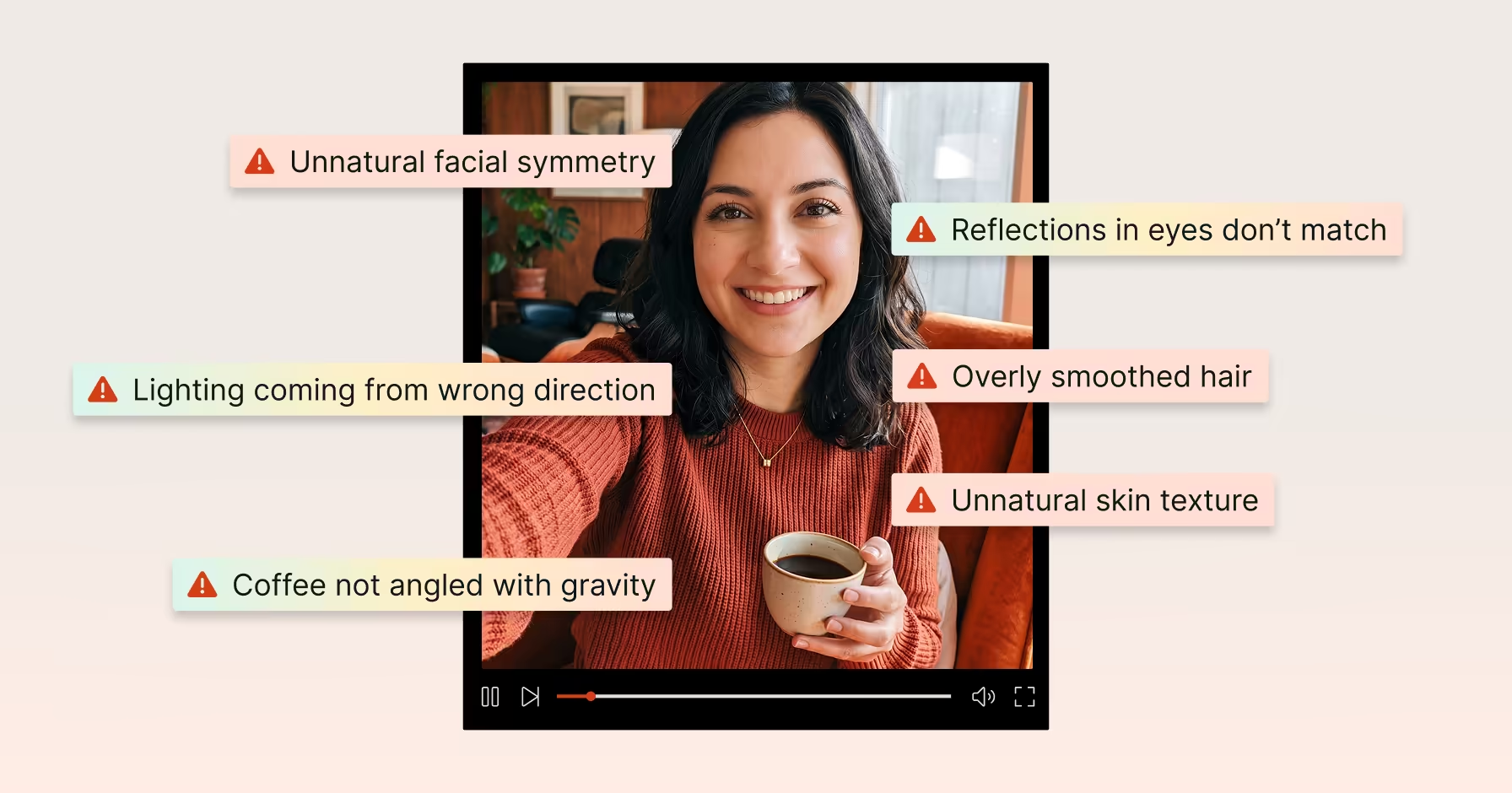
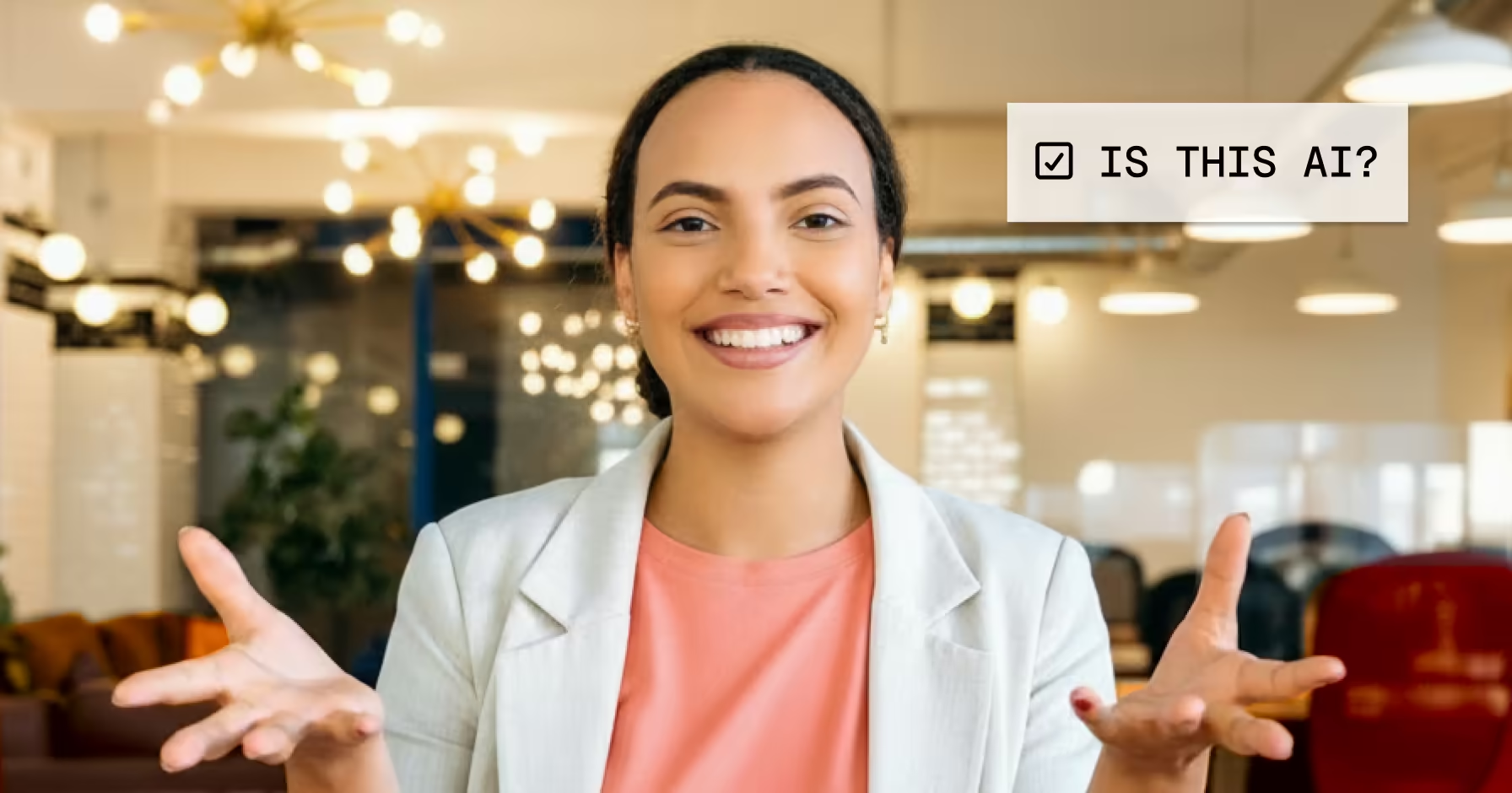
Is it real? Is it AI? It's nearly impossible to tell anymore. Even with a closer look or deeper listen, the signals that used to give AI away are fading fast. Now, the most reliable way to determine whether media was created with AI is with AI deepfake detection.
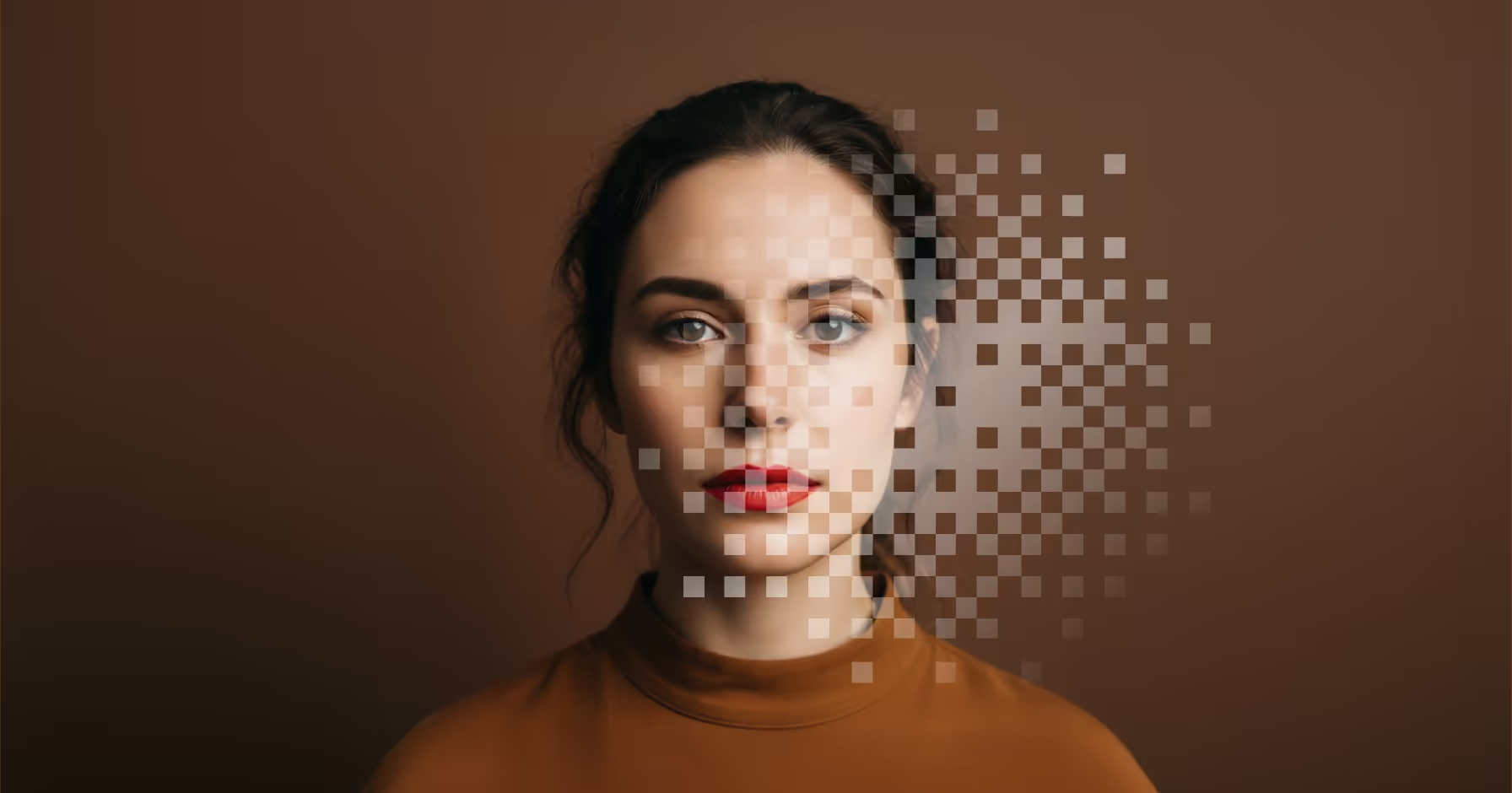
Generative AI models leave subtle traces behind, signals a person can't see or hear. New models and new versions arrive every week, and the signs keep getting harder to catch. But AI detection models are trained to recognize those traces across voice, video, and image.
Detection has one precise and important job: it tells you whether a piece of content was generated or altered by AI. That’s critical when you are expecting a real human or unaltered media. But the more people use AI for legitimate purposes, the more we may need to understand.
“Is it AI?” is a vital question, but it’s also just the start. It helps you decide which question to answer next: Is it permitted? Does a human need to review it? Does it need to be stopped in its tracks? Who made it? Has anything been changed in it? What’s the context?
You see, the presence of AI alone doesn’t say something is inherently bad. On its own, AI is just another tool in a creator’s toolbox. And something generated by AI isn’t automatically a deepfake. It crosses into deepfake territory when that tool is used to deceive, distort, misinform, or impersonate without consent. The fear around deepfakes is a global effect of bad actors using it improperly. The goal of deepfake detection should be to stop the ones with potential negative consequences — not just note the existence of AI.
To achieve this, you need a complete trust stack working in tandem. Detection to assess whether AI was used in creation or revision. Explainability to add context behind a result including signals of manipulation and fraud. Identity management to confirm the presence of a known likeness, and to confirm the consent of the subject. And watermarking to reveal provenance and ownership. Even as watermarking and regulation arrive, the absence of a mark never proves something is made without AI. And detection doesn't take anyone's word for it. It reads the pixels and the waveforms in front of it to give you an independent score.
If done well, deepfake detection works in real time for virtual meetings, for phone calls, and for AI voice agents. And in batch, for document and ID review, claims and receipts, and forensic evidence. And it has to learn continuously so it's ready to detect against the release of new models weekly and even daily.
The best version of this is detection you barely notice. Running in the background, catching what doesn't add up, so you don't have to scan and judge every voice and face yourself. Your attention and judgment can stay on the meeting, on the conversation, on building the camaraderie.