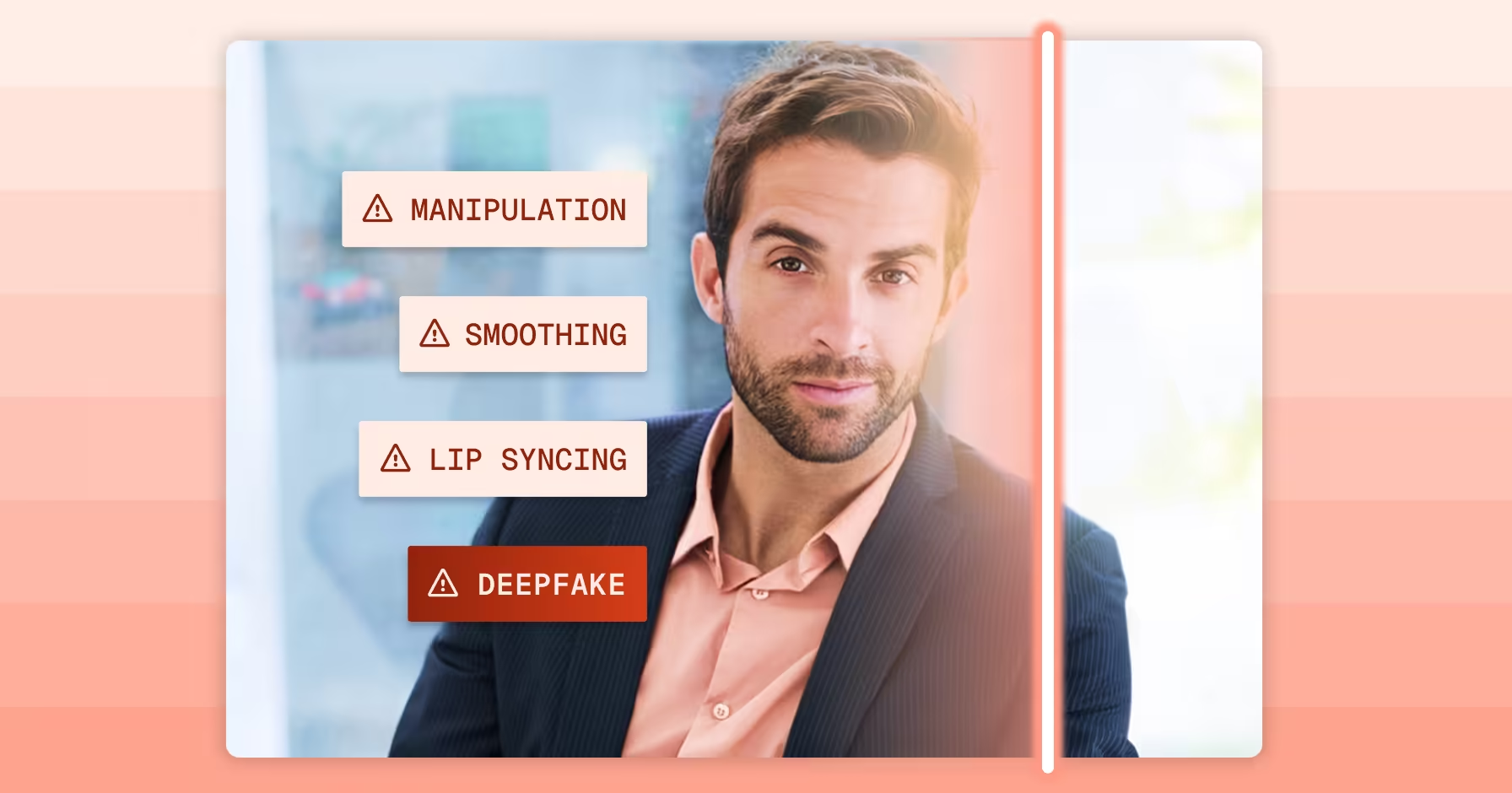

Deepfake detection is no longer a theoretical concern for your team. Whether you work in product, security, customer experience, or media workflows, you deal with systems in which synthetic audio, video, and images can closely resemble real human output. In fact, Resemble AI’s Q2 2025 deepfake security report counted 487 publicly disclosed attacks in a single quarter, up 41% from the previous quarter.
The challenge is not just identifying fake content but understanding why a system flags something as manipulated. When detection tools return only a binary result without context, you're left without the evidence needed to justify decisions in audits or incident response.
This is where explainable AI for deepfake detection becomes essential for your decision-making process. Instead of treating detection as a black-box output, explainable systems help you understand what signals influenced a classification, how those signals behave across different media types, and where uncertainty exists in the model’s judgment. When detection systems are built with interpretability in mind, you are not just getting a result; you are getting the context needed to act on it with confidence.
This blog explores how explainable AI is being applied in deepfake detection systems, how modern models operate, what techniques make outputs interpretable, and where limitations still exist.
Key Highlights:
- Deepfake detection becomes more reliable when AI systems provide clear reasoning behind their decisions rather than only labeling content as real or fake.
- Trust, compliance, forensic investigations, and human review processes benefit from transparent and interpretable detection outputs.
- Modern detection models analyze visual, audio, and multimodal signals to identify manipulation patterns across different types of synthetic media.
- Feature attribution, saliency maps, attention mechanisms, SHAP, LIME, and multimodal explanation layers help make model decisions easier to understand.
- Challenges such as scalability, latency, multimodal complexity, and explanation accuracy continue to shape the future of explainable deepfake detection systems.
What is Explainable AI in Deepfake Detection?
Explainable AI (XAI) in deepfake detection refers to techniques that make the decision-making process of detection models understandable to humans. Instead of simply labeling content as “real” or “fake,” these systems provide insights into the reasoning behind that classification.
For example, a model might indicate that irregular lip synchronization, inconsistent lighting across frames, or unnatural speech rhythm influenced its classification. These explanations help technical and non-technical stakeholders validate system outputs and build confidence in automated decisions.
Importantly, explainability does not change the core function of detection systems. Instead, it adds a layer of interpretability on top of existing models. This layer can be generated through post-processing techniques or built directly into model architectures, depending on the system design.
Why Explainability Matters in Deepfake Detection
Explainability is essential in deepfake detection because teams need more than a prediction. They need to understand the reasoning behind it to make confident, accountable decisions in real-world environments.
- Forensic validation: When media is flagged as synthetic, explainable outputs help teams trace the signals behind the decision. This supports investigations, audits, and evidence-based verification. In regulated industries, decisions often need to be documented. Explainability provides a clear record of how and why a classification was made.
- Trust in outputs: Security and product teams are more likely to rely on detection systems when they can see why a result was produced, not just the final label.
- Error analysis: When models fail or misclassify content, explainability helps identify patterns such as recurring audio distortions or visual inconsistencies that need refinement.
- Better decision-making: Instead of treating outputs as final, teams can use explanation signals to decide whether human review or additional verification is needed. Explainability helps balance AI outputs with human judgment, preventing over-reliance on opaque model decisions.
If your team is evaluating how synthetic media risks affect internal communications, Resemble Meetings combines real-time multimodal deepfake detection with Resemble Intelligence, its built-in explainability layer.
Every flagged meeting includes a human-readable forensic report with artifact analysis, fraud classification, liveness assessment, and an audit trail—helping teams understand not only that content was flagged, but why.
How Deepfake Detection Models Work Today
Modern deepfake detection systems rely on machine learning models trained to identify patterns that are statistically associated with synthetic content. These systems operate across different modalities, including audio, video, and images, depending on the use case.
- Image analysis (CNN models): These models scan visual content for inconsistencies such as unnatural facial textures, lighting mismatches, or blending artifacts that often appear in synthetic images.
- Video frame consistency: Detection systems analyze frame-to-frame motion to identify irregular blinking, unnatural facial movement, or disruptions in temporal continuity.
- Audio pattern detection: Speech signals are examined using spectrograms and frequency analysis to detect unusual pitch stability, tone shifts, or rhythm inconsistencies that may indicate synthetic voice generation.
- Multimodal fusion: Advanced systems combine audio, video, and contextual signals to improve detection accuracy, especially when manipulation appears in only one data stream.
- Feature-based learning: Instead of fixed rules, models learn patterns from large datasets of real and synthetic media, allowing them to adapt to different deepfake generation techniques.
- Black-box outputs: Despite strong detection capability, most systems provide only a final classification (real or fake) without explaining which features influenced the decision, limiting interpretability for human reviewers.
For organizations assessing browser-level safeguards, Chrome Deepfake Detection initiatives highlight how detection capabilities can be integrated closer to everyday user interactions and content consumption.
Key Explainable AI Techniques Used in Deepfake Detection
Explainability in deepfake detection is achieved through a combination of model-level and post-processing techniques. These methods are designed to highlight which inputs or features influenced a model’s decision and how strongly they contributed.
- Feature Attribution Methods
Feature attribution identifies which input parts most influenced the model’s decision. It connects predictions to specific signals rather than treating the output as a black box.
- Highlights key regions in video or important frequency ranges in audio
- Shows which features contributed most to the prediction
- Supports validation of whether the model focused on meaningful signals
In practice, it can point to subtle facial inconsistencies, lip-sync mismatches, or unusual speech patterns. This makes it easier to review why a piece of media was flagged during analysis or audits.
- Saliency Maps and Visual Heatmaps
Saliency maps visually highlight areas in an image or video frame that influenced the model’s decision. They make detection results easier to interpret, especially for non-technical users.
- Highlights important regions in visual inputs
- Identifies facial artifacts or blending issues
- Provides visual support for detection results
For example, they may emphasize eyes, mouth, or edge regions where synthetic edits are often detected. These signals are typically used alongside other methods since they show influence, not absolute proof.
- Attention Mechanisms in Multimodal Models
Attention mechanisms assign importance to different inputs in models that process audio and video together. They show which modality influenced the decision most. Multimodal layering combines explanations from audio, video, and other inputs into one view. It helps show how different signals interact in a single decision.
- Weighs audio, video, or text inputs based on relevance
- Shows which signal impacted the prediction most
- Can identify mismatches across modalities
- Merges explanations from multiple data sources
- Identifies cross-modal inconsistencies
- Provides a unified view of model reasoning
For example, video may appear natural while audio shows synthetic traits. Combining both provides insight into where the manipulation is detected across modalities.
For instance, a system may rely more on audio cues for speech anomalies and more on video cues for facial inconsistencies. This helps explain how different signals contribute to one decision.
- Model-Agnostic Explanation Techniques (LIME and SHAP)
These methods explain predictions without depending on a specific model type. They analyze how changes in input affect output results.
- Measures how individual features influence predictions
- Works across different model architectures
- Helps compare feature importance across systems
They may show how changes in pitch, frame consistency, or facial motion affect detection results. This makes them useful during model testing and evaluation.
Challenges in Implementing Explainable AI for Deepfakes

While explainability improves transparency, implementing it in deepfake detection systems introduces several practical challenges that must be considered during design and deployment.
- Balancing performance and interpretability: Highly accurate deep learning models are often difficult to interpret. Many organizations therefore add explainability layers that preserve detection performance while providing human-readable reasoning, although generating those explanations can increase computational overhead and workflow complexity.
- Real-time latency impact: Explainability layers add extra computation on top of detection models. In live environments like fraud monitoring or voice verification, this can affect response speed.
- Multimodal complexity: Deepfake systems often combine audio, video, and metadata signals. Explaining how these different inputs contribute to one decision is technically difficult.
- Approximate explanations: Many XAI techniques provide estimated reasoning rather than exact model logic. This means explanations may not always fully reflect how the model actually reached a decision.
- Scalability limits: As detection systems process large volumes of media, generating detailed explanations for every output can strain system performance and infrastructure.
- Workflow integration gaps: Many enterprise systems are not built for explanatory outputs. Integrating XAI often requires redesigning alert systems, logs, and review processes.
How Resemble AI Can Strengthen Explainable Deepfake Detection Systems
Resemble AI approaches explainable deepfake detection through a multimodal security platform that analyzes audio, video, and images together. Rather than returning only a confidence score, its detection stack combines multimodal analysis with forensic explainability, helping security, compliance, and trust teams understand what triggered a detection and how to act on the result.
Here’s how we can assist you:
- Multimodal scope: Resemble AI’s detection approach spans audio, image, and video inputs, making explanations more grounded by allowing signals to be compared across formats rather than being isolated to a single media type. Deepfakes often appear in combined formats, such as synthetic voice with face-swapped video, so multimodal detection improves interpretability by linking mismatches across audio and visual signals.
- Resemble Intelligence: Adds an explainability layer to detection results with forensic analysis, including liveness detection, digital alteration analysis, fraud classification, misinformation insights, and anti-cheating detection to support security and compliance workflows.
- Model coverage: The system is trained on 160+ generative AI models, which helps broaden detection signals across different synthetic media generation methods. This improves explainability by enabling systems to map detected anomalies to known manipulation patterns.
- Low-latency analysis: Some workflows operate with sub-300ms response times, which is relevant for explainable detection in real-time environments such as live calls or media moderation, where decisions and explanations need to be generated quickly.
- Language reach: Support for 54+ languages ensures that detection signals and explanations remain usable across different linguistic and regional contexts, which is important for global enterprise workflows.
- Deployment flexibility: On-prem and air-gapped deployment options allow organizations to run detection and explanation systems in controlled environments, supporting governance and audit requirements.
- Content provenance support: Watermarking capabilities help add traceability to generated media, which can be used alongside detection outputs to strengthen verification and explanation workflows.
- Operational readiness: Explainability is built directly into Resemble Detect and Resemble Meetings through Resemble Intelligence, allowing organizations to move from a detection verdict to a structured forensic explanation within the same workflow, without requiring separate analysis tools.
Resemble AI, therefore, represents a model of how synthetic media systems can evolve toward both capability and accountability, where detection is not only about identifying manipulation but also about explaining it in a way that supports real-world decisions.
Conclusion
Explainable AI is gradually reshaping how deepfake detection systems are designed and evaluated. Instead of relying solely on classification outputs, modern systems are moving toward frameworks that provide reasoning, traceability, and interpretability alongside predictions.
Across different detection techniques, explainability introduces clarity into otherwise opaque processes. It allows teams to interpret model behavior, validate decisions, and identify system limitations in a structured and reliable way.
As organizations continue to adopt voice and media AI technologies, explainability will play a central role in ensuring these systems remain trustworthy and usable at scale. Future developments are likely to focus on improving real-time interpretability, enhancing multimodal explanation quality, and aligning detection outputs with human decision workflows.
If you are evaluating how deepfake detection and voice AI systems fit into your security or product workflows, reviewing platforms like Resemble AI can help clarify how explainability, control, and deployment work in practice.
FAQs
- What is the relationship between deep learning model accuracy and explainability in deepfake detection?
Higher accuracy often comes from complex deep learning models that are difficult to interpret. Explainability helps reveal how predictions are made, allowing researchers to validate whether models rely on meaningful deepfake indicators rather than misleading patterns or dataset biases.
- How can explainable deepfake detection models reduce false positives and false negatives?
Explainable models highlight the features influencing a prediction, helping developers identify errors and refine detection strategies. This visibility improves model calibration, reduces reliance on irrelevant artifacts, and supports more accurate classification of authentic and manipulated content.
- What role does XAI play in forensic analysis and legal admissibility of deepfake evidence?
XAI provides transparent reasoning behind detection results, making forensic findings easier to verify and defend. Clear explanations strengthen credibility, support expert testimony, and help establish trust when deepfake evidence is presented in legal or investigative contexts.
- What are the limitations of current XAI methods when applied to GAN-based or diffusion-model deepfakes?
Many XAI techniques struggle to explain highly sophisticated manipulations generated by modern GANs and diffusion models. Explanations may be inconsistent, difficult to interpret, or unable to accurately capture the subtle artifacts that advanced synthetic media produces.
- How does cross-dataset testing affect the explainability and generalization of deepfake detection models?
Cross-dataset testing evaluates whether models perform well beyond their training data. Consistent explanations across datasets indicate stronger generalization, while changing explanation patterns may reveal overfitting, dataset-specific biases, or reduced reliability in real-world applications.
- What metrics are used to evaluate the quality and reliability of explanations in deepfake detection?
Common evaluation metrics include fidelity, completeness, faithfulness, stability, and localization accuracy. Researchers also assess whether explanations align with known manipulation regions and whether they consistently reflect the model’s actual decision-making process.
- What are the ethical implications of using black-box vs. explainable AI models for deepfake detection?
Black-box models may deliver strong performance but provide limited accountability. Explainable AI improves transparency, supports fairness assessments, and enables informed decision-making, helping organizations justify moderation actions while reducing concerns about hidden biases or unjustified outcomes.
- How do attention mechanisms in CNNs enhance both detection accuracy and explainability in deepfake systems?
Attention mechanisms guide CNNs toward important image or video regions that may contain manipulation artifacts. This focused analysis often improves detection performance while producing visual attention maps that help users understand model decisions.
- What is the impact of preprocessing steps (normalization, augmentation, noise reduction) on XAI performance in deepfake detection?
Preprocessing can improve model robustness and explanation quality by reducing irrelevant variations in data. However, excessive transformations may alter important forensic cues, leading to explanations that are less accurate or less representative of real-world manipulations.
- What are the computational costs of integrating explainability techniques into real-time deepfake detection systems?
Explainability methods often require additional processing to generate visualizations or feature importance maps. This increases computational overhead, memory usage, and inference time, creating challenges for deploying real-time deepfake detection systems at scale.
- How might future deepfake detection systems balance accuracy, robustness, and interpretability using XAI?
Future systems are expected to combine advanced detection architectures with built-in explainability mechanisms. Hybrid approaches that generate accurate predictions alongside reliable explanations can improve trust, adaptability, and resilience against increasingly sophisticated deepfake techniques.
- How do explainable deepfake detection systems support fact-checking platforms and content moderation?
Explainable systems provide evidence showing why content was flagged as manipulated. These insights help fact-checkers verify decisions, assist moderators in prioritizing reviews, and improve transparency when communicating moderation outcomes to users and stakeholders.