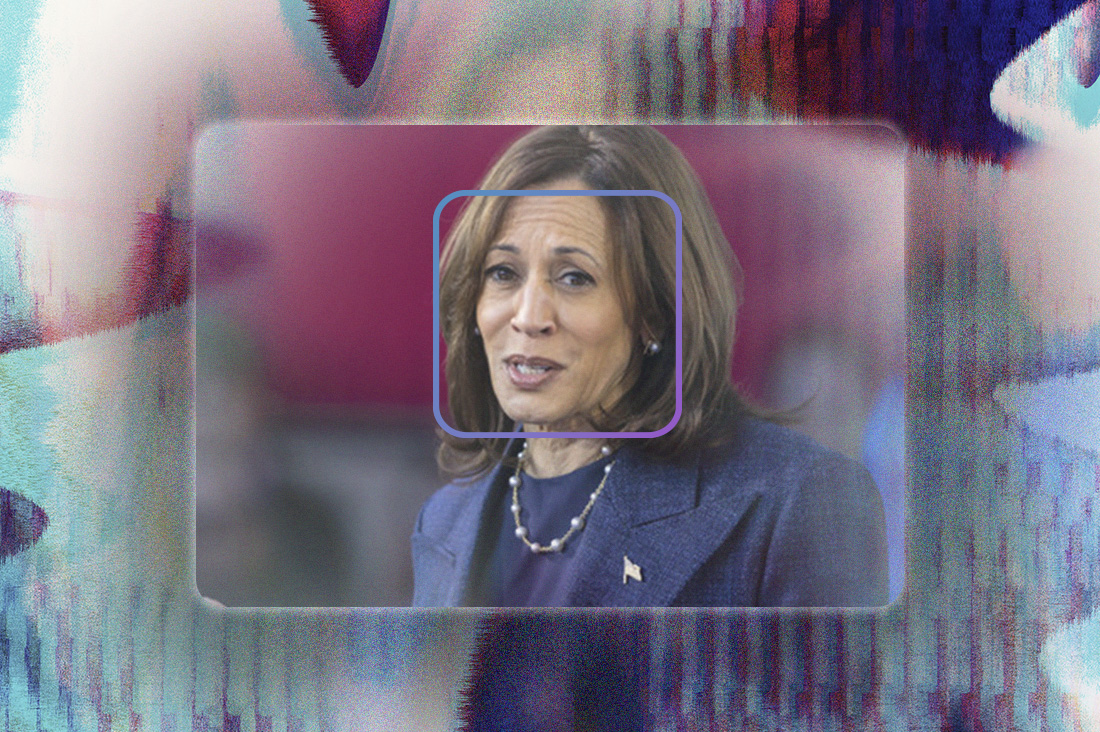
Detect deepfakes before they cause cybersecurity breaches

Take control of deepfake threats with comprehensive detection of synthetic audio, video, and images, deployed securely within your infrastructure.

Schedule a Demo

Q3 2025 Deepfake Crisis Report: 2,031 Attacks Signal Unprecedented Escalation

2,031
Verified incidents
385
Direct financial fraud cases
980
Corporate infiltration cases
4.5:1
Women targeted over men
Download the Report →

Q3 2025 marks the inflection point where deepfakes evolved from isolated threats to industrialized warfare. Attackers used real-time video deepfakes during Zoom calls to authorize fraudulent wire transfers. The WhatsApp-to-Zoom kill chain is bypassing every traditional security protocol. State-sponsored operatives are using deepfakes to secure remote employment and plant malware.

This isn’t volume growth—it’s ecosystem evolution. Our analysis provides the detection architecture and threat intelligence your organization needs before you become a case study.

On-premise and cloud

Deploy within your infrastructure—from bare metal servers to air-gapped environments. Perfect for organizations requiring complete control over sensitive content analysis while maintaining the highest security standards.

On-premise and cloud deployment

Multi-modal detection

An ensemble of specialized AI models, each optimized for different media types and use cases. Defend against synthetic threats regardless of the source, methods, and modality.

Multi-modal detection

Instantaneous threat detection

Identify synthetic media in under 300 milliseconds. Our real-time detection integrates with live streams and communication platforms, allowing immediate response to potential security threats before they can cause harm.
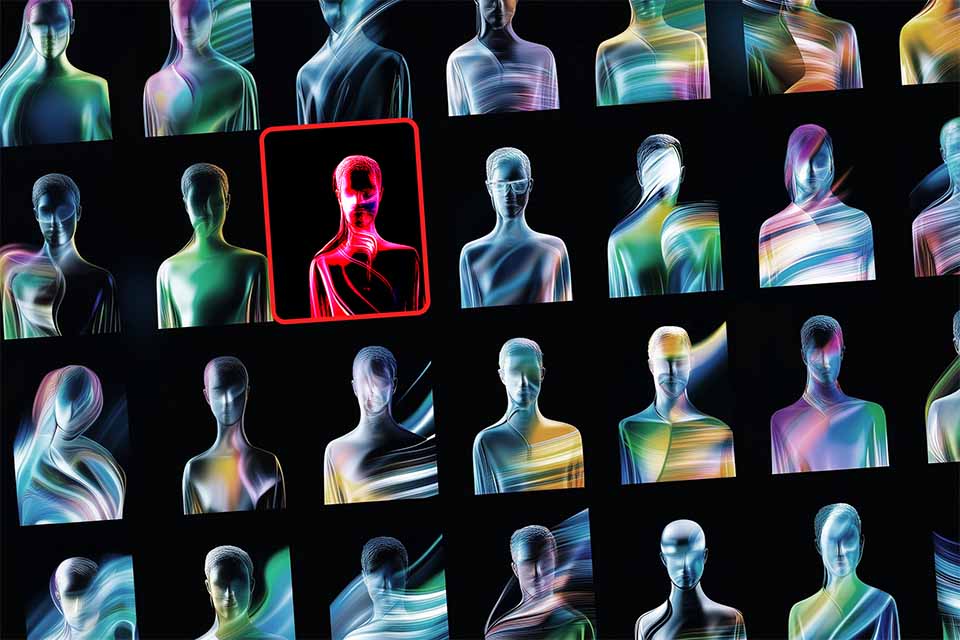
Zoom integration for real-time threat detection

Seamless integration for any security stack

Deploy powerful deepfake protection in minutes, not months. Our straightforward API and flexible deployment options work with your existing security tools and workflows.
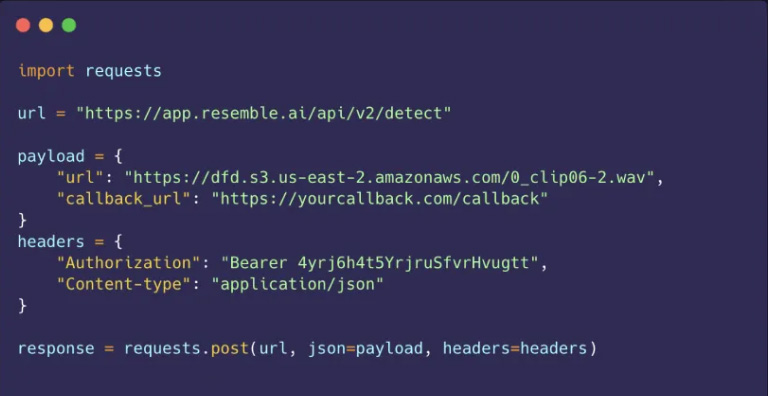
API integration

Ready to Safeguard Your Organization?

Talk with an expert to see how Detect by Resemble AI integrates to protect your organization against deepfake attacks.

Book a Demo

Frequently Asked Questions

Resemble Detect is a state-of-the-art neural model designed to expose deepfake audio in real-time. It works across all types of media, and against all modern state-of-the-art speech synthesis solutions. By analyzing audio frame-by-frame, it can accurately identify and flag any artificially generated or modified audio content.
Yes, Resemble AI offers an AI Watermarker to protect your data from being used by unauthorized AI models. By watermarking your data, you can verify if an AI model used your data during its training phase.
Resemble AI’s watermarker is designed to endure throughout the model training process. This means that the watermark, or the unique identifier, remains intact even after the data has undergone various transformations during training.
Resemble AI’s generative AI Voices are production-ready and offer a revolutionary way to create content. Whether it’s creating unique real-time conversational agents, translating a voice into multiple languages, or generating thousands of dynamic personalized messages, Resemble AI is altering the content creation landscape. It adds a new level of authenticity and immersion to your content, enhancing audience engagement and overall quality.
Resemble Detect uses a sophisticated deep neural network that is trained to distinguish real audio from spoofed versions. It analyzes audio frame-by-frame, ensuring any amount of inserted or altered audio can be accurately detected.
Psychoacoustics, the study of human sound perception, plays a significant role in Resemble AI’s technology. By understanding that human sensitivity varies with different frequencies, the technology can embed more information into frequencies we are less sensitive to. Additionally, it utilizes a phenomenon called “auditory masking” where quieter sounds in frequency and time to a louder sound are not perceived, thereby allowing data to be encoded beneath such ‘masking’ sounds.
Resemble AI applies various regularization methods to the model training procedure to resist different types of attacks. Even after applying “attacks” like adding audible noise, time-stretching, time-shifting, re-encoding, and more, nearly 100% data recovery rate can be achieved.
Absolutely. Because Resemble AI’s watermarker persists through model training, it can be used to identify if your data was used in training other AI models. This feature adds an extra layer of security and allows for better control and protection of your data.