







For close to a decade, the goal of deepfake detection has been simple: look at a clip, photo, or audio file and decide if it's real or fake. Commercial detectors answer that question by analyzing pixels, frequencies, and biometric signals and the best of them post strong accuracy numbers on standard benchmarks. The problem, as researchers at the Vector Institute have increasingly documented in 2026, is that in deployment, performance drops sharply on content from newer generators. And as of now, there are over 2.2 million AI model variants on Hugging Face, nearly doubling year over year.
So, improving performance means rethinking what detection is actually trying to detect which is the problem our new model DETECT-World addresses. Instead of only asking "does this content contain artifacts I've learned and memorized from known generators?", we also ask "does this content violate my model of how physical reality works?"
Three Generations of Detection
DETECT-World is the third generation of Resemble AI's detection model. Each generation expanded what the previous one could do.
DETECT-2B was our first production-grade audio detector. Built on a Wav2Vec2 and Mamba-SSM ensemble architecture with self-supervised representation learning, it achieved 94% accuracy across 30+ languages at 200ms latency. Frame-by-frame analysis with tunable classification thresholds made it deployable in real-time pipelines including contact centres, editorial workflows, and enterprise voice authentication.
DETECT-3B Omni was the first multimodal step. Three billion parameters spanning audio, image, and video through a single unified API. The audio component built on DETECT-2B's foundation with substantially expanded training data, telephony codec robustness, replay attack protection, and coverage of 51 languages. The vision stack added coverage of major generative architectures including StyleGAN, DALL·E 3, Stable Diffusion, GPT-4o, Veo 2 and ranked first on DFBench for both image and speech detection and EER dropped across every public benchmark we tracked.
DETECT-World adds the layer neither of those models had: a learned understanding of physical reality. Rather than only asking whether content matches known generator signatures, it also evaluates whether the content is physically coherent — whether the lighting, geometry, motion, and audio-visual synchronisation of a scene make sense as something that could have happened in the real world.
What a World Model Does Differently
Where DETECT-3B Omni asks "does this look like a known fake?", DETECT-World asks both that question and a second one: "does this make sense as a physical event in the real world?"
The model achieves this through the World-Vision Hybrid Encoder, a spatiotemporal backbone that processes video as 4-second windows at 40 frames per second, and images as static clips. Both pass through the same encoder, producing spatiotemporal tokens that are evaluated by a patch head to generate per-patch logits. From those logits, the model produces three outputs: an overall probability of manipulation, per-frame scores showing exactly when in a video the anomaly occurs, and a spatial heatmap showing where in the frame the manipulation is concentrated.
The model may look to determine things like:
- Does the lighting on a person's face change in a way that is inconsistent with the light sources visible in the scene?
- Does the shadow cast by a subject match the direction and intensity of the ambient light?
- Do background elements move in a way that is coherent with the foreground motion?
None of these checks require prior exposure to the generator that produced the content. They only need a learned model of how reality behaves. That is what world detection means: generalizing from the constraints of physical reality rather than just the signatures of known tools.
This is why DETECT-World can reach zero-day coverage more quickly than any approach built on signature memorization alone as the physics do not change when a new generator launches.
How We Built It: Training
The model is trained across hundreds of distinct manipulated image and video sources including individual generators, generator versions, and manipulation pipelines covering:
- Face swap, including real-time injection tools
- Lip-sync and talking-head reanimation
- Fully synthetic text-to-video and image-to-video generation
- Partial edits including splices, inpainting, and AI filters
- Classic GAN and diffusion-based forensics baselines (image corpus)
What makes coverage of new generators fast is how the training corpus is sampled. Rather than treating all sources equally, the training process continuously prioritises sources the model is currently getting wrong and automatically pulls newly ingested generators into focus without manual scheduling. A new generator added to the catalog is covered quickly because the training distribution adjusts to it immediately.
Augmentation is designed to simulate the real-world transformations that content undergoes in deployment: platform re-encoding, compression, frame-rate variation, and social-media degradation chains. Every augmentation is applied symmetrically to real and fake content alike, so the model cannot learn to detect the augmentation rather than the manipulation.
What This Means in Practice
The most immediate practical consequence is coverage that does not degrade on novel attack types.
On internal tests, DETECT-World caught the Haotian-style real-time face-swap attack at approximately 95% accuracy. Haotian AI is a Chinese real-time deepfake tool marketed to scammers and commercially available at under $2,000 per year, integrating natively with Zoom and Teams, and requiring no specialist knowledge to deploy. A May 2026 investigation by 404 Media found it misclassified nearly 100% of its outputs as authentic on leading academic deepfake detectors. DETECT-World had no prior exposure to it. The physics were wrong, and that was enough.
World detection is also structurally resistant to evasion through adversarial fine-tuning. The physical consistency checks are grounded in reality, not in any model's training data.
The Numbers Across Modalities
DETECT-World ships with meaningful accuracy improvements across all three modalities, bringing image and video detection into the same tier as our audio detection.
Audio: 99.5% accuracy on the Podonos benchmark — externally validated, ranked first ahead of commercial competitors with a publicly available API. Approximately 0.5% improvement over the prior generation. Audio detection now covers 54 languages, with improved coverage of VoIP streaming and packet-loss scenarios.
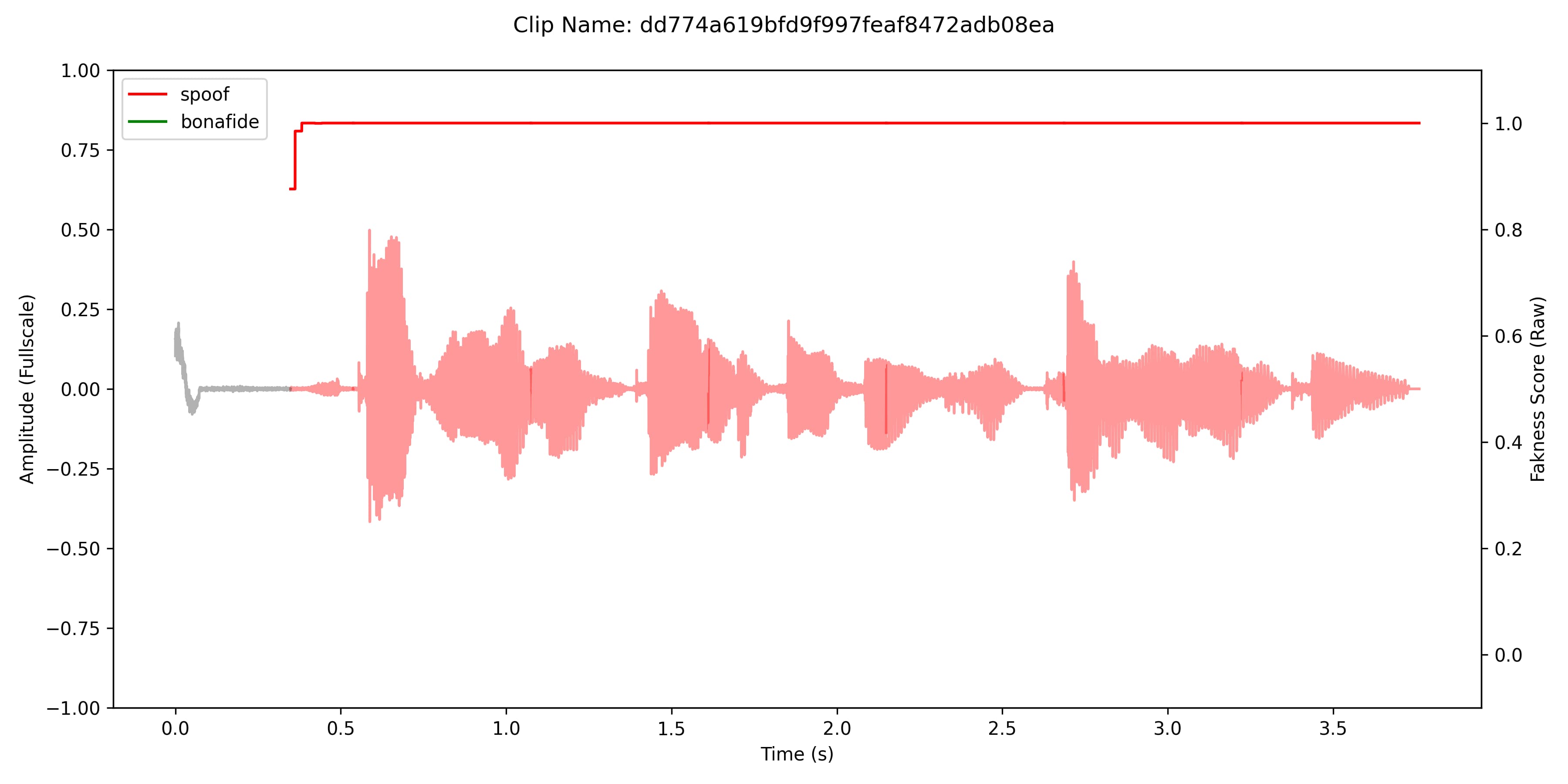
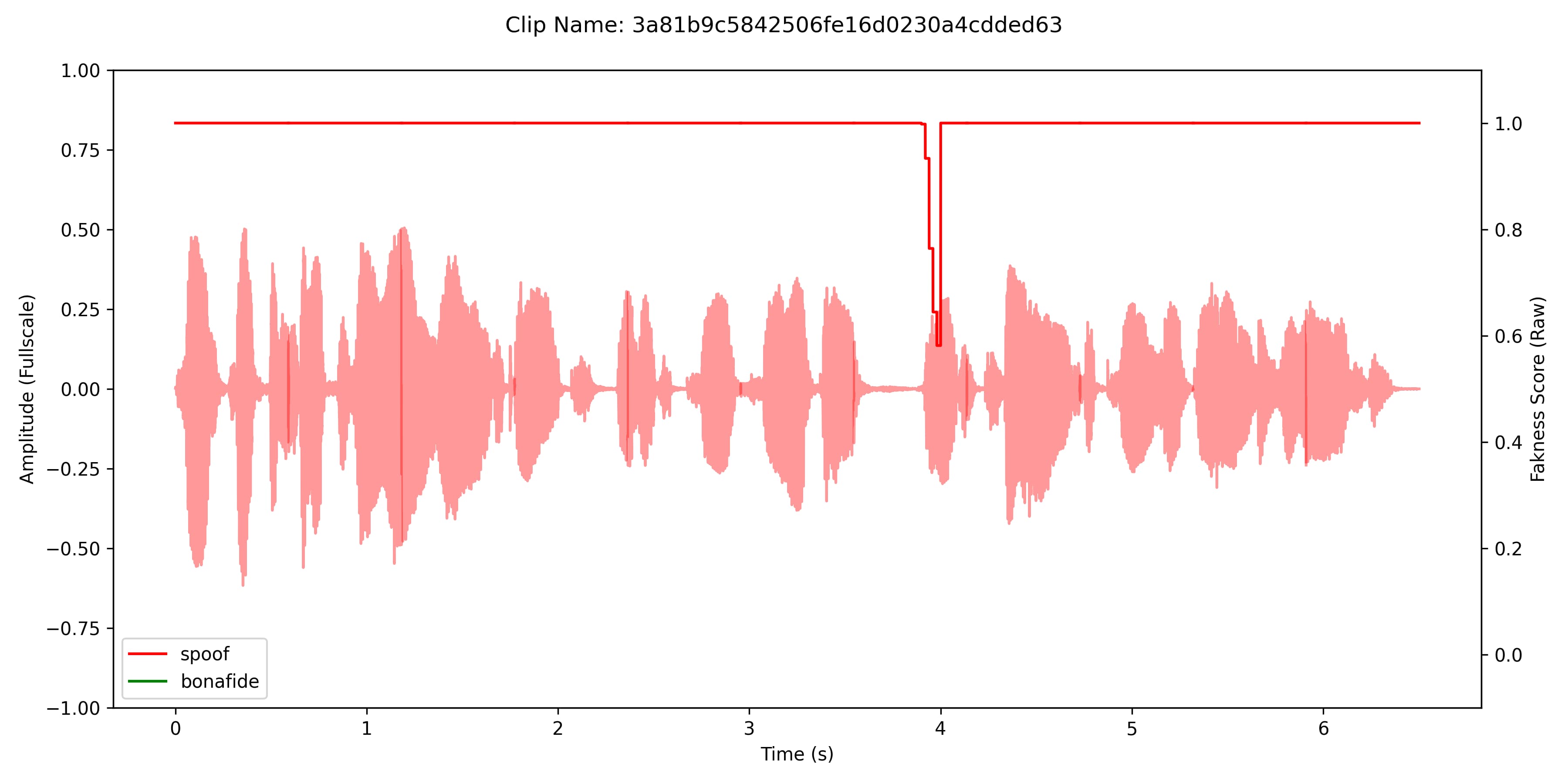
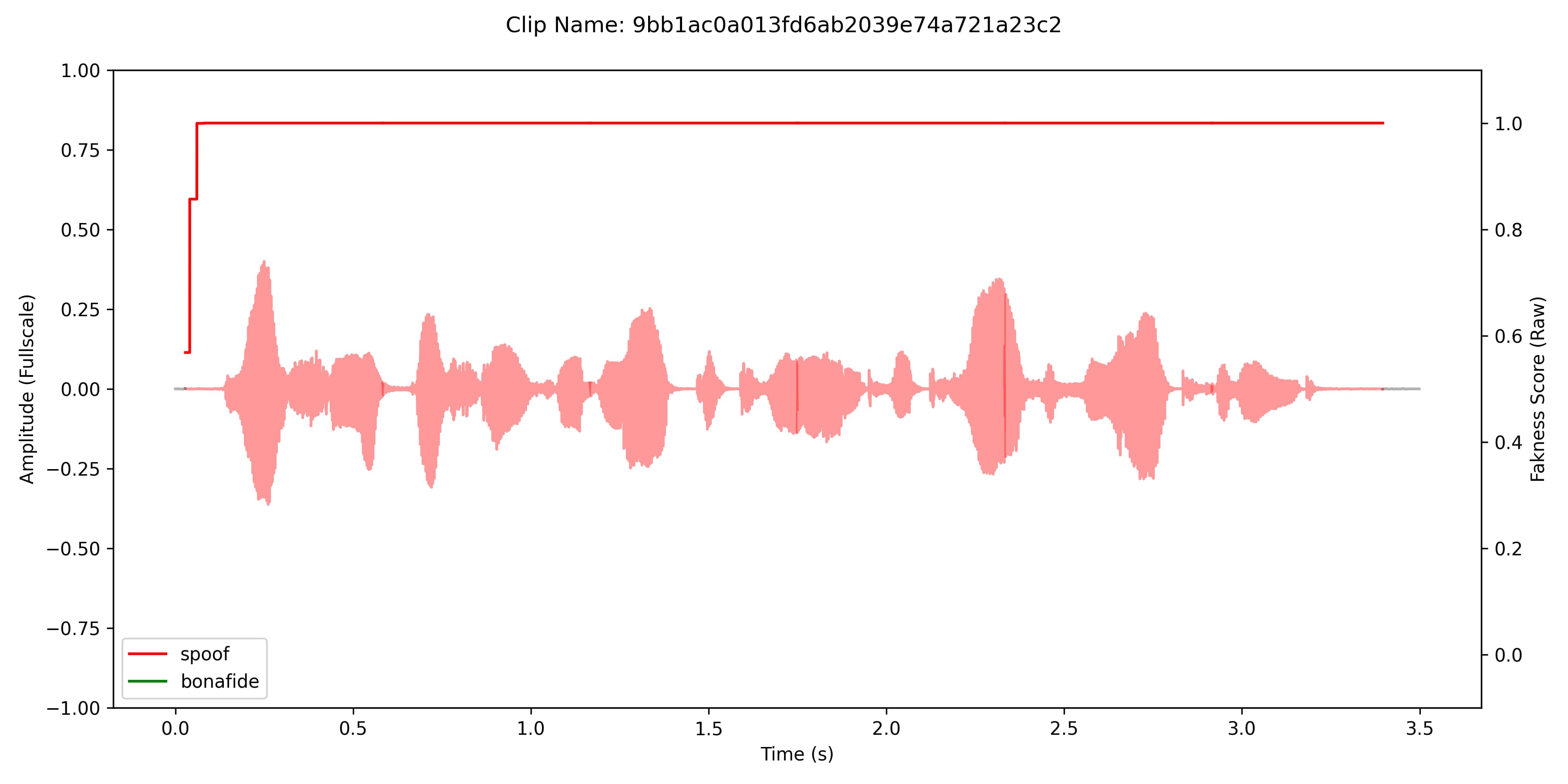
Image: 95.8% accuracy on internal benchmarks, moving image detection into the mid-90s for the first time.
%20(1).jpg)

%20(1).jpg)

%20(1).jpg)

Video: 98.2% accuracy on internal benchmarks, covering real-time face-swap, lip-sync manipulation, and AI filter injection during live video calls.
Coverage: Benchmarked across 250+ generation models, up from 160+ in the prior generation, with the ability to generalise to generators it has never seen.
Scope and Known Limitations
Long video. Above 60 seconds, spatial heatmaps are disabled and input resolution is reduced. For forensic-grade review of a long video, re-run flagged segments as shorter clips at full resolution.
Temporal granularity. Detection operates on short windows with overlapping context. Few-frame manipulations are detectable but reported segment boundaries are approximate.
The score is a probability. Output is a calibrated score, not proof of manipulation. For high-stakes decisions, pair automated scoring with human review of the uncertain band and threshold tuning for your specific content distribution.
Getting Started
DETECT-World powers Resemble Detect and is available now via API, with streaming support for real-time detection and batch processing for forensic and compliance workflows. Deployable on-prem and in air-gapped environments.
Read more about Resemble Detect or talk to the team.
.avif)