Did you know that the classic Ghostface voice is actually a complex layer of modulation and voice acting? This complexity makes it nearly impossible to recreate the voice perfectly with a cheap, costume-store box.
If you have tried using one of those apps or handheld devices, you likely faced a frustrating sound that was more “robot trying to whisper” than genuinely terrifying. You want that authentic, disturbing tone to level up your content, but most voice changers fall completely flat.
This blog will reveal the best Ghostface voice changer apps and techniques you can use to achieve a spine-chillingly realistic villain voice for your content.
Key Takeaways
- Ghostface Voice Changer: Simple, real-time voice changers fail to capture the authentic, complex Ghostface sound due to a lack of realism and inflection control.
- Generative AI is the Upgrade: To achieve cinematic quality, use Generative AI voice models and cloning, which generate the voice from a script (TTS) for perfect pacing and tone.
- Professional Control: Top platforms like Resemble AI and ElevenLabs offer speech-to-speech conversion and fine-tuned emotion controls for professional-grade voice design.
- High-Value Use Cases: The high-fidelity Ghostface voice is essential for creating immersive experiences in gaming, horror podcasting, and themed event marketing.
How Ghostface Voice Changers Have Evolved?
The Ghostface voice changer is an audio tool designed to replicate the chilling, instantly recognizable voice of the killer from the Scream franchise. This voice, provided by actor Roger L. Jackson across all films, is the character’s terrifying signature, maintaining a consistent, menacing identity regardless of who is behind the mask.
The Mechanics and the Missing Element
Modern tools capture your voice, drop the pitch significantly, and apply tone distortion with an element of echo or reverb to achieve a scary, metallic texture. However, apps like Voicemod, LingoJam, and mobile voice recorders that rely on this simple real-time filtration introduce severe limitations:
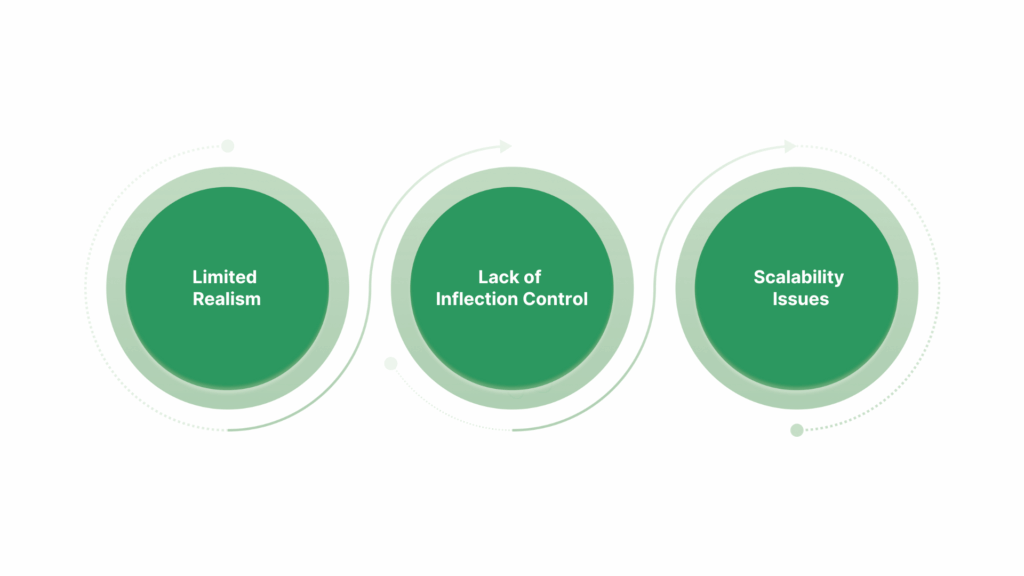
- Limited Realism: These apps use basic filters, often resulting in an audio output that sounds artificially “processed” or “digital.” It’s less a character voice and more a generic, distorted sound, failing to capture the nuance of the iconic tone.
- Lack of Inflection Control: Crucial for horror, the iconic voice relies on slow, menacing cadence and deliberate pauses. Simple filters distort the sound but cannot manipulate the way the user speaks, resulting in a fast, jumbled, or poorly-paced reading.
- Scalability Issues: They are great for a quick, live joke but lack the quality and control needed for longer content like professional streams, high-quality video narration, or detailed voice-over work.
The Generative AI Solution
To achieve movie-level authenticity and overcome the limitations of simple filters, the focus shifts to Generative AI Voice Models. Instead of merely filtering a user’s input, these sophisticated platforms are trained to generate the voice from scratch using advanced techniques:
- AI Voice Cloning: The models are trained on the original source audio to perfectly replicate the Ghostface tone and timbre, effectively cloning the character’s voice.
- Text-to-Speech (TTS): Users can input a script, and the AI generates the lines in the cloned voice. This allows for precise control over the crucial pace, emotion, and deliberate pauses needed for an alarming performance.
This is why, for serious content creation or an authentic experience, it is necessary to look beyond simple pitch-shifters to the next generation of voice-modeling technology.
Also Read: Understanding What is Text-to-Speech Technology and How It Works
6 Best AI Platforms for Ghostface Voice Changer
The challenge in creating the perfect Ghostface voice is not just cloning a tone but replicating the distinct, digitally modulated texture of a high-quality electronic pitch-shifter.
Here are the top 6 generative AI platforms that go beyond standard text-to-speech to offer the voice design capabilities needed to bring the iconic killer’s menace to life:
1. Resemble AI

Resemble AI is a leading generative AI platform trusted by major content creators and enterprises, specializing in creating highly realistic, human-like synthetic voices. The platform offers a comprehensive toolkit centered around voice cloning and real-time audio transformation, making it a powerful solution for developing custom, high-fidelity character voices, including Ghostface.
Key Features of Resemble AI
- Realtime Speech-to-Speech (S2S): Instantly transforms a user’s natural speaking voice into a high-quality, synthetic Ghostface-style voice, enabling live interaction and professional audio quality.
- Tone, Emotion, and Emphasis Control: Provides fine-tuned control over tone, emotion, and emphasis, which is critical for nailing the villain’s terrifying inflection and building suspense in the delivery.
- Custom Voice Design: Enables the creation of a unique Ghostface persona with specific textures (e.g., raspy or metallic) by generating a new voice model from a simple text prompt.
- Multilingual Capability: Allows the cloned or custom voice to speak in over 60 languages, making it possible to create localized horror content or foreign-language dubs of Ghostface dialogue.
- Text-Based Audio Editing: Edit the voiceover simply by modifying the transcript, providing critical control over dramatic pacing and the precise timing of suspenseful pauses without re-recording.
Resemble AI is the platform of choice when you need a terrifyingly authentic Ghostface voice that sounds like a professional voice actor’s high-budget take, rather than a novelty filter.
2. Murf AI
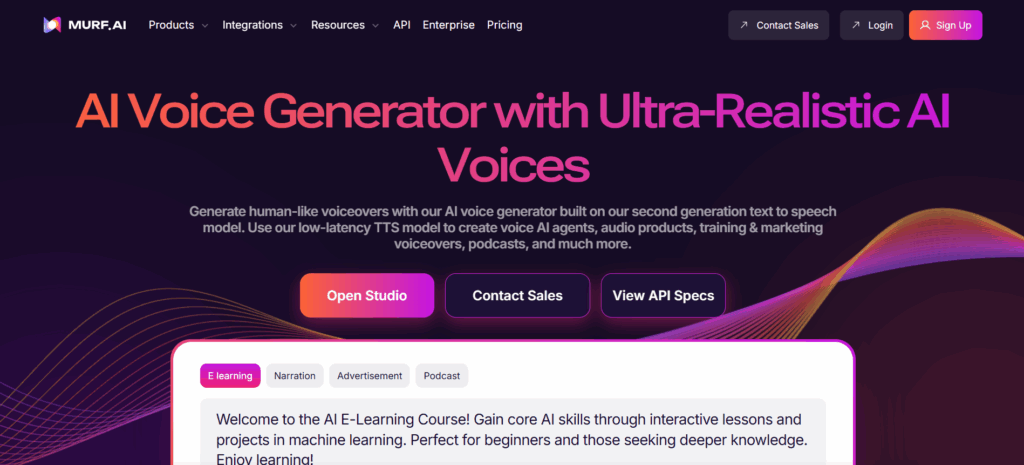
Murf AI is a popular Text-to-Speech (TTS) platform widely adopted for corporate content and e-learning. Its strength lies in a massive library of voices and a robust studio that offers deep customization, making it an excellent option for creating a professionally polished Ghostface voice.
Key Features of Murf AI
- AI Voice Changer: Allows users to record their own voice or upload existing audio, and then transform it into any of the platform’s high-quality AI voices, allowing you to control the performance timing.
- Voice Customization Suite: Offers granular controls over pitch, speed, emphasis, and pauses, which are essential for crafting the distinct, menacing cadence of Ghostface.
- Voice Styles: Apply specific voice styles (including angry or sad) to the text to inject the desired emotional layer of threat into the dialogue.
- Multilingual Voices: Supports over 20 languages and accents, enabling global content creators to produce localized horror voiceovers.
Murf AI provides the comprehensive studio controls necessary to transform standard text into a customized, broadcast-quality voice that carries the emotional weight of a fictional villain.
3. ElevenLabs
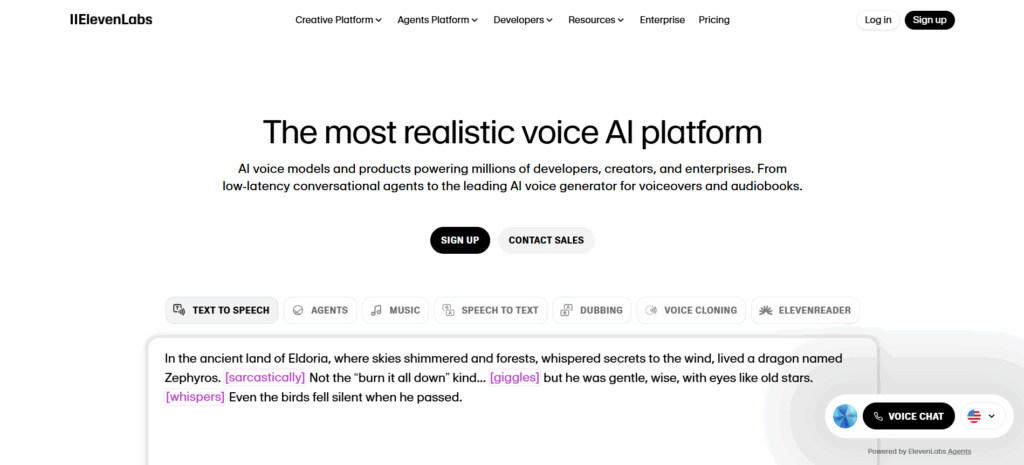
ElevenLabs is a top-tier generative AI voice platform recognized for its breakthrough realism and emotionally rich output, making its voices nearly indistinguishable from human speech. Its focus on expressive models and detailed voice design is ideal for narrative and character-driven audio.
Key Features of ElevenLabs
- Emotionally Expressive TTS: Utilizes advanced models optimized for emotional depth and context-aware delivery, crucial for a genuinely terrifying and nuanced Ghostface performance.
- Voice Design Studio: Provides tools to create and fine-tune unique character voices from scratch, giving extensive control over pitch, speed, and subtle vocal characteristics.
- Speech-to-Speech Voice Changer: Input your own voice to guide the delivery, timing, and inflection, while the platform converts the audio into a high-quality synthetic character voice.
- AI Dubbing & Multilingual Support: Supports translation and dubbing in over 29 languages, perfect for localizing the character’s voice for international projects.
ElevenLabs stands out by offering unparalleled realism and emotional nuance, allowing creators to generate a Ghostface voice that sounds genuinely alive and highly threatening.
4. LOVO AI
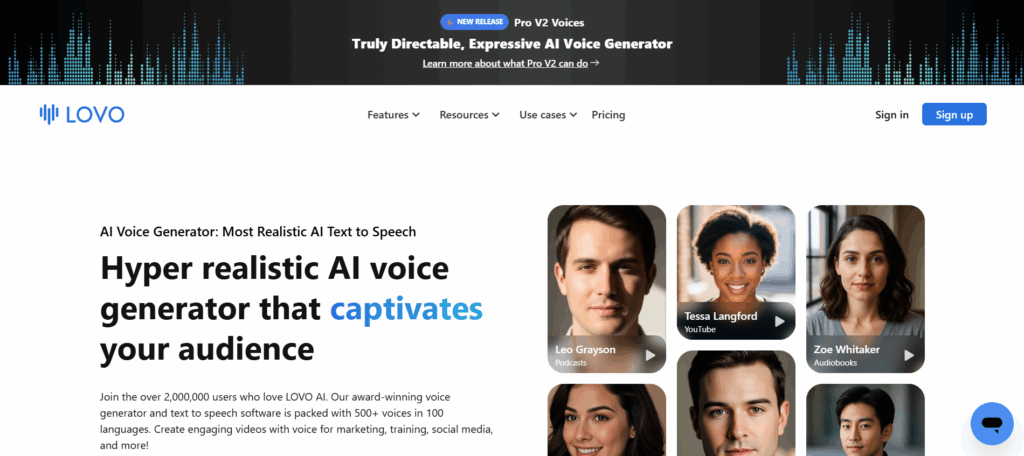
LOVO AI, powered by its Genny platform, combines text-to-speech with video editing tools. It stands out by offering a massive and diverse voice library that includes voices specifically categorized by emotion and style, providing immediate options for a terrifying, character-based voice like Ghostface.
Key Features of LOVO AI
- 500+ Voices with 30 Emotions: Offers a vast selection of voices, including up to 30 emotional categories, enabling creators to quickly find voices with a pre-set cunning or villainous quality suitable for horror.
- Emotional Voice Types: Features voices explicitly labeled as “Emotional Voice” types, which can display a range of emotions on demand, perfect for a consistent character that needs to transition from calm to furious.
- Custom Pitch and Pause Control: Allows for deep editing of the audio output, including adjusting pitch (for the classic electronic shift) and inserting pauses for dramatic, suspenseful effect.
- 100+ Language Support: The platform supports voice generation in over 100 languages and accents, ensuring the Ghostface voice can terrify audiences across global markets.
LOVO AI’s advantage lies in its specialized library and detailed emotion control, which dramatically cuts down the time needed to engineer a scary voice from scratch.
Also Read: Generating AI Rap Voices with Voice Cloning Tools
5. PlayHT
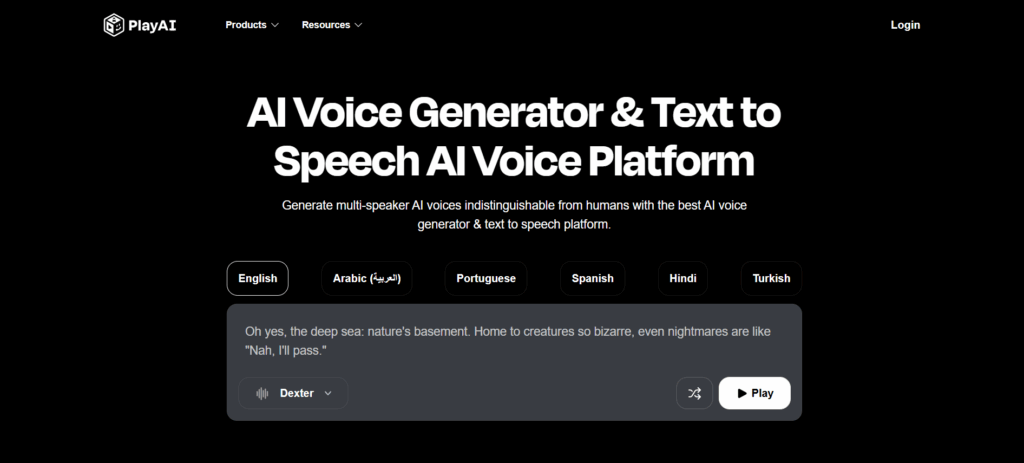
PlayHT is an advanced voice AI platform that focuses on generating ultra-realistic and expressive speech, catering particularly to developers, content creators, and the gaming industry. Its core strength is its powerful, customizable TTS engine that offers superior control over how the final audio is delivered.
Key Features of PlayHT
- Fine-Grained Prosody Control: Allows users to manipulate the pitch, speed, emphasis, and tone of the voice at the word or sentence level, giving precise control over the character’s threatening vocal delivery.
- Expressive Speech Styles: Offers various speech styles (e.g., Conversational, Cheerful, Empathetic) which serve as a base to build an emotionally rich character voice.
- Multi-Voice Dialog Feature: Allows for simulating a real-time conversation or dialogue by having multiple, distinct voices in the same audio file, which is useful for creating a scene between Ghostface and a victim.
- Extensive Language Library: Features over 206 AI voices across 40+ languages and accents, offering immense versatility for multilingual project development.
PlayHT is ideal for creators who require deep technical control and realism to perfectly dial in the eerie and unnatural quality of a digitally modulated voice.
6. Speechify
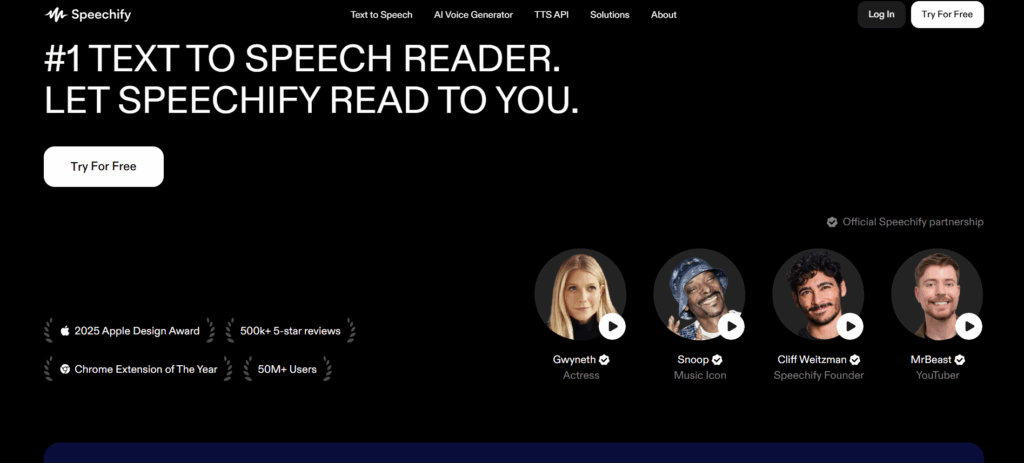
Speechify is a widely used AI text-to-speech platform, known for its user-friendly interface and focus on content accessibility. For character voice work, it offers a dedicated voice changer tool designed to transform uploaded or recorded speech into a new, high-quality AI voice, while preserving the original emotional performance.
Key Features of Speechify
- AI Voice Changer for Professionals: Converts existing audio or recorded performance into a new AI voice while retaining the original tone, emotion, and pacing. This is ideal for voice actors who want to deliver the performance but use an AI-generated character voice.
- Word-Level Control: Provides granular control over the final output, allowing users to fine-tune pronunciation, pauses, and pitch on specific words, essential for creating tension and suspense.
- Convey Emotion Feature: Simple tools built into the editor to help creators easily inject emotion into the script, giving the Ghostface voice depth beyond a simple digital filter.
- No Audio Upload Limits: The studio features no limits on audio upload size, making it suitable for long-form narrative content like a series of continuous phone calls.
Speechify is a great choice for creators who prioritize retaining an actor’s core vocal performance and emotional delivery while utilizing AI for the final, chilling Ghostface voice effect.
These advanced voice technologies open the door to diverse creative and professional opportunities.
Also Read: How to Create Unique Voices for Characters in Fiction
Beyond the Prank: Best Use Cases for the Ghostface Voice
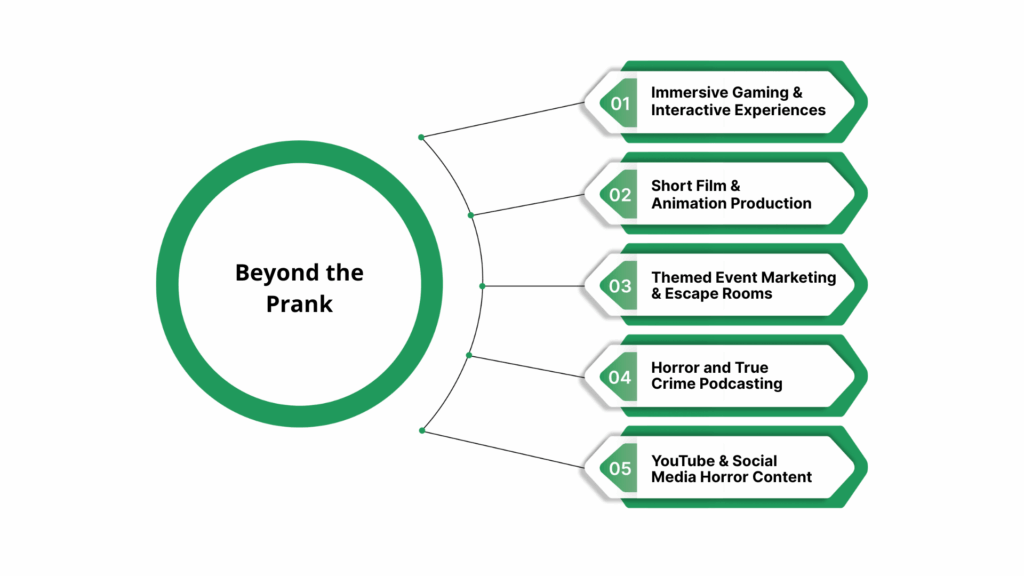
The iconic, electronically distorted voice of Ghostface is synonymous with terror and suspense. Using high-fidelity AI voice generators allows creators to go beyond simple pranks and integrate this scary persona into professional media, interactive experiences, and marketing.
Here are the most relevant use cases for employing the high-quality Ghostface voice:
1. Immersive Gaming and Interactive Experiences
A high-quality AI voice can be integrated into game engines (like Unity or Unreal) to provide dynamic, context-aware dialogue for a central villain or a “Skinwalker” type enemy that hunts players.
Example: In a multiplayer horror survival game, the voice can deliver personalized taunts to isolated players, using their own name or mentioning items they’re holding, significantly increasing player paranoia and immersion.
Want to level up your interactive content? Resemble AI’s Chatterbox feature allows your AI voice to respond instantly in real-time. See how it works.
2. Short Film and Animation Production
Use the text-to-speech functionality to quickly and cost-effectively generate high-quality placeholder audio (temp tracks) during the editing phase, or even as the final voiceover for low-budget productions, saving on professional voice actor fees.
Example: Generating multiple lines of dialogue overnight to test pacing and tension in an animated short film’s cutting room, allowing the director to iterate quickly on the script’s impact.
3. Themed Event Marketing and Escape Rooms
Use the voice in promotional materials or within the physical environment of an attraction to set a high-production-value tone before the experience even begins.
Example: Recording a voicemail greeting for a haunted house or escape room customer service line, or using the voice to deliver the critical, time-sensitive instructions during the climax of an escape room puzzle.
4. Horror and True Crime Podcasting
Replace a standard narrator for the scariest segments to instantly inject a cinematic atmosphere. This is particularly effective for dramatic readings of killer transcripts or listener-submitted ghost stories.
Example: Using the voice for the unsettling, isolated reading of a victim’s final phone call transcript, or as a recurring ‘host’ for a weekly “Killer’s Corner” segment.
5. YouTube and Social Media Horror Content
Assign a specific character voice for review/react videos to create a recurring, marketable identity that is instantly recognizable to the horror community, improving brand recall.
Example: Creating a series of “Unsolicited Movie Reviews” where the Ghostface voice critiques new horror trailers, or using the voice to narrate “Top 10 Most Frightening Movie Moments.”

Also Read: Text-to-Speech Tools for YouTubers
Conclusion
AI voice generation elevates the classic Ghostface voice changer into a high-fidelity, professional-grade tool. This level of control over tone and prosody is now a critical component for cinematic suspense and deeply immersive content. It moves beyond simple novelty into true digital character design.
Ready to utilize the perfect, chilling voice for your next horror project? Resemble AI’s Speech-to-Speech technology lets you transform your own voice into that sinister, iconic Ghostface effect with precise control. Book a demo today to bring your most menacing characters to life.
FAQs
1. How do I make my voice sound like Ghostface?
Use a real-time voice changer application, often AI-powered, and select a horror, low-pitch, or ‘Ghostface’ preset. You may also adjust pitch, echo, and distortion filters in a desktop editor for a classic, unsettling tone.
2. Are voice changers illegal?
Owning and using voice changers is generally legal, but their use for fraud, unauthorized impersonation of public figures, or harassment is illegal. It is crucial to check local laws and use them responsibly with proper consent.
3. How to create a scary voice?
Use an AI voice generator that offers scary text-to-speech presets like “demon,” “haunting,” or “monster.” You can also manually adjust an existing voice’s parameters, like slowing the speed, lowering the pitch, and adding distortion or reverb effects.
4. What are the commercial and legal risks of using an AI-cloned celebrity voice for a horror character?
Using a celebrity’s AI-cloned voice in commercial projects without explicit permission risks violating their intellectual property and likeness rights, potentially leading to lawsuits and content removal. Most platforms prohibit deceptive use or replication of real people to avoid legal issues like defamation or fraud.